


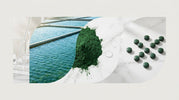
Inside Our Spirulina Production: From Cultivation to Finished Tablets
, by ENERGYbits Team, 9 min reading time
, by ENERGYbits Team, 9 min reading time
Discover how ENERGYbits spirulina is grown, harvested, tested, and pressed into tablets. Our transparent production process ensures the highest quality algae supplements.
Spirulina cultivation begins in carefully controlled growing environments where conditions mimic the alkaline lakes where this ancient organism has thrived for billions of years. But here's what most people don't realize: the quality of your spirulina supplement is determined long before it ever becomes a tablet.
Spirulina is essentially a living filter. It absorbs everything in its environment—which is exactly why water quality is paramount. Our spirulina is cultivated in triple-filtered spring water in a controlled facility, far from industrial pollution, agricultural runoff, and environmental contaminants.
This matters more than most consumers realize. Spirulina grown in contaminated water can accumulate heavy metals, pesticides, and other toxins. When you consume that spirulina, you're consuming those contaminants too. Our water undergoes rigorous testing before, during, and after the cultivation cycle to ensure purity.
Spirulina thrives in specific conditions:
Our cultivation facilities maintain these precise conditions throughout the growing cycle. Temperature fluctuations, pH imbalances, or inadequate sunlight can all compromise the nutritional profile of the final product. We monitor these variables continuously using advanced sensors and adjust conditions in real-time.
How long does it take to produce spirulina? Under optimal conditions, spirulina doubles its biomass every 2-5 days—making it one of the fastest-growing organisms on Earth. However, we don't rush the process. Our spirulina is allowed to reach peak nutrient density before harvesting, which typically takes 3-4 weeks from inoculation to harvest.
Timing the harvest is both science and art. Harvest too early, and you sacrifice nutrient density. Wait too long, and the spirulina begins to degrade. Our cultivation team monitors chlorophyll content, protein levels, and cell density to determine the optimal harvest window.
Once ready, the spirulina is harvested using a gentle filtration process. The algae-rich water passes through fine mesh screens that capture the spirulina while allowing water to flow through. This process is repeated multiple times to concentrate the spirulina biomass.
What we don't do is equally important. We avoid harsh mechanical processes that can rupture cell walls and oxidize delicate nutrients. Our gentle harvesting preserves the integrity of spirulina's 40+ nutrients, including its signature blue pigment phycocyanin—a powerful antioxidant that's easily damaged by rough handling.
Here's where many spirulina producers cut corners—and where ENERGYbits stands apart. The drying process is critical because spirulina's nutrients are heat-sensitive. High-temperature drying methods may be faster and cheaper, but they destroy the very compounds that make spirulina valuable.
We use a proprietary low-temperature drying method that removes moisture without exceeding temperatures that would degrade nutrients. This process takes longer and costs more, but it preserves:
The result is a vibrant green powder that retains the full spectrum of spirulina's nutritional benefits. You can actually see the difference—our dried spirulina maintains a deep, rich green color rather than the brownish-green of heat-damaged products.
What quality controls are used in spirulina production? At ENERGYbits, testing isn't a single checkpoint—it's woven throughout our entire production process.
Pre-Cultivation Testing:
During Cultivation:
Post-Harvest Testing:
Final Product Testing:
Every batch of ENERGYbits comes with a certificate of analysis. We don't just meet industry standards—we exceed them. Our heavy metal limits, for example, are stricter than FDA requirements because we believe you deserve the cleanest possible product.
How are spirulina tablets made? This is where our commitment to purity really shows. Most supplement tablets contain binders, fillers, coatings, and flow agents—sometimes making up 30% or more of the tablet's weight. Not ours.
ENERGYbits tablets are made using a cold-pressing process that compresses pure spirulina powder into tablet form using only pressure—no heat, no binders, no fillers, no additives whatsoever.
This means when you take ENERGYbits, you're getting 100% spirulina. Every tablet. Every time.
The cold-pressing process requires specialized equipment and precise calibration. Too little pressure and the tablets crumble. Too much and you risk generating heat through friction. Our production team has refined this process over years to create tablets that hold together perfectly while remaining easy to chew or swallow.
Common tablet additives include:
These additives aren't necessarily harmful, but they're also not beneficial. They dilute the active ingredient and add unnecessary substances to your body. Our philosophy is simple: if it doesn't contribute to your health, it doesn't belong in our tablets.
When Catharine Arnston founded ENERGYbits, she wasn't interested in creating just another supplement. After her sister's breast cancer diagnosis led her down a rabbit hole of nutrition research, she became obsessed with finding the most nutrient-dense, cleanest food source possible. That search led her to algae—and to a commitment to quality that shapes everything we do.
Single-Origin Sourcing: We don't blend spirulina from multiple sources. Every batch comes from the same controlled facility, ensuring consistency.
Non-GMO Verification: Our spirulina is verified non-GMO and grown without genetic modification.
No Irradiation: Some companies irradiate their products to extend shelf life. We don't—our careful production and packaging maintains freshness naturally.
Sustainable Practices: Spirulina production requires significantly less water and land than traditional protein sources. We're proud that our product supports both personal and planetary health.
Founder Oversight: Catharine personally visits our production facilities and reviews quality reports. This isn't a faceless corporation—it's a mission-driven company with real accountability.
What is the spirulina production process from start to finish?
Here's the complete journey of an ENERGYbits tablet:
From start to finish, our production cycle takes approximately 8-9 weeks—significantly longer than producers who prioritize speed over quality. But we believe this investment in time translates directly to a superior product.
Now that you understand our process, you're better equipped to evaluate any spirulina product. Here are the questions to ask:
If a company can't or won't answer these questions, that tells you something important about their commitment to quality.
Spirulina is grown in controlled alkaline water environments where temperature, pH, and mineral content are carefully monitored. After reaching peak nutrient density (typically 3-4 weeks), it's harvested through gentle filtration, dried using low-temperature methods to preserve nutrients, tested extensively for purity and potency, and finally cold-pressed into tablets without binders or fillers. ENERGYbits follows this process with additional quality controls at every stage.
Commercial spirulina cultivation takes place in large outdoor ponds or controlled indoor facilities. The algae grows in alkaline water (pH 9-11) at warm temperatures (86-95°F) with abundant sunlight. Quality producers like ENERGYbits use triple-filtered spring water and continuous monitoring to ensure optimal growing conditions and prevent contamination.
The complete production cycle from cultivation to finished tablets takes approximately 8-9 weeks. This includes 3-4 weeks for cultivation, 2-3 weeks for harvesting, drying, and testing, and 1-2 weeks for tablet pressing, final testing, and packaging. Rushing this timeline can compromise quality.
Comprehensive quality control includes water purity testing before cultivation, continuous monitoring during growth, post-harvest testing for heavy metals, microbial contamination, and pesticide residues, nutritional profile verification, and third-party laboratory certification. ENERGYbits exceeds industry standards with stricter limits on contaminants.
ENERGYbits differentiates through single-origin sourcing, triple-filtered spring water, low-temperature drying that preserves nutrients, cold-pressing without binders or fillers, testing that exceeds FDA requirements, and founder-level oversight of quality. Every tablet is 100% pure spirulina with nothing added.
Many spirulina tablets contain binders, fillers, flow agents, and coatings that can make up 30% or more of the tablet. ENERGYbits tablets contain zero additives—they're made using cold-pressing technology that compresses pure spirulina powder using only pressure, with no heat or binding agents.
Now that you've seen inside our spirulina production process, we invite you to experience the difference that quality makes. Every bag of ENERGYbits represents our unwavering commitment to purity, potency, and transparency.
Ready to fuel your body with the cleanest spirulina available? Shop ENERGYbits now and discover why thousands of health-conscious consumers trust us for their daily nutrition.
Want to learn more about our quality standards? Visit our quality page to see our certifications, testing protocols, and commitment to excellence.
Have questions about our production process? We love talking about this stuff. Reach out to our team—we're always happy to share more about what makes ENERGYbits different.


