


Is Spirulina Keto Friendly? Carbs and Macros Explained
, by The ENERGYbits® Team, 10 min reading time
, by The ENERGYbits® Team, 10 min reading time
Spirulina fits a ketogenic diet with room to spare. A 3 gram serving has under 1 gram of net carbs plus about 2 grams of complete protein, so you get iron and B vitamins at almost no carb cost.
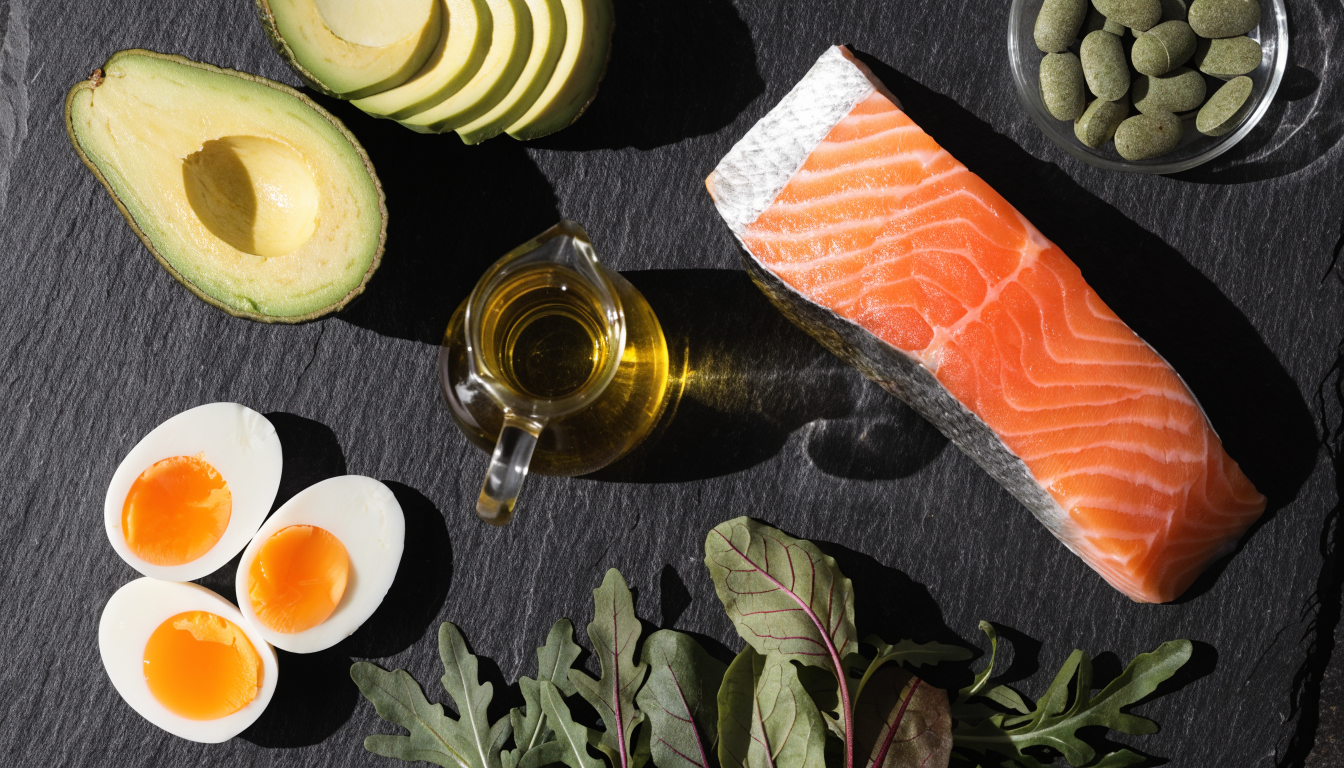
Spirulina slots into a keto plate without touching your carb budget.
If you count every gram, a new supplement deserves a hard look before it goes in your tracker. Spirulina is a green algae, and "green" sometimes triggers the same suspicion that fruit and root vegetables do on keto. The math here is friendlier than you might expect.
Spirulina is served in very small amounts. That is the whole story. A typical daily serving is measured in grams, not cups, so even though spirulina is around 20 to 25 percent carbohydrate by dry weight, the absolute carb count per serving is tiny. Below is the arithmetic, plus why so many keto dieters reach for algae in the first place.
Dried spirulina is roughly 60 to 70 percent protein by weight, which is unusually high for a plant food, with the rest split between carbohydrate, a small amount of fat, minerals, and moisture. Scale that down to a real-world serving and the numbers get very small.
| Serving | Calories | Total carbs | Fiber | Net carbs | Protein |
|---|---|---|---|---|---|
| 1 g (about 4 tablets) | ~4 | ~0.24 g | ~0.1 g | ~0.2 g | ~0.6 g |
| 3 g (about 12 tablets) | ~11 | ~0.7 g | ~0.1 g | ~0.6 g | ~2 g |
| 5 g (about 20 tablets) | ~19 | ~1.2 g | ~0.2 g | ~1 g | ~3.3 g |
| 10 g (about 40 tablets) | ~37 | ~2.4 g | ~0.4 g | ~2 g | ~6.6 g |
Set that against a standard ketogenic carb budget of 20 to 30 grams of net carbs per day. A 3 gram serving uses roughly 2 to 3 percent of it. Even a generous 10 gram serving is about 2 grams of net carbohydrate, which is a rounding error next to a handful of nuts or a splash of cream in your coffee. Nothing in that column is going to push you out of ketosis.
The protein column is worth a second look too. Spirulina supplies all nine essential amino acids, which is why we cover it in detail in our guide to whether spirulina is a complete protein. If you want the gram-by-gram breakdown across serving sizes, our piece on how much protein is in spirulina goes deeper.
Fitting inside a carb budget is the price of admission. The reason to bother is what you get for those fractions of a gram.
First, the transition period. When you cut carbohydrate sharply, your body sheds water and, along with it, electrolytes and minerals. That shift is behind much of what people call the "keto flu" in the first week or two. A nutrient-dense whole food may support your body through that adjustment by adding minerals and B vitamins back into the mix without adding carbs.
Second, variety. Keto works by removing entire food groups: grains, most fruit, legumes, starchy vegetables. Those foods carry micronutrients, and when they leave, the range of vitamins and minerals in your week narrows unless you actively rebuild it. Spirulina helps fill that gap. It provides iron, B vitamins including B1, B2, and B3, and a spectrum of trace minerals in a very small package.
Third, protein quality at almost no carb cost. Very few plant foods let you add complete protein without also adding meaningful carbohydrate. Spirulina does, which makes it a useful tool for anyone doing a plant-leaning version of keto.
ENERGYbits® spirulina is one ingredient: pure spirulina, third-party tested, with no fillers, binders, or added carbs to account for. Iron, B vitamins, and complete protein in a serving that barely moves your macros.
Shop ENERGYbits® SpirulinaBoth forms have identical macros per gram, since tablets are simply pressed spirulina with nothing added. The difference is how precisely you can measure a serving.
Tablets make tracking almost automatic. Each ENERGYbits® tablet is about 0.33 grams, so twelve tablets is roughly 3 grams. You count instead of weighing, and the count is the same every day, which means your logged number is the real number. Tablets also travel well and require no water, blender, or cleanup.
Powder is more economical per gram and blends into shakes or fat bombs, but a "scoop" or "heaping teaspoon" varies more than most people realize. If you use powder and you track tightly, weigh it on a kitchen scale rather than trusting a scoop.
Search your app for "spirulina, dried" or "seaweed, spirulina, dried," which pulls the USDA entry most databases are built on. Enter your amount in grams rather than tablets, since tablet counts in user-submitted entries are often wrong. If you take 10 tablets, log 3 grams. Then check that the entry shows fiber separately so your app can calculate net carbs correctly. If it does not, subtract the fiber yourself.
One practical note: user-submitted database entries are frequently inaccurate for supplements. Prefer a verified or USDA-sourced entry, and if the carb number looks wildly different from the table above, you have probably grabbed a blend rather than pure spirulina.
Many keto dieters also practice intermittent fasting, so the timing question comes up quickly. Spirulina contains calories and protein, which technically ends a strict fast, though the amount is small enough that the practical impact depends on your goals. We work through that trade-off in our article on whether spirulina breaks a fast.
As for ketosis itself, the carbohydrate load is far too small to trigger a meaningful insulin response or deplete ketone production. If you are combining keto with a body composition goal, our overview of spirulina for weight loss covers how the protein and satiety side may support that effort.
Most research uses around 3–5 grams per day, which is 12 to 20 tablets. That range gives you meaningful iron, B vitamins, and protein while costing you about 1 gram of net carbs. Start at 1–2 grams for the first few days so your digestion adjusts, then build up.
Morning tends to work best, since the iron and B vitamins support natural energy and that pairs well with the steadier energy many people report once they are fat-adapted. Spirulina can be taken with or without food.
Join our newsletter for a simple day-by-day plan to build your algae habit, plus subscriber-only offers.
Send me the guideA 3 gram serving of spirulina contains roughly 0.7 grams of total carbohydrate, and after subtracting fiber, net carbs land at about 0.6 grams. A larger 10 gram serving comes in near 2 grams of net carbs.
No. The carbohydrate in a normal serving is a fraction of a gram, far too little to raise blood glucose meaningfully or interrupt ketone production at standard keto serving sizes.
Both have identical macros per gram. Tablets are easier to track precisely because each one is a consistent weight, so you count rather than estimate a scoop. Powder is fine if you weigh it on a kitchen scale.
Spirulina is not a treatment for any condition, but because the keto transition involves mineral and electrolyte shifts, a nutrient-dense food that supplies iron, B vitamins, and trace minerals may support your body through that adjustment. Hydration and electrolytes still matter most.


