


Is Spirulina Safe for Kids? A Parent's Guide
, by The ENERGYbits® Team, 6 min reading time
, by The ENERGYbits® Team, 6 min reading time
Pure, high-quality spirulina is generally safe for healthy children in small amounts, but always ask your pediatrician first. Here is a parent's guide to purity and dosing.
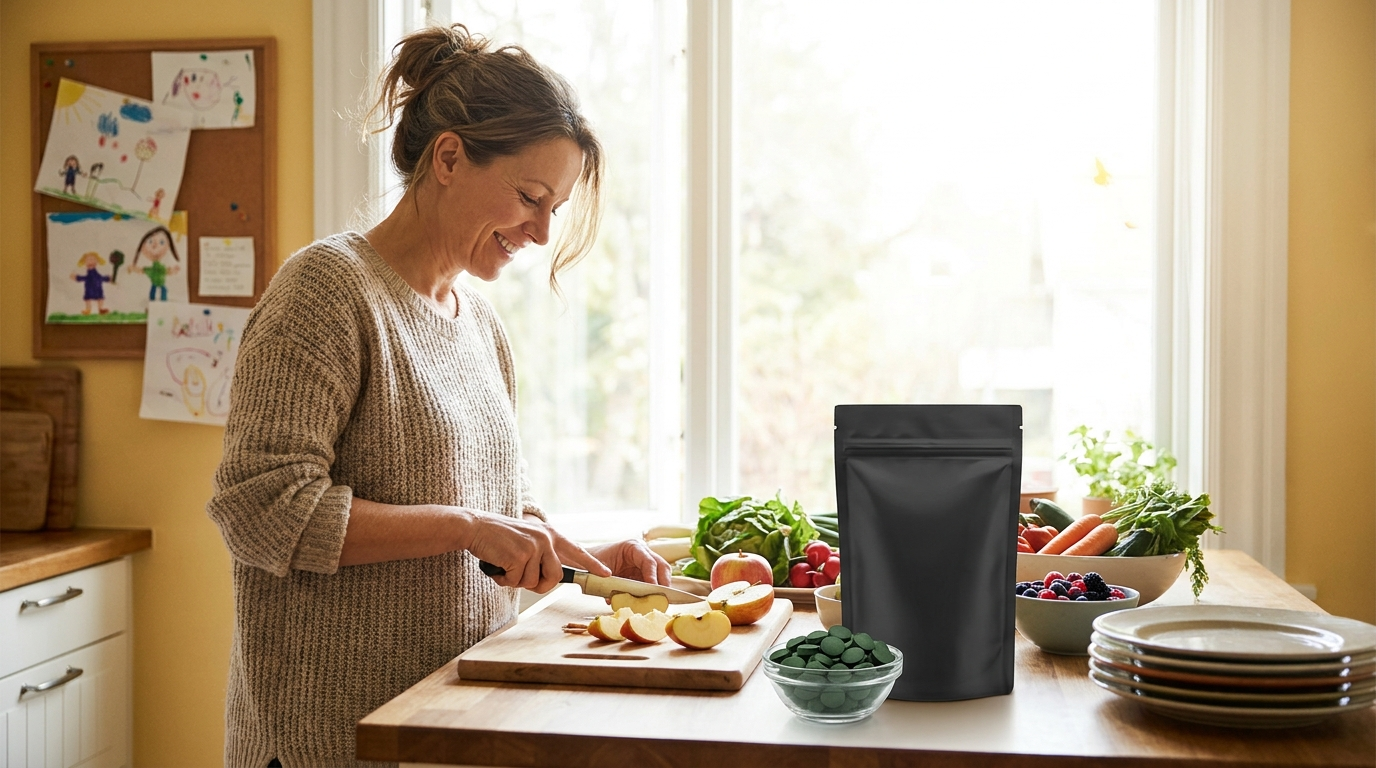
Parents often ask whether this nutrient-dense algae has a place in a child's diet.
Spirulina is one of the most nutrient-dense foods on the planet, so it is understandable that parents wonder whether it can help picky eaters or growing bodies. The answer is generally reassuring, with a few important caveats.
For most healthy children, small amounts of pure spirulina are considered safe, and it has a long history as a food in many cultures. That said, children are not small adults. Their needs and tolerances differ, so the single most important step is to talk with your pediatrician before starting, especially for younger kids.
Quality is everything. Poorly grown spirulina can be contaminated with heavy metals or other unwanted compounds, which is a bigger concern for small bodies. Choose spirulina grown in clean, controlled conditions and third-party tested. Our overview of spirulina side effects explains what to watch for, and it applies doubly to children.
Spirulina provides iron, complete protein, and B vitamins, nutrients that support growing bodies. For families raising plant-based eaters, that protein can be useful, as our guide on whether spirulina is a complete protein describes. Still, spirulina is a supplement to a balanced diet, not a replacement for whole foods.
| Consideration | Guidance for kids |
|---|---|
| Pediatrician approval | Always confirm before starting |
| Amount | Start small, well below adult servings |
| Purity | Choose clean, tested spirulina only |
| Form | Tablets or blended into food |
| Autoimmune or health conditions | Extra caution, ask your provider |
There is no universal children's dose, and it should be much smaller than an adult serving. This is exactly the kind of question to bring to your pediatrician. For context on adult amounts, our spirulina dosage guide gives a starting frame, and what spirulina tastes like can help you plan how to serve it.
ENERGYbits is pure pressed spirulina, third-party tested with no fillers, grown in clean and controlled conditions. Quality you can feel good about.
Shop ENERGYbits SpirulinaSkip it, or get specific medical guidance, if your child has an autoimmune condition, a known allergy, or takes medication. As with any new food, introduce it slowly and watch for any reaction. When in doubt, your pediatrician is the right guide.
Join our newsletter for plain-language guides on spirulina, chlorella, and everyday wellness.
SubscribeSmall amounts of pure, high-quality spirulina are generally considered safe for healthy children, but you should always confirm with your pediatrician first, especially for younger kids.
There is no universal children's dose, and it should be well below an adult serving. Start small and ask your pediatrician for guidance specific to your child.
Small bodies are more sensitive to contaminants. Poorly grown spirulina can carry heavy metals, so choose spirulina grown in clean conditions and third-party tested.
Avoid it or seek medical guidance if your child has an autoimmune condition, a known allergy, or takes medication. Introduce any new food slowly and watch for reactions.


