


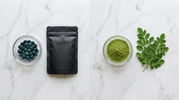
Spirulina vs Moringa: Which Green Superfood Is Better?
, by The ENERGYbits® Team, 8 min reading time
, by The ENERGYbits® Team, 8 min reading time
A head-to-head look at spirulina and moringa across protein, iron, B vitamins, antioxidants, and chlorophyll, with a clear comparison table and guidance on the best use for each.
Two celebrated green superfoods, one simple question: which one fits your goals?
Spirulina is a blue-green algae that grows in fresh water and has been eaten for centuries. It is prized for being remarkably nutrient dense in a very small serving. Moringa, sometimes called the drumstick tree, is a leafy plant whose dried leaves are ground into a green powder. Both are called superfoods, and both deliver plant nutrition, yet they are quite different once you look past the shared green color.
If you want the fastest way to add real food nutrition to your morning, spirulina tablets are simple to take. You can explore ENERGYbits spirulina if a clean, single-ingredient algae is what you are after. For a deeper look at how algae compares to blended greens, see our guide on spirulina vs greens powder.
This is where the two part ways. Spirulina is roughly 60 to 70 percent protein by weight, one of the highest plant protein concentrations found in any food. Moringa leaf is nutritious but contains far less protein per serving. More importantly, spirulina is a complete protein, meaning it provides all nine essential amino acids your body cannot make on its own. Moringa offers protein too, but not in the same density. To dig into the numbers, read how much protein is in spirulina and whether spirulina is a complete protein.
Both plants supply iron, a mineral many people want more of from food. Spirulina is a notably rich plant source of iron and also delivers B vitamins that may support natural energy metabolism. Both are green thanks to chlorophyll, the pigment that gives plants their color, though spirulina and its algae cousin chlorella are especially concentrated sources. Moringa brings its own strengths, including vitamin C and calcium from the leaf. The table below lays the differences side by side.
| Nutrient or benefit | Spirulina | Moringa |
|---|---|---|
| Protein density | Very high (about 60 to 70 percent) | Moderate |
| Complete protein | Yes, all nine essential amino acids | Not a complete protein |
| Iron | Rich plant source | Good source |
| B vitamins | Present, may support energy metabolism | Present in smaller amounts |
| Antioxidants | High (phycocyanin, beta carotene) | High (polyphenols, vitamin C) |
| Chlorophyll | Very concentrated | Present |
| Fiber | Low | Higher (leaf powder) |
| Best use | Complete protein, steady energy support | Fiber and general plant nutrition |
Antioxidants are compounds that may help protect cells from everyday oxidative stress. Spirulina carries phycocyanin, the blue pigment behind its distinctive color, along with beta carotene. Moringa contributes polyphenols and vitamin C. Research suggests both plants offer meaningful antioxidant value, so this category is close. If antioxidant variety is your goal, either can contribute, and many people enjoy a diet that includes a range of colorful plants.
Spirulina is often chosen for caffeine-free energy support. Its combination of complete protein, iron, and B vitamins may help support the body's natural energy production without stimulants, which appeals to anyone who wants a lift without the jitters or afternoon crash. Moringa is nourishing, but spirulina tends to be the go-to for people focused on steady daily energy. Learn more about why in our article on whether spirulina gives you energy. Curious how spirulina stacks up against its algae sibling? See the difference between spirulina and chlorella.
One ingredient, no fillers, no caffeine. ENERGYbits spirulina is real food algae you can take in seconds.
Shop ENERGYbits SpirulinaIf your priority is protein density, a complete amino acid profile, and caffeine-free energy support, spirulina is often the stronger everyday choice. If you want extra fiber and enjoy variety in leafy plant nutrition, moringa can be a lovely addition to a balanced diet. The good news is that this is not strictly either or, and both belong to a whole-food approach. For most people focused on protein and energy, spirulina earns the daily spot.
Simple, science-friendly tips on algae, protein, and natural energy, delivered to your inbox.
Join the newsletterThey serve different strengths. Spirulina leads on protein density and complete protein status and is often chosen for caffeine-free energy support. Moringa offers more fiber and its own plant compounds. For protein and steady energy, spirulina is typically the stronger pick.
Many people enjoy a variety of plant foods, and there is no rule against including both in a balanced diet. If you take medication, are pregnant or nursing, or manage a health condition, check with your healthcare provider first.
Yes. Spirulina is roughly 60 to 70 percent protein by weight and provides all nine essential amino acids, making it a complete protein. Moringa leaf contains protein but in much lower amounts per serving.
Spirulina is commonly chosen for caffeine-free energy support thanks to its protein, iron, and B vitamins, which may help support the body's natural energy metabolism. Moringa is nourishing but is less focused on daily energy.


