


Spirulina vs Sea Moss: Which Superfood Is Better?
, by The ENERGYbits® Team, 9 min reading time
, by The ENERGYbits® Team, 9 min reading time
Spirulina and sea moss are biologically unrelated despite both being called algae. Here is an honest look at protein, iodine, the viral 92 minerals claim, and which one fits your routine.
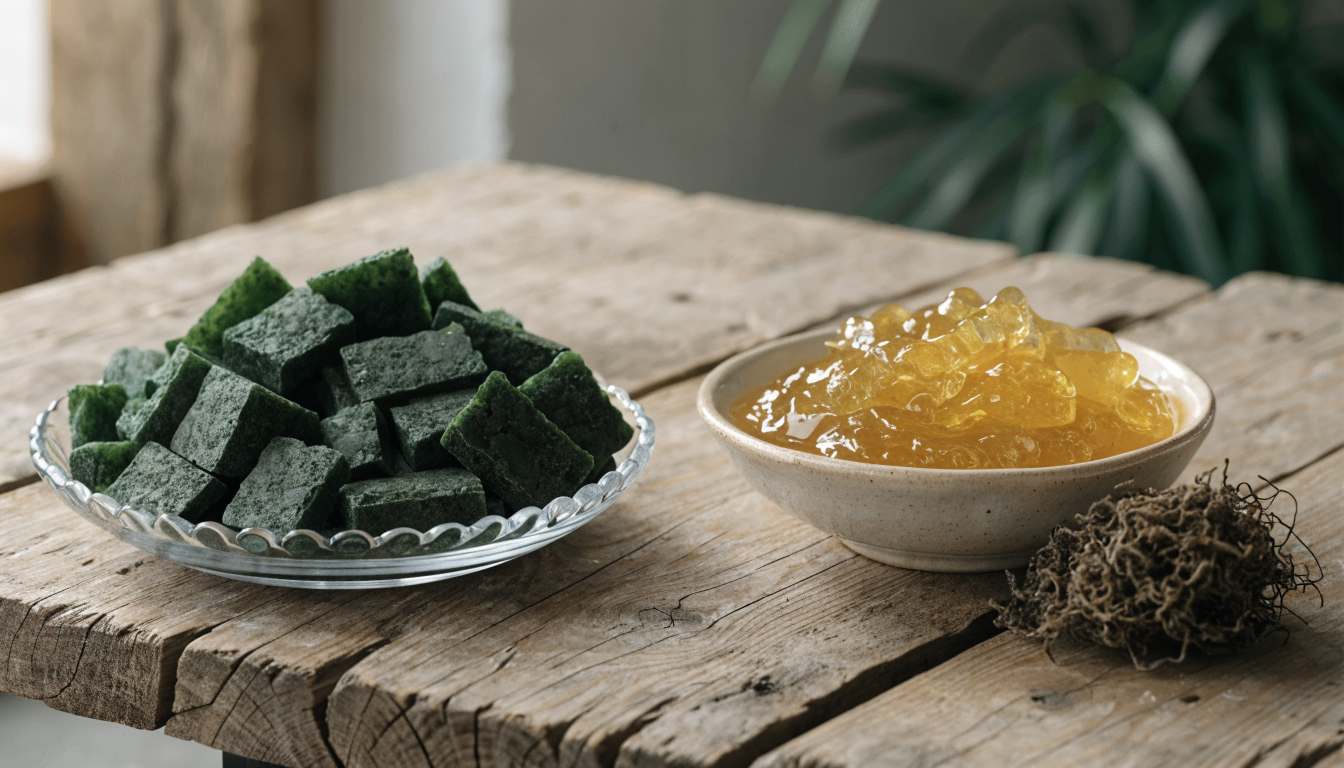
Two very different organisms, two very different jobs, and one viral claim that does not hold up.
Sea moss has had an extraordinary few years, going from a Caribbean kitchen staple to a supplement that shows up in gel jars and gummies across social media, usually attached to a mineral claim that sounds too tidy to be true. Spirulina has been studied for decades and gets far less airtime.
People ask us to pick a winner. These two are so different that the question is a little like asking whether almonds beat olive oil. What matters is knowing what each one actually delivers, and where the marketing has run ahead of the evidence.
Technically yes, in the loosest sense, but they are barely related. Spirulina is a freshwater cyanobacterium, a microscopic blue/green organism grown in controlled ponds and pressed into tablets. Sea moss, usually Chondrus crispus or Irish moss, is a red seaweed that grows on rocky North Atlantic coastlines and is harvested in visible fronds.
That distinction is not trivia. Spirulina behaves like a concentrated food. Sea moss behaves like a hydrocolloid, the food science term for something that turns liquid into gel, which is why it ends up as a jelly in a jar.
This is where the gap is widest. Spirulina is roughly 60 to 70 percent protein by dry weight and contains all nine essential amino acids, which is unusual for a plant source. It also carries meaningful iron, B vitamins, and phycocyanin, the blue pigment behind much of its antioxidant research. We unpack that further in our piece on whether spirulina is a complete protein.
Sea moss is mostly carbohydrate. The bulk of it is mucilage, a family of carrageenan-type polysaccharides the body does not digest as fuel. Protein is low per realistic serving, and because the gel is mostly water, a spoonful delivers a small fraction of what spirulina does on nearly every nutrient except iodine. That is not a knock, it is simply what a gelling seaweed is.
No, and it is worth saying plainly. That line traces back to wellness marketing rather than laboratory analysis, and the premise does not survive contact with chemistry. There is no agreed list of 102 minerals the body needs. The essential ones number closer to twenty. Seaweed does absorb trace elements from seawater, so a sensitive instrument detects many of them, but detecting an element is not the same as supplying a useful amount of it.
We are not sneering at anyone who repeated it. The claim is everywhere, including from people who genuinely love the product. It just should not be the reason you buy anything. The same skepticism belongs in every green powder comparison, including spirulina vs moringa and spirulina vs matcha.
Two things, and they are real. The first is the mucilage itself. That gel-forming fiber coats and soothes, which is why Irish moss has a long folk history in throat and digestive remedies. Research here is thin, but the traditional use is centuries old and the mechanism is plausible.
The second is iodine. Sea moss is a legitimate source of a mineral that many people do not get much of, particularly those who avoid iodized salt, dairy and fish. Iodine is required for normal thyroid hormone production, and that matters.
Both, which is the part that gets glossed over. Iodine content in wild-harvested seaweed varies enormously by species, water, season and harvest site. Two jars can differ by an order of magnitude, and almost no product tells you the number. Excess iodine can disrupt thyroid function just as deficiency can, so anyone with a thyroid condition or on thyroid medication should talk to a clinician first.
Spirulina sits at the opposite end. As a freshwater organism it is not a meaningful iodine source, which makes it simpler for anyone monitoring intake. We go deeper in our article on spirulina and thyroid health.
ENERGYbits Spirulina is a single ingredient tablet of organically grown spirulina. No fillers, no sugar, no binders, and third-party tested so you know what you are taking.
Shop ENERGYbits SpirulinaSea moss gel is perishable. It lives in the refrigerator, keeps a couple of weeks, smells distinctly oceanic and does not travel. Plenty of people use a jar twice and throw the rest away. Capsules and gummies fix the convenience problem but usually shrink the dose. Spirulina tablets are shelf stable and portable, and consistency is the biggest predictor of whether any supplement does anything for you.
Quality testing matters for both, arguably more for sea moss. Seaweed accumulates whatever is in the water around it, including heavy metals, so wild-harvested product from an unspecified coastline is a gamble. Pond-grown spirulina should carry heavy metal and microcystin testing too. Ask either brand for a certificate of analysis.
If you want daily protein, iron, B vitamins and steadier energy, spirulina is the stronger and better-studied option. If your goal is gut-soothing fiber, or you have a documented reason to add iodine, sea moss earns its place, provided you know the harvest source and your thyroid status.
| Factor | Spirulina | Sea moss |
|---|---|---|
| Nutrient profile | Dense in iron, B vitamins, phycocyanin and antioxidants | Mostly carbohydrate and mucilage fiber, trace minerals in small amounts |
| Protein | About 60 to 70 percent by dry weight, all nine essential amino acids | Low per realistic serving, gel is mostly water |
| Iodine | Not a meaningful source, freshwater grown | Notable but highly variable by harvest, which is also the main risk |
| Format | Shelf stable tablets, portable, no prep | Refrigerated gel that spoils, or lower-dose capsules and gummies |
| Best use | Everyday nutrition, plant protein, energy support | Gut-soothing fiber and iodine, if the source is verified |
They are not mutually exclusive. Some people take spirulina every morning and keep sea moss for occasional digestive comfort. If your real question is which algae to start with, our guide to the difference between spirulina and chlorella is the more useful comparison.
Join our newsletter for plain-language guides on spirulina, chlorella, and everyday wellness.
SubscribeNeither is universally better because they do different jobs. Spirulina is far higher in protein, iron and B vitamins, making it the stronger choice for everyday nutrition and energy. Sea moss offers gel-forming fiber and iodine. If you want one daily nutrient-dense food, spirulina is the more practical pick.
No. That figure comes from marketing rather than analysis, and there is no recognized list of 102 essential minerals. The body requires roughly twenty. Seaweed does absorb trace elements from seawater, but detecting an element in trace amounts is not the same as delivering a nutritionally useful dose of it.
Generally yes, since they are unrelated organisms with different nutrient profiles and no known interaction. The main caution is iodine. Sea moss can be concentrated and variable, so if you have a thyroid condition or take thyroid medication, speak with your healthcare provider before combining them.
Spirulina is easier to take daily because it contains no meaningful iodine and comes in a consistent, shelf-stable tablet. Sea moss iodine varies widely by harvest, so daily use is harder to dose predictably. With either one, choose a brand that publishes heavy metal testing results.


