


The Green Revolution You Haven't Heard Of: Why Algae is the Future of Sustainable Food
, by ENERGYbits Team, 9 min reading time
, by ENERGYbits Team, 9 min reading time
Discover why algae is revolutionizing sustainable food. Learn how this ancient superfood uses 99% less water, absorbs carbon, and delivers complete nutrition for our planet's future.
When we talk about sustainable food, we need to consider the full picture: water usage, land requirements, carbon footprint, nutritional output, and scalability. By every meaningful measure, algae outperforms traditional food sources in ways that seem almost impossible.
Conventional agriculture is incredibly water-intensive. Producing just one pound of beef requires approximately 1,800 gallons of water. Even plant-based proteins like soybeans need significant irrigation and rainfall to thrive.
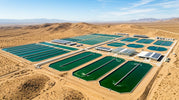
Algae changes this equation entirely. Grown in closed-loop systems, algae cultivation uses up to 99% less water than traditional agriculture because the water is continuously recycled. This isn't a marginal improvement—it's a fundamental reimagining of how we can produce nutrient-dense food without depleting our freshwater resources.
Key sustainability fact: Algae can be cultivated using non-potable water sources, including seawater and even wastewater, making it viable in regions where traditional agriculture simply cannot exist.
One of the most pressing challenges facing global food security is arable land scarcity. We're losing topsoil at alarming rates, and climate change is making previously fertile regions increasingly difficult to farm.
Algae requires no arable land whatsoever. It can be grown vertically in photobioreactors, on rooftops, in deserts, and even in urban environments. A single acre of algae production can yield 30 times more protein than an acre of soybeans and up to 200 times more than an acre used for cattle ranching.
This vertical scalability means we could theoretically produce enough algae to feed the entire global population using a fraction of the land currently devoted to agriculture—freeing up space for ecosystem restoration and carbon sequestration.
Unlike virtually every other food production system, algae cultivation is carbon-negative. This means it removes more carbon dioxide from the atmosphere than it produces during the entire growth and harvesting process.
During photosynthesis, algae absorbs carbon dioxide and converts it into biomass and oxygen. In fact, algae is responsible for producing approximately 50% of the world's oxygen—more than all the rainforests combined.
When we cultivate algae for food, we're essentially creating a system where eating becomes an act of environmental restoration. Every serving of algae represents carbon that has been pulled from the atmosphere and converted into nutrition for human health.
Environmental impact snapshot:
Modern algae cultivation has achieved something remarkable: truly circular production systems. The water is recycled, the nutrients are recaptured, and even the CO2 used to accelerate growth can be sourced from industrial emissions that would otherwise enter the atmosphere.
This closed-loop approach means algae farming generates virtually no waste while actively cleaning the air and conserving water. It's not just sustainable—it's regenerative.
Sustainability means nothing if the food doesn't actually nourish people. This is where algae truly shines, offering a nutritional density that rivals or exceeds virtually any other whole food on Earth.
Spirulina, one of the most studied forms of edible algae, contains 60-70% protein by dry weight—more than any other whole food. But it's not just the quantity that matters; it's the quality. Algae provides all nine essential amino acids in bioavailable forms that the human body can readily absorb and utilize.
For comparison:
This protein density means we can produce more complete nutrition using fewer resources, making algae an obvious solution for addressing global protein deficiency.
Beyond protein, algae delivers an extraordinary concentration of vitamins, minerals, and phytonutrients. Spirulina is one of the richest natural sources of iron, B-vitamins, and beta-carotene. Chlorella, another edible algae, contains the highest concentration of chlorophyll found in any plant—a compound associated with detoxification support and cellular health.
This micronutrient density is particularly important when we consider that modern agricultural practices have depleted the nutritional content of many conventional foods. Algae grown in controlled environments maintains consistent nutritional profiles regardless of soil conditions or seasonal variations.
The numbers suggest that algae could play a transformative role in feeding our growing global population. By 2050, we'll need to produce 70% more food to feed an estimated 9.7 billion people—using agricultural systems that are already straining under current demands.
Unlike traditional agriculture, algae production isn't constrained by geography, climate, or season. Algae grows year-round, doubles its biomass every few hours under optimal conditions, and can be harvested continuously rather than seasonally.
This means production can scale rapidly to meet demand without the multi-year timelines required to expand traditional farming operations. New algae facilities can be operational within months, not decades.
Perhaps most importantly, algae can be cultivated in regions where traditional agriculture is impossible or impractical. Desert nations, island communities, and urban centers can all become food producers rather than food importers.
This decentralization of food production has profound implications for food security, reducing dependence on global supply chains and making communities more resilient to climate disruptions and geopolitical instability.
You don't have to wait for algae to become mainstream to start incorporating this sustainable superfood into your daily routine. High-quality algae supplements offer an accessible entry point into this green revolution.
Not all algae products are created equal. The sustainability benefits of algae depend entirely on how it's grown and processed. Look for algae that is:
At ENERGYbits, we've spent over a decade perfecting algae cultivation and processing to preserve the full nutritional potential of both spirulina and chlorella. Our VITALITYbits combine both algae types in a single tablet, offering the complete spectrum of algae nutrition in its most bioavailable form.
Incorporating algae into your diet is remarkably simple. A small serving of algae tablets can be taken with water, added to smoothies, or simply chewed as a nutrient-dense snack. Many people find that starting their day with algae supports sustained energy, mental clarity, and overall vitality.
The beauty of algae nutrition is that you're not just supporting your own health—you're voting with your food choices for a more sustainable food system. Every serving of algae represents resources saved, carbon sequestered, and a step toward a food future that works for both people and planet.
The green revolution in sustainable food isn't coming—it's already happening. Research institutions, food companies, and forward-thinking consumers are recognizing that algae offers something no other food source can match: complete nutrition with net-positive environmental impact.
As climate pressures intensify and traditional agricultural systems face increasing challenges, algae will inevitably move from the margins to the mainstream of global nutrition. The only question is whether you'll be ahead of this curve or catching up to it.
The ancient organisms that first made Earth habitable for complex life may well be the key to ensuring our planet remains habitable for generations to come. That's not just sustainable food—that's food that sustains everything.
Algae is more sustainable than traditional crops because it uses up to 99% less water, requires no arable land, needs no pesticides or fertilizers, and actually absorbs carbon dioxide during growth. While conventional agriculture depletes soil and water resources, algae cultivation can be carbon-negative, meaning it removes more greenhouse gases than it produces. Additionally, algae produces 30-200 times more protein per acre than traditional protein sources.
Algae farming uses approximately 99% less water than conventional agriculture when grown in closed-loop systems where water is continuously recycled. To put this in perspective, producing one pound of beef requires about 1,800 gallons of water, while algae can be cultivated using recycled water, seawater, or even treated wastewater. This dramatic water efficiency makes algae viable in water-scarce regions where traditional farming is impossible.
Yes, algae has significant potential to address global food security challenges. It can be grown year-round regardless of climate or season, doubles its biomass every few hours, and can be cultivated in deserts, urban areas, and coastal regions where traditional agriculture cannot exist. With the global population expected to reach 9.7 billion by 2050, algae's ability to produce complete protein and dense nutrition using minimal resources makes it a promising solution for feeding more people sustainably.
The environmental benefits of eating algae include carbon sequestration (algae absorbs CO2 at rates 10-50 times higher than land plants), oxygen production, zero agricultural runoff, no soil degradation, and elimination of pesticide use. Algae is responsible for producing approximately 50% of Earth's oxygen. Choosing algae as a food source actively supports environmental restoration rather than contributing to resource depletion.
Algae production reduces carbon emissions through photosynthesis, where algae absorbs carbon dioxide and converts it into biomass and oxygen. Modern algae facilities can even capture CO2 from industrial emissions to accelerate growth, turning pollution into nutrition. This makes algae cultivation carbon-negative—one of the only food production systems that actually removes greenhouse gases from the atmosphere while producing nutrient-dense food.
Ready to be part of the sustainable food revolution? VITALITYbits combines the power of both spirulina and chlorella in one convenient tablet—giving you complete algae nutrition while supporting a food system that's better for our planet. Experience the future of sustainable nutrition today and discover why thousands of environmentally-conscious health seekers have made algae part of their daily wellness routine.
[Shop VITALITYbits Now] | [Learn More About Our Sustainable Practices]


