


Does Chlorella Contain Lectins? A Guide for Lectin-Free Diets
, by The ENERGYbits® Team, 10 min reading time
, by The ENERGYbits® Team, 10 min reading time
Chlorella is not a lectin-rich food and is generally treated as compatible with lectin-free eating. Here is what the research actually says, and why the cell wall matters more than lectins.

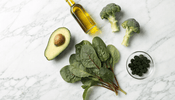
Chlorella slots easily onto a lectin-restricted plate of greens, healthy fats and cruciferous vegetables.
If you have spent time in lectin-free circles, you know the recurring question: is this food on the list or off it? Chlorella comes up often, partly because it is a plant-like organism and partly because the framework casts a wide net across plant foods.
The short version is that chlorella sits on the allowed side for most people eating this way. The longer version is worth your time, because the reason has less to do with lectins than you might expect.
Lectins are a large family of proteins that bind to specific carbohydrate structures. They are everywhere in nature, in plants, animals, fungi and bacteria, and the great majority of the ones you eat pass through you without incident. Your own body makes lectins too.
A small number are genuinely troublesome in food. Phytohaemagglutinin, concentrated in raw and undercooked kidney beans, is the classic case and can cause acute digestive upset at high doses. Wheat germ agglutinin has been studied for its ability to bind to intestinal cell surfaces. Raw legumes, wheat and uncooked nightshades carry the heaviest load.
Preparation matters enormously. Boiling, pressure cooking, soaking, sprouting and fermenting all reduce lectin activity substantially, which is why traditional food cultures built those steps into their recipes long before anyone named the protein.
Chlorella is a single-celled freshwater green algae, not a seed, a grain or a legume. It does not appear on lectin-restriction food lists, and it is not a recognized dietary source of the agglutinins that framework is concerned with.
Researchers have described lectin-like carbohydrate-binding proteins in various algae and cyanobacteria. Almost all of that work is biochemistry rather than nutrition: these proteins get isolated as laboratory reagents for studying cell surfaces and viral binding. Finding a carbohydrate-binding protein inside an organism is a very different thing from that organism being a meaningful dietary lectin exposure on your plate.
What chlorella does deliver in quantity is protein, and an unusual kind of it. Our deeper look at whether chlorella counts as a complete protein walks through the amino acid profile, roughly 60 percent protein by dry weight with all nine essential amino acids present.
Generally, yes. Chlorella and spirulina are usually treated as acceptable, and many people on lectin-restricted plans reach for algae specifically because it helps fill the nutrient gaps left by cutting out grains and legumes.
One honest caveat about the framework itself: lectin-free eating is a popular dietary model rather than established nutrition science. The acute toxicity of raw legume lectins is well documented. The broader claim that ordinary lectins from properly cooked foods drive chronic disease is not settled, and mainstream nutrition bodies have not adopted it. Many people report feeling better eating this way, which is reasonable to act on, but worth holding loosely.
If you are stacking restrictions, chlorella tends to cooperate. A serving carries almost no usable carbohydrate, which is also why it passes muster for people asking whether chlorella is keto friendly.
Here is what actually determines whether you absorb anything from chlorella, and it is not lectins. Chlorella has a tough cellulose-based cell wall that human digestive enzymes cannot open. Left intact, that wall keeps most of the nutrients sealed inside where your gut never reaches them.
Processing method therefore matters far more than any lectin question. Broken cell wall chlorella has been mechanically cracked so the contents become bioavailable, and the cracking technique is not a trivial detail: some methods use chemicals or high heat that damage the nutrients they are meant to release. Sound-wave cracking opens the wall while leaving the cell contents intact.
That same indigestible wall is the part most often examined for binding behavior in the digestive tract, which is one reason chlorella and gut health shows up so frequently in the research. The wall functions as insoluble fiber, which is ordinary and expected, not a lectin effect.
The table below groups common foods by how the lectin-free framework ranks them. Treat these as directional categories rather than measured values, since real lectin content shifts with variety, ripeness and preparation.
| Food | Rough dietary lectin load | What drives the ranking |
|---|---|---|
| Raw or undercooked kidney beans | Very high | Phytohaemagglutinin; full boiling required |
| Wheat, wheat bran, whole wheat flour | High | Wheat germ agglutinin, the framework's main target |
| Raw nightshades (tomato skin, peppers) | Moderate | Peeling and deseeding are commonly advised |
| Pressure-cooked lentils and chickpeas | Low | Pressure cooking cuts measurable activity sharply |
| Leafy greens, broccoli, avocado, olive oil | Very low | Staples on nearly every lectin-free plan |
| Chlorella and spirulina | Not a recognized source | Single-celled algae, not a seed or legume |
Most people do best starting small and building. A full serving of RECOVERYbits is 30 tablets, and beginning with 5 to 10 and working upward over 2 to 3 weeks is the gentler route. Take them with a full glass of water, before or between meals.
If you track your reactions carefully, you already have the right instinct: add one new thing at a time and give it a week before judging. Any digestive adjustment in the first few days usually reflects the fiber load from the cell wall rather than anything lectin-related. You can read the full sourcing and cracking details on the RECOVERYbits chlorella tablets page.
RECOVERYbits are pure sound-wave cracked chlorella tablets. One ingredient, no fillers, no binders, no grains or legumes anywhere in the bag.
Shop RECOVERYbits Chlorella →Short, research-grounded emails on algae nutrition, plus early access to new guides.
Join the list →Chlorella is generally treated as acceptable. It is a single-celled algae rather than a seed, grain or legume, so it does not appear on the foods-to-avoid lists that define that plan. If you follow a specific practitioner's version, check their list directly.
There is no good evidence that they do at dietary amounts. The lectin-like proteins described in algae were characterized as laboratory tools for studying carbohydrate binding, not as food components present in quantities that affect digestion.
Processing is mostly about the cell wall, not lectins. Cracking the wall makes nutrients bioavailable. Since chlorella is not a notable dietary lectin source to begin with, there is nothing meaningful for cooking or cracking to reduce.
Some people notice mild gas or fullness in the first few days, which is typically the insoluble fiber from the cell wall rather than a lectin response. Starting at 5 to 10 tablets and increasing gradually usually settles it.
Both are generally considered compatible. Chlorella is the usual choice for fiber and detoxification support, while spirulina leans toward energy and protein density. Many people rotate or use both, and neither is a seed or legume.


