


What Is Broken Cell Wall Chlorella and Why Does It Matter?
, by The ENERGYbits® Team, 9 min reading time
, by The ENERGYbits® Team, 9 min reading time
Chlorella's tough cellulose cell wall keeps its nutrients locked inside. Here is what broken cell wall chlorella means, how that wall is opened, and why it changes how much your body can actually absorb.
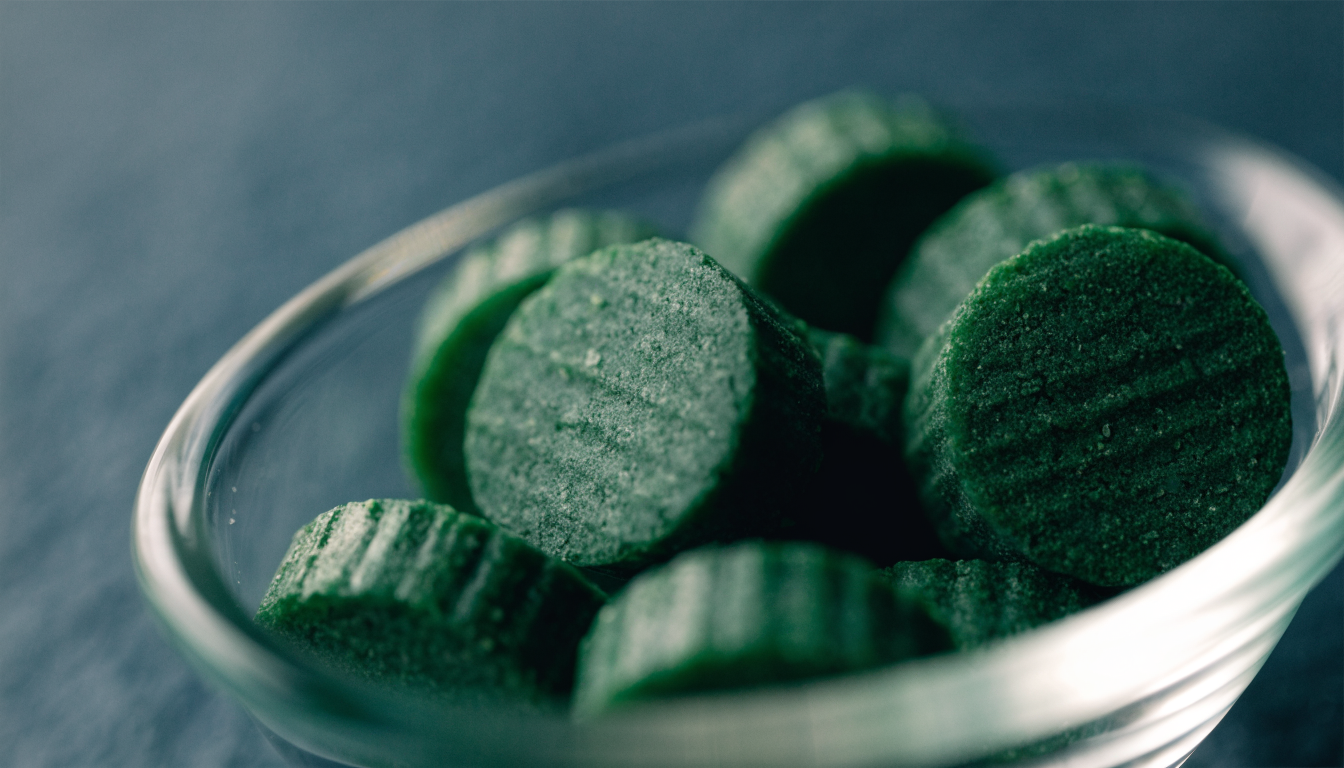
The wall around each chlorella cell decides how much of the good stuff you actually absorb.
If you have shopped for chlorella, you have seen the phrase on nearly every label: broken cell wall. It sounds technical, and it would be easy to file it away as marketing language. It is not. It is the one processing detail that decides whether the nutrients inside a chlorella tablet reach you or simply pass through.
Chlorella is a single-celled freshwater green algae, and like most plant cells it protects itself with a rigid outer wall. In chlorella's case that wall is built largely from cellulose along with a remarkably tough fibrous material. Think of it as armor. It is what let chlorella survive in ponds and lakes for an extraordinarily long stretch of evolutionary history, shielding the cell from predators, sunlight, and rough water conditions.
The problem is that humans do not produce cellulase, the enzyme needed to digest cellulose. So when you swallow whole, untreated chlorella, your digestive system runs into a wall it has no tool to open. The protein, chlorophyll, iron, and B vitamins packed inside stay largely sealed away.
Mostly, no. Broken cell wall, cracked cell wall, and pulverized are three ways of describing the same goal: opening the wall so the contents inside can be absorbed. The wording varies by brand and by region, not by biology.
What genuinely differs is the method used to open the wall, and whether the delicate nutrients inside survived the process. That is the question worth asking.
There are two broad families of methods: mechanical and chemical or heat-based. Mechanical methods use physical force alone. Chemical and high-heat methods are faster and cheaper at scale, but heat-sensitive compounds like chlorophyll and some B vitamins may not come through intact.
| Method | How it works | What to know |
|---|---|---|
| Sound wave (sonication) | High-frequency vibration fractures the wall | Mechanical, no solvents, low heat |
| Pressure release | Cells pass through a sudden pressure drop that splits the wall | Mechanical and gentle on nutrients |
| Bead or ball milling | Cells ground against small beads | Mechanical, though friction can add heat |
| Chemical or enzyme treatment | Solvents or added enzymes dissolve the wall | Raises questions about residues |
| High heat | Heat ruptures the cell | May degrade chlorophyll and B vitamins |
Bioavailability simply means how much of a nutrient your body can actually take in and use. With the wall intact, most of chlorella's contents are physically inaccessible during digestion. Once the wall is fractured, those contents are released where your gut can reach them, and digestibility rises substantially.
That matters most for the compounds people seek chlorella out for in the first place: its complete protein, its chlorophyll, its iron, and the cluster of nucleic acids and peptides known as Chlorella Growth Factor. None of it does much good sealed inside a capsule of cellulose.
This is the most common worry, and the answer is reassuring. Breaking the wall does not remove it. The fragments stay right there in the tablet, and that fibrous material is exactly the part researchers have studied for its ability to bind unwanted compounds as food moves through the digestive tract. Cracking it open is closer to unlocking a box than throwing the box away.
That same fiber is also why chlorella is often discussed in the context of digestive and gut health. You may support both goals at once: better absorption of what is inside, plus the fiber benefits of the wall itself.
| Feature | Broken cell wall chlorella | Intact cell wall chlorella |
|---|---|---|
| Nutrient access | High, contents released during digestion | Limited, wall stays mostly closed |
| Human digestibility | Substantially improved | Poor, humans lack cellulase |
| Fiber present | Yes, wall fragments remain | Yes |
| Binding of unwanted compounds | Retained | Retained |
| Typical label wording | Broken, cracked, or pulverized | Often unspecified |
RECOVERYbits® is pure chlorella with a cracked cell wall, nothing added and nothing filled. Third-party tested, one ingredient, and no binders or flow agents.
Shop RECOVERYbits® →A few practical checks. First, the label should state clearly that the cell wall is broken, cracked, or pulverized. If it says nothing at all, ask. Second, look for the method. Brands that use mechanical cracking usually say so, because it is a point of pride. Third, check the ingredient list: pure chlorella should be one ingredient, with no fillers, binders, or flow agents. Fourth, look for third-party testing for heavy metals and purity, since algae reflects the water it grew in.
Once you have the right product, the remaining questions are simple ones of routine: how much to take each day, and when to take it.
Join our newsletter for a simple day-by-day plan to build your algae habit, plus subscriber-only offers.
Send me the guide →Yes. Broken, cracked, and pulverized all describe the same outcome: the cellulose wall has been opened so the nutrients inside can be absorbed. The terms are marketing variations, not different biology. What differs is the method used.
No. Breaking the wall opens it rather than removing it. The fibrous wall fragments remain in the tablet, so the binding and fiber properties are retained while the nutrients inside become available.
For most healthy adults, chlorella is generally well tolerated as a daily food. We cover this in more detail in our guide to taking chlorella daily. If you are pregnant, nursing, or taking medication, check with your healthcare provider first.
The label or product page should say so directly, and ideally name the method, such as sound-wave or pressure cracking. If a brand does not mention the cell wall anywhere, that is worth asking about before you buy.


