



Is Chlorella Good for Gut Health?
, by The ENERGYbits® Team, 6 min reading time
, by The ENERGYbits® Team, 6 min reading time
Chlorella brings fiber, chlorophyll, and a tough cell wall that may support digestion, regularity, and a balanced microbiome. Learn how to start slow and take it with meals.
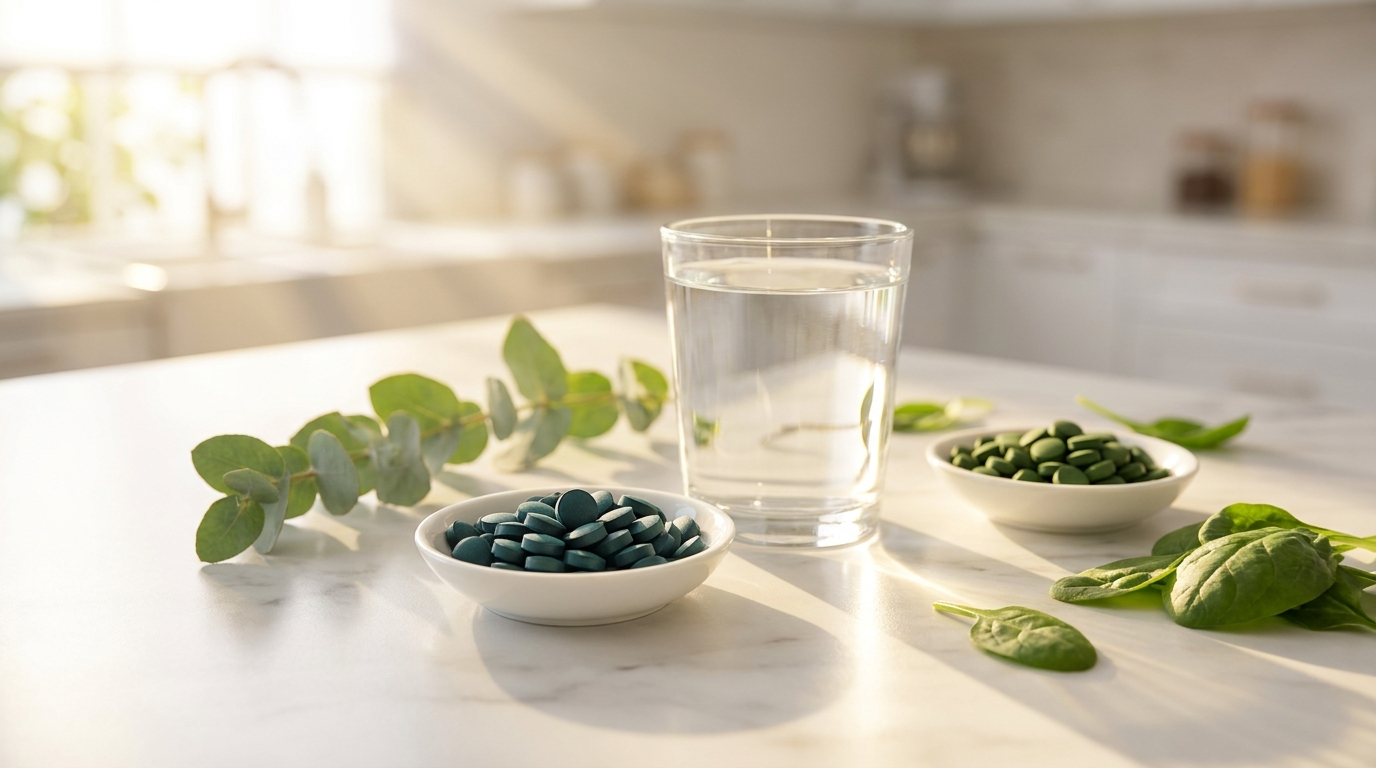
Small daily habits, like a green algae routine, may help your digestion feel more steady.
Chlorella is a single-celled green algae, and its whole-food makeup gives your gut several things to work with at once. The plant fiber in its cell wall adds gentle bulk that may support regularity and more comfortable, predictable trips to the bathroom. Because chlorella is a food rather than an isolated extract, the fiber arrives alongside protein, vitamins, and minerals, which is part of why so many people fold it into a broader wellness routine. If you enjoy the idea of leaning on green nutrition, our guide on how it is good to be green with chlorophyll is a natural next read.
Your gut is home to trillions of bacteria, and those microbes largely feed on the fiber you eat. The fiber in chlorella may act as a food source that friendly bacteria can ferment, which is the kind of activity researchers connect to a balanced microbiome. A steadier microbiome is often linked with smoother digestion and a settled feeling after meals. Many readers pair chlorella with seasonal resets, and our spring detox overview explains how a green, fiber-forward routine can fit that goal without anything harsh.
Chlorella has a tough, fibrous cell wall, and that structure is part of what makes it interesting for gut support. The cell wall may help bind certain unwanted compounds in the digestive tract so they can move through and out, rather than lingering. People often talk about this quality when their digestion feels sluggish after indulgent stretches. If that sounds familiar, you may enjoy our lighthearted look at why some fans reach for chlorella after a big night, in chlorella and hangovers. Supporting the gut lining and the traffic moving through it is one reason chlorella earns a spot in so many daily routines.
Chlorella is not meant to replace vegetables, oats, or beans. It is a concentrated green addition that stacks nicely alongside them. The table below lines up a few familiar fiber sources against chlorella so you can see where it fits.
| Source | What it brings | How it may help the gut |
|---|---|---|
| Chlorella | Fiber plus chlorophyll, protein, and a fibrous cell wall | May support regularity, feed friendly bacteria, and bind unwanted compounds |
| Oats | Soluble beta-glucan fiber | May support softer, easier stools and steady digestion |
| Beans and lentils | Mixed soluble and insoluble fiber | May feed the microbiome and add bulk |
| Leafy greens | Insoluble fiber and chlorophyll | May support regularity and add plant volume |
| Chia and flax | Soluble fiber and healthy fats | May support gel-like bulk and smoother transit |
Because chlorella is fiber-rich, the smartest move is to start low and go slow. A small daily serving lets your digestion adjust and helps you sidestep the temporary bloating that a big first dose can bring. Take chlorella with meals so it works alongside the food already in your stomach, and drink plenty of water to help the fiber do its job. Over a week or two you can build up to your preferred amount. If you like a structured approach, our fast recovery routine shows how consistency, not intensity, is what makes algae habits stick.
RECOVERYbits chlorella is pure, cracked-cell-wall algae with no fillers, so you get fiber, chlorophyll, and whole-food nutrition in every tab.
Shop RECOVERYbits Chlorella →A simple day-by-day plan to ease chlorella into your routine without the guesswork.
Send me the guide →Chlorella may support gut health because it provides fiber, chlorophyll, and a fibrous cell wall. These may support regularity, feed friendly bacteria in the microbiome, and help bind unwanted compounds in the digestive tract. Start small and take it with meals for the gentlest experience.
A large first serving can cause temporary bloating because chlorella is fiber-rich. The simple fix is to start with a small amount, take it with meals, drink plenty of water, and increase slowly over a week or two so your digestion has time to adjust.
Many people find that taking chlorella with meals works well, since it can support digestion alongside the food you are already eating. Consistency matters more than exact timing, so pick a mealtime you will remember and stick with it daily.
The plant fiber in chlorella adds gentle bulk that may support regularity and more comfortable, predictable digestion. Pairing it with water and a fiber-rich diet of vegetables, beans, and whole grains gives your gut the best foundation.


