


Does Spirulina Contain Omega-3 Fatty Acids?
, by The ENERGYbits® Team, 10 min reading time
, by The ENERGYbits® Team, 10 min reading time
Spirulina is only about 5 to 8 percent fat, and its standout fatty acid is GLA, an omega-6, not an omega-3. Here is why people confuse it with algae oil DHA supplements, and what to take instead.
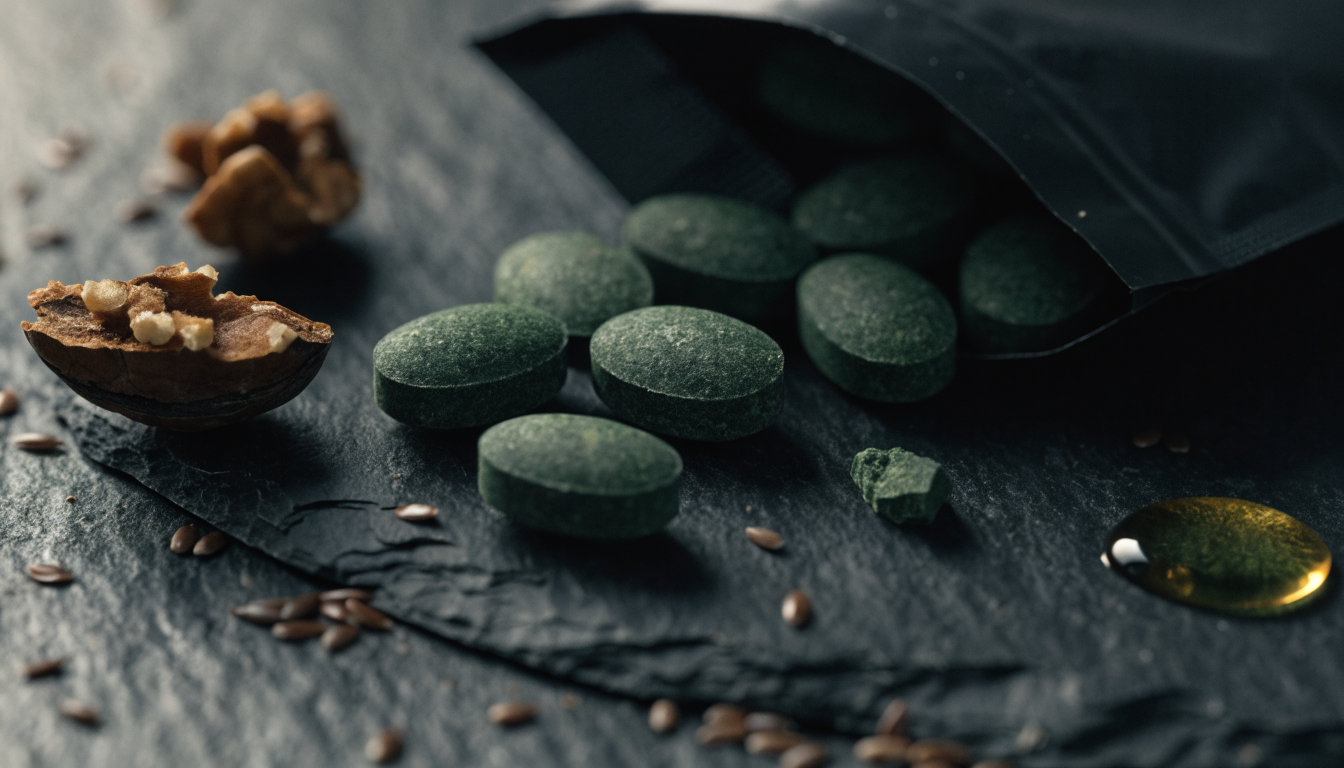
Spirulina is a remarkable food, but the omega-3 headline belongs to a different algae entirely.
This question shows up constantly, and we understand why. Spirulina is algae. Some of the best vegan omega-3 supplements on the shelf are labeled "algae oil." It is a perfectly reasonable leap to assume the two are the same thing. They are not, and the difference matters enough that we would rather lose a sale than let someone take spirulina thinking it covers their omega-3 needs.
Not much. Spirulina is a protein food first and foremost, running roughly 60 to 70 percent protein by dry weight, which is why we spend so much time on questions like how much protein is in spirulina. Total fat lands somewhere around 5 to 8 percent, depending on the strain and growing conditions.
Run the arithmetic on a typical 3 gram serving and you are looking at roughly 0.15 to 0.25 grams of total fat. That is all fatty acids combined. Even if every last molecule of it were omega-3, which it is not, the number would be too small to move your intake in any meaningful way. Spirulina is simply not a fat source, and it was never designed to be one.
Gamma-linolenic acid, usually shortened to GLA. It typically makes up a substantial share of spirulina's fat content, and it is genuinely uncommon in the food supply. Here is the part that surprises people: GLA is an omega-6, not an omega-3.
That sounds like a demerit given how often omega-6 fats are cast as the villain in modern diets. The criticism is aimed mostly at linoleic acid from refined seed oils, which we eat in enormous quantity. GLA is a different animal. It sits one step further down the metabolic pathway and is a precursor to dihomo-gamma-linolenic acid, which the body can convert into series-1 prostaglandins, signaling compounds associated with a calmer inflammatory response rather than a heightened one. Research suggests this is why GLA gets studied at all. Outside of evening primrose and borage oil, it is hard to find in the diet, and we go deeper on that in our piece on whether spirulina reduces inflammation.
Because the word "algae" is doing far too much work. Spirulina is a cyanobacterium, a blue-green organism grown in open freshwater ponds and harvested for its protein and pigment. Vegan DHA supplements labeled "algae oil" come from marine microalgae such as Schizochytrium, grown in closed fermentation tanks specifically because those organisms accumulate large amounts of DHA in their cells.
Different organism. Different growing method. Different reason for existing. Calling both of them "algae" is a bit like calling both a mushroom and a slice of bread "fungus adjacent" and expecting the same nutrition label. If a product promises meaningful DHA, check what species it came from, because that single line tells you almost everything.
Here is the honest side-by-side. Notice that spirulina is not competing in this category at all, it is playing a different sport.
| Source | Fat content and primary fatty acid | What it is good for |
|---|---|---|
| Spirulina tablets | About 5 to 8 percent fat, mostly GLA, an omega-6 | Protein, iron, B vitamins, phycocyanin, not omega-3 |
| Algal oil (Schizochytrium) | Nearly all fat, concentrated DHA with some EPA | The vegan route to preformed DHA and EPA |
| Ground flaxseed | About 42 percent fat, dominated by ALA | Plant omega-3 plus fiber, with poor ALA to DHA conversion |
| Walnuts and chia | High fat, ALA dominant | Easy whole-food ALA you can add to meals |
| Fatty fish | Moderate fat, preformed EPA and DHA | The most efficient dietary source of EPA and DHA |
Yes, in trace amounts. Alpha-linolenic acid is the plant form of omega-3, and spirulina contains a small quantity of it alongside the GLA. The problem is twofold. The absolute amount is tiny given how little fat is in the food to begin with, and ALA converts to EPA and DHA at a famously poor rate in humans, often cited in the low single-digit percentages and lower still for DHA.
So the technically correct answer to the headline question is "yes, a little." The practically useful answer is that you should not count spirulina toward your omega-3 intake. Both statements are true, and only one of them is worth acting on.
Pair them. That is the whole answer, and it is not complicated. Take an algal DHA oil if you eat plant-based, or eat fatty fish two or three times a week if you do not. Add flax, chia, or walnuts to breakfast for background ALA. Then take spirulina for the reasons spirulina is actually good: it is a complete protein, a plant source of iron, and a carrier of phycocyanin, the blue pigment behind most of the antioxidant research.
One caution worth naming, since this is a precision article. Spirulina is also frequently miscredited as a vitamin B12 source, and that claim has its own complications, which we lay out in our article on whether spirulina contains B12. Two nutrients, two myths, same lesson: check the actual data before you build a diet around a marketing line.
ENERGYbits Spirulina is a single ingredient tablet, organically grown, with no fillers or binders. Protein, iron, B vitamins, and phycocyanin in a form you can carry anywhere.
Shop ENERGYbits SpirulinaA little, though pigment and protein drive most of it. Because spirulina carries so little fat, it does not go rancid the way an oily seed or fish oil capsule can, which is one quiet advantage of a low-fat food. What you notice instead is a savory, slightly oceanic character, and we break that down in detail in our guide to what spirulina tastes like. If you have ever opened a fish oil bottle past its prime, you will appreciate the trade.
Join our newsletter for plain-language guides on spirulina, chlorella, and everyday wellness.
SubscribeOnly in trace amounts. Spirulina is roughly 5 to 8 percent fat, and its dominant fatty acid is gamma-linolenic acid, an omega-6. It contains a small amount of alpha-linolenic acid and essentially no EPA or DHA. It should not be counted as an omega-3 source in your diet.
No. Spirulina is a blue-green cyanobacterium grown in freshwater ponds for its protein and pigment. Vegan omega-3 supplements labeled algae oil come from marine microalgae such as Schizochytrium, grown in tanks specifically to accumulate DHA. They are different organisms grown for completely different purposes.
Not all omega-6 fats behave alike. GLA is rare in the diet, found mainly in evening primrose and borage oil, and it is a precursor in the series-1 prostaglandin pathway, which is associated with a calmer inflammatory response. That is different from the linoleic acid most people already consume in large amounts.
Many people do, and the two complement each other well. Use an algal DHA oil or fatty fish for EPA and DHA, and take spirulina for its protein, iron, B vitamins, and phycocyanin. If you take medication or manage a health condition, check with your healthcare provider first.


