



Is Spirulina Gluten Free? Allergens and Purity Explained
, by The ENERGYbits® Team, 7 min reading time
, by The ENERGYbits® Team, 7 min reading time
Pure spirulina is naturally gluten free because algae has no botanical relationship to wheat, barley, rye or oats. The real risk comes from added fillers and shared equipment, not from the algae itself.
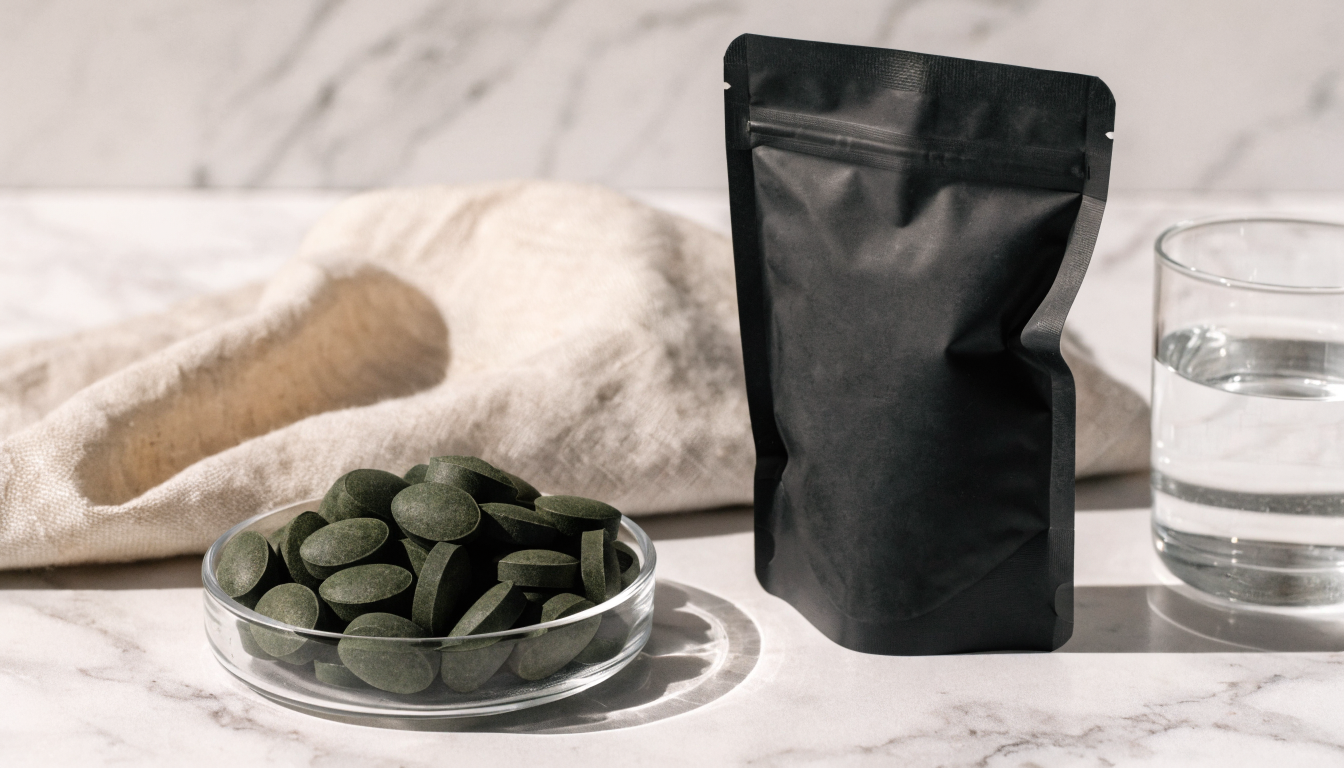
Pure algae has no relationship to wheat, so the gluten question is really a question about manufacturing.
Gluten questions land in our inbox most weeks, usually from someone who has spent years reading labels and has learned not to take a front of package claim at face value. The short answer is reassuring. Spirulina contains no gluten. The longer answer is worth a few minutes, because in supplements the risk rarely comes from the headline ingredient.
Yes. Spirulina is a microscopic single celled aquatic organism, a blue green algae that grows in warm alkaline water. Gluten is a protein found in wheat, barley, rye, and in oats handled alongside those grains. Spirulina is not a grain and is not botanically related to one, so there is no biological route by which gluten could form inside an algae cell.
Chlorella, the green freshwater algae, sits in exactly the same position. Different organism, same answer. Neither one produces gluten proteins, so pure algae in any form, tablet, powder or flake, starts out gluten free.
Almost always from what gets added during manufacturing. Most supplement tablets are not a single ingredient. To press a loose powder into a tablet that holds its shape, makers commonly add binders, fillers, flow agents and coatings, and some of those excipients are wheat derived. Maltodextrin is the classic example, since it can be made from corn, rice, potato or wheat depending on the supplier, and the label rarely says which. Dextrin and modified food starch carry the same ambiguity.
The second risk is cross contamination. A tableting line that runs a wheat based protein blend in the morning and an algae tablet in the afternoon can transfer trace gluten even with cleaning protocols in place. It is the same reasoning people apply to shared facility oats.
When a tablet contains one ingredient and nothing else, most of the question disappears. There is no binder to trace, no flow agent to research, no filler with an ambiguous plant source. ENERGYbits Spirulina is pressed algae and nothing more, so the ingredient panel is one line long.
If you have celiac disease or non celiac gluten sensitivity, that shrinks the surface area where a problem could hide and shortens the list of questions you need to ask a manufacturer. Format matters here too, which we walk through in our comparison of spirulina tablets and powder.
| Allergen | Present in pure spirulina? | Where it can sneak in |
|---|---|---|
| Gluten | No | Wheat derived binders, maltodextrin, shared equipment |
| Soy | No | Soy lecithin used as a flow agent |
| Dairy | No | Lactose fillers in blended formulas |
| Nuts | No | Shared facilities running nut based products |
| Shellfish | No | Marine blends that combine algae with other sea ingredients |
| Added sugar | No | Sweetened coatings and flavored chewables |
ENERGYbits Spirulina is a single ingredient tablet. No binders, no fillers, no flow agents, no sugar. Just organically grown spirulina, so the label answers most allergen questions on its own.
Shop ENERGYbits SpirulinaFour things. The full ingredient list, including anything filed under other ingredients. A specific allergen statement that describes the facility's practices rather than a vague line about shared equipment. Third party testing, which speaks to purity in general and is worth reading alongside our article on whether spirulina contains heavy metals. And a certificate of analysis, which a reputable company will send on request.
Certified gluten free labeling is a helpful signal, though certification is voluntary and its absence does not by itself mean a product contains gluten. If you have celiac disease, contact the manufacturer directly and confirm what you learn with your clinician.
Pure spirulina contains none of the major allergens. It is not a legume, so there is no soy. It is not an animal product, so no dairy and no shellfish, which matters because algae is sometimes lumped in with marine ingredients. It is not a nut, and it carries no added sugar.
Two things are worth flagging. Algae contains naturally occurring iodine, welcome for most people but relevant if you have thyroid disease and have been told to watch your intake. Spirulina also contains phenylalanine, an amino acid present in every complete protein, which matters only for people with phenylketonuria. Our guide to spirulina side effects covers tolerance in more detail, and if you are stacking products, read how spirulina fits with other supplements first.
Join our newsletter for plain-language guides on spirulina, chlorella, and everyday wellness.
SubscribeYes. Pure spirulina is naturally gluten free. It is an aquatic algae with no botanical relationship to wheat, barley, rye or oats, so the algae itself cannot contain gluten proteins.
It can be, though not from the algae. Gluten can appear through wheat derived fillers and binders added during tableting, or through cross contamination on shared equipment. Single ingredient tablets remove most of that risk.
Pure single ingredient spirulina contains no gluten, but anyone with celiac disease should confirm ingredients, allergen statements and facility practices with the manufacturer, and discuss any new supplement with their clinician.
No. Spirulina is not a legume, an animal product or a nut, so pure spirulina contains no soy, dairy, shellfish or tree nuts, and no added sugar. Check the label for anything added during manufacturing.


