


Spirulina Tablets vs Powder: Which Is Better?
, by The ENERGYbits® Team, 7 min reading time
, by The ENERGYbits® Team, 7 min reading time
Spirulina tablets and powder come from the same algae, but they behave very differently in real life. Here is how they compare on taste, dosing, purity, portability, and cost.
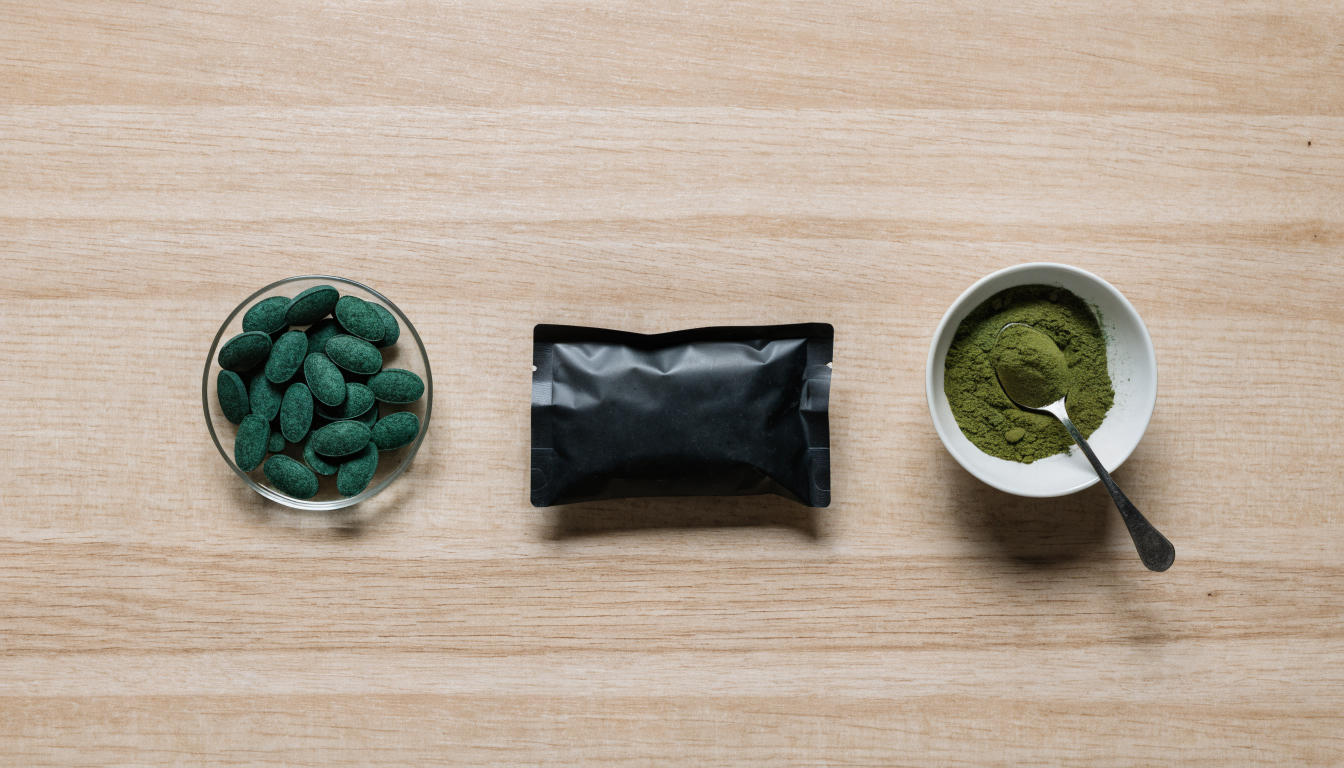
Tablets and powder start as the same algae, but they fit into daily life very differently.
Walk down any supplement aisle and you will find spirulina sold two ways: as a bright green powder in a tub, or as small pressed tablets in a pouch. Shoppers often assume the powder must be the more natural option and the tablets must be the processed one. In practice, it is usually the other way around. Here is what actually separates the two formats, and how to pick the one you will genuinely stick with.
Spirulina is harvested, dried, and milled into a fine powder. That powder is the raw material for both formats. To make a tablet, the same powder is compressed under pressure into a small disc. Nothing is cooked, nothing is stripped out, and in a clean product nothing is added. A pure spirulina tablet is simply powder that has been squeezed into a shape you can swallow.
Powders are where things get less predictable. Many green powders on the shelf are blends: spirulina mixed with wheatgrass, barley grass, flavorings, sweeteners, fibers, or maltodextrin to soften the taste. Some tubs contain far less actual spirulina than the front of the label suggests. Read the ingredient panel rather than the marketing copy.
This is the deciding factor for most people. Spirulina powder has a strong, oceanic, grassy flavor that carries through almost anything you mix it into. It also turns smoothies dark green and leaves a stubborn film on blenders, counters, and teeth. If you are curious before you commit, our honest guide to what spirulina tastes like walks through it.
Tablets sidestep the issue entirely. You swallow them with water and the flavor never enters the picture. For anyone who wants the nutrition without turning breakfast into a project, this alone settles the question.
A tablet is a fixed, known amount. ENERGYbits tablets are 250 mg each, so counting tablets is the same as measuring grams. Thirty tablets is seven and a half grams, and no scale is required.
Powder is measured by scoop, and scoops vary. A heaped teaspoon and a level teaspoon can differ by fifty percent or more, which makes it hard to know what you actually took on a given day. If you are building a consistent routine, read our daily spirulina dosage guide first, then choose the format that lets you hit that number reliably.
| Factor | Tablets | Powder |
|---|---|---|
| Taste | Bypassed completely, swallowed with water | Strong and grassy, carries through most recipes |
| Dosing precision | Exact, 250 mg per tablet | Varies by scoop and how it is packed |
| Convenience | No prep, no cleanup | Needs a liquid, a scoop, and a rinse |
| Filler risk | Low with a pure tablet, higher if binders are used | Often blended with grasses, fibers, or sweeteners |
| Travel | Pocket, purse, or carry-on friendly | Tub and scoop, easy to spill |
| Cost per gram | Slightly higher | Usually lower |
Because spirulina is grown in water, quality depends entirely on where and how it is farmed. In either format, look for third-party testing for heavy metals and microcystins. ENERGYbits spirulina tablets are pure spirulina with zero fillers, binders, or excipients, and every batch is third-party tested. Good powders exist, but blended tubs make it harder to know what fraction of each scoop is actually algae. If you are new to algae and want to know what to expect in the first few weeks, see our notes on spirulina side effects.
ENERGYbits Spirulina tablets are one ingredient: spirulina, pressed and third-party tested, with no fillers and no flavor to work around.
Shop ENERGYbits SpirulinaPowder needs a tub, a scoop, a liquid, and something to stir with. That works fine at your own kitchen counter and poorly everywhere else. Tablets go in a pocket, a purse, or a carry-on, and can be taken at a desk or on a plane with nothing but water. Timing matters more than format for most people, and our guide to the best time to take spirulina and chlorella covers when to fit them in.
Per gram of raw algae, powder is usually cheaper. Compression, testing, and packaging add cost to tablets. But cost per gram only matters if you actually take the product. A cheaper tub that sits unopened because you dislike the taste is far more expensive than tablets you take every morning. Compare price per gram, then weigh it honestly against how likely you are to use it daily.
Join our newsletter for plain-language guides on spirulina, chlorella, and everyday wellness.
SubscribeNeither is nutritionally superior, since tablets are simply compressed powder. Tablets win on taste, portability, and dosing precision, while powder wins on price per gram and blends easily into recipes. Most people stay consistent longer with tablets.
They can, depending on the brand, because many manufacturers use binders or flow agents to speed up production. ENERGYbits tablets are pure spirulina with no fillers, binders, or excipients, and every batch is third-party tested for heavy metals and microcystins.
A level teaspoon of spirulina powder is roughly 3 grams. ENERGYbits tablets are 250 mg each, so about 12 tablets match one teaspoon. A full daily serving is 30 tablets, which comes to 7.5 grams.
Yes. A pure spirulina tablet breaks apart in the stomach and returns to the same powder it started as. Spirulina has a soft cell wall, so no special processing is needed for its nutrients to become available.


