


Spirulina vs Beef Liver: Which Is More Nutrient Dense?
, by The ENERGYbits® Team, 10 min reading time
, by The ENERGYbits® Team, 10 min reading time
Beef liver and spirulina are both nutrient density champions, but in different columns. Here is an honest look at where each one wins and how to choose.
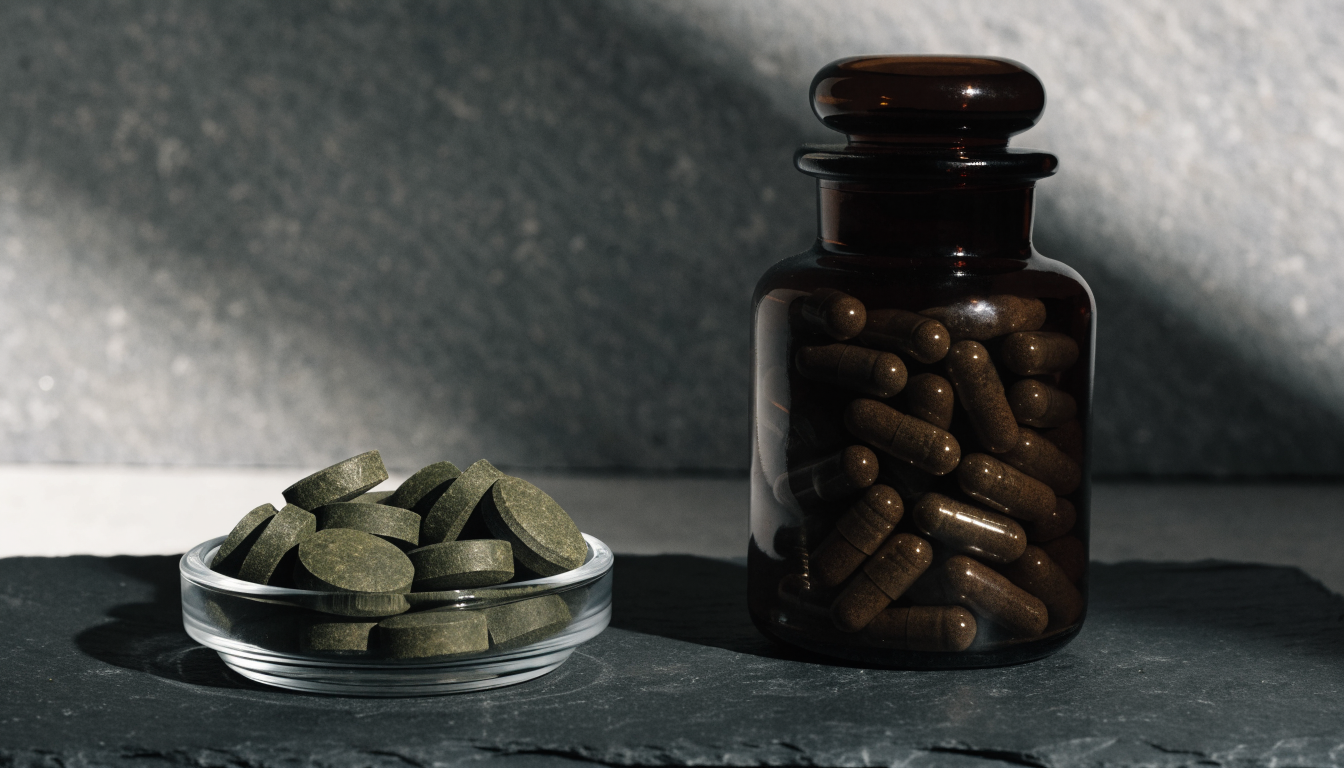
Two contenders for the title of most nutrient dense food, sitting side by side.
Search for the most nutrient dense food on earth and you land in one of two camps. One says beef liver, fresh or desiccated, so concentrated that a small serving outpaces most multivitamins. The other says spirulina, a blue green algae that is roughly two thirds protein by dry weight.
Both camps are right. The argument happens because each side is measuring something different. So let us set the marketing aside and look at where each food genuinely leads and where it falls short.
Nutrient density sounds precise, but it is two separate questions wearing one name. The first is how many micronutrients a food delivers per serving. That is the classic definition, the one that kept liver atop ranking lists for decades. Liver is the organ that stores nutrients, so eating it means eating a storage depot.
The second question is how much nutrition you get per calorie, and per gram you have to get down. That is where algae competes. A gram of spirulina is mostly protein and pigment, with little fat and no cholesterol. Rank by that yardstick and the order flips.
Four columns, and they are not close. Liver contains true vitamin B12 in a form your body recognizes and absorbs, often well beyond a day's worth in one modest serving. It also carries preformed vitamin A as retinol, which needs no conversion, unlike the beta carotene in plants.
Liver is also one of the richest dietary sources of copper and choline, two nutrients most people never think about and many diets run thin on. And its iron is heme iron, the form bound up in animal tissue that your gut takes in far more efficiently than the plant version, which is worth understanding if you are considering algae because your iron runs low.
If you eat animal products and your goal is filling specific micronutrient gaps, liver is hard to beat. That is worth saying plainly, even here, because the honest comparison is the useful one.
Start with protein. Spirulina is roughly 60 to 70 percent protein by dry weight, a share almost nothing else in the food supply matches, and it contains all nine essential amino acids, which is why people keep asking whether it counts as a complete protein. Serving sizes are small, so the absolute grams are modest, and it helps to know how much protein one serving really provides before you set expectations.
Then there are the pigments. Phycocyanin, the blue pigment spirulina is named for, has no equivalent in liver, and neither does its chlorophyll. Spirulina also supplies GLA, a fatty acid uncommon in whole foods. Research suggests these compounds are associated with antioxidant activity, though the science is still developing.
The practical wins matter just as much. Spirulina has zero cholesterol and negligible fat. It needs no cooking and no refrigeration. It has no upper-limit problem, while liver is so high in retinol that eating large amounts regularly carries a genuine vitamin A concern, which is why many providers urge caution in pregnancy. Spirulina also suits vegans and vegetarians, who were never in the market for liver anyway.
Here is how the two compare on the factors people actually weigh.
| Factor | Beef liver | Spirulina |
|---|---|---|
| Protein (dry weight) | About 25 to 30 percent | About 60 to 70 percent |
| Iron type | Heme, absorbed readily | Non-heme, helped by vitamin C |
| Vitamin B12 | True B12, very high | Largely pseudo-B12, not reliable |
| Vitamin A | Preformed retinol, very high | Carotenoids only, no retinol |
| Antioxidant pigments | No direct equivalent | Phycocyanin and chlorophyll |
| Calories per serving | Moderate, contains cholesterol | Very low, negligible fat |
| Taste and prep | Strong flavor, cooking or capsules | Mild, tablets swallowed whole |
| Vegan suitability | No | Yes |
| Upper-limit concerns | Retinol and copper, caution in pregnancy | No known retinol ceiling |
This is the caveat algae marketing tends to skip, so here it is straight. Lab tests do detect B12 in spirulina, but most of it appears to be pseudo-vitamin B12, an analogue humans cannot reliably use and which may even compete with the real form. We covered whether spirulina contains usable B12 separately. Treat spirulina as a protein and pigment food, not a B12 plan.
Iron follows a similar pattern with a friendlier ending. Spirulina does contain iron, but in the non-heme form, which the body absorbs less readily than liver's heme iron. The workaround is simple and well established: take it with a source of vitamin C, and keep coffee or tea an hour away, since both are associated with reduced non-heme absorption.
ENERGYbits tablets are 100 percent spirulina, a single ingredient with no fillers, binders, or additives. They are grown in a controlled environment and tested for purity, so a serving takes seconds.
Shop ENERGYbits SpirulinaStart with whether you eat animal products. If you do not, the comparison ends there and spirulina is your answer. If you do, these two are complements rather than rivals. A common pattern is liver once or twice a week for retinol, B12, and copper, with spirulina daily for protein and pigments.
Then weigh what decides whether a habit survives past week two. Cost per serving lands in a similar range for quality versions of both. Palatability is not close, since most people find liver's flavor and smell a real obstacle while tablets are simply swallowed. Purity testing matters for both, because liver concentrates what the animal was exposed to and algae reflects the water it grew in.
If you are starting spirulina, most people begin around 1 to 3 grams a day with water, ideally alongside something containing vitamin C. Give it a few weeks before you judge it, and raise the amount gradually. If you are pregnant, nursing, taking medication, or managing a condition, talk with your provider first, and be especially careful with liver given its retinol load.
Join our newsletter for plain-language guides on spirulina, chlorella, and everyday wellness.
SubscribeBoth are nutrient dense, just in different columns. Beef liver leads on true vitamin B12, retinol, copper, choline, and absorbable heme iron. Spirulina leads on protein as a share of dry weight, plus pigments such as phycocyanin and chlorophyll. Liver wins the classic micronutrient count, while spirulina delivers more nutrition per calorie.
Mostly not. Laboratory tests detect B12 in spirulina, but the majority appears to be pseudo-vitamin B12, an analogue humans cannot reliably use. That is an honest limitation worth knowing. If B12 is your main concern, liver or a tested B12 supplement is the more dependable route, and spirulina is better valued for its protein and pigments.
Generally yes. Liver supplies heme iron, which the body absorbs more readily than the non-heme iron found in spirulina. Non-heme absorption improves when you pair it with a source of vitamin C such as citrus or bell pepper, and drops when you take it alongside coffee or tea.
Yes, they are not mutually exclusive, and plenty of people use both. A common pattern is liver once or twice a week for retinol, B12, and copper, with spirulina daily for protein and pigments. Check with your provider first, especially during pregnancy, since liver retinol carries a real upper limit.


