


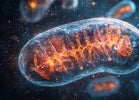
What Is PQQ? Mitochondria Claims vs. the Evidence
, by The ENERGYbits Team, 29 min reading time
, by The ENERGYbits Team, 29 min reading time
What is PQQ? See what cell, animal and small human studies show about mitochondria, which foods contain it, doses used in trials, and a food-first approach.
Search for mitochondrial supplements and PQQ shows up almost immediately, usually with a promise that it builds new mitochondria, the power plants inside your cells. The claim traces back to real laboratory science, and it runs well ahead of what has been shown in people. This guide explains what pyrroloquinoline quinone is, where it occurs in food, what the cell, animal and human studies found, what doses researchers have actually used, and how it compares with the less glamorous but better-established ways to feed your mitochondria.
ENERGYbits® • Mitochondrial Health
Quick Answer
What is PQQ? Pyrroloquinoline quinone (PQQ) is a small, redox-active quinone compound first identified in methanol-using bacteria, where it works as a cofactor for redox enzymes [19]. It occurs in trace amounts in foods and in human tissue, and it is also sold as a supplement. Whether humans strictly require it, as they do a vitamin, remains debated [12][13][14].
PQQ is a quinone, a molecule that readily gains and loses electrons. In bacteria it helps certain enzymes do their work [19]. In nutrition circles it is described as an antioxidant and a possible signal for mitochondrial growth.
Here is what it is not. It is not a proven human vitamin, it is not a mitochondrial treatment, and it is not a replacement for the nutrients mitochondria already depend on. A 2021 review by researchers who have studied PQQ for years describes it as “novel among biofactors that are not currently accepted as vitamins or conditional vitamins” [14]. That is a fair summary of its status: interesting, biologically active in the lab, and still being sorted out in people.
PQQ has been measured in many ordinary foods, but always in tiny amounts. In a 1995 study using gas chromatography-mass spectrometry, free PQQ was detected in every food sample, in the range of 3.7 to 61 nanograms per gram or milliliter [1]. A later, more sensitive LC-MS/MS method found 0.19 to 7.02 nanograms per gram fresh weight across a range of foods [2]. Both point the same way: nanograms, not milligrams.
A 2018 PLOS ONE paper optimized enzymatic and LC-MS/MS methods and screened foods including natto (fermented soybeans), peppers, spinach, tomato, parsley, rape blossoms and tea, plus vinegars and beer. Some foods had only trace amounts or fell below the detection limit. Fermented foods made with acetic acid bacteria stood out, with certain vinegars at 1.94 to 5.59 ng/mL, higher than the beer used as a comparison [3].
Quick Answer
Which foods contain PQQ? Studies have detected PQQ in nanogram-per-gram amounts in a wide range of foods, including natto, peppers, spinach, tomato, parsley, tea and some fermented products such as vinegars [1][2][3]. Amounts are very small and vary by method and product, so food contributes far less than the milligram doses used in supplement trials.
The European Food Safety Authority gave a useful reference point in its 2017 opinion on a PQQ disodium salt ingredient. It noted that the proposed 20 mg a day supplement level is at least 250 times higher than the estimated background intake from foods [11]. By simple arithmetic on EFSA's statement, background intake would be no more than about 80 micrograms a day (our calculation). Trials used amounts a normal diet does not approach.
The 1995 study found human tissue levels 5 to 10 times lower than food levels, suggesting tissue PQQ comes at least partly from diet [1].
The headline claim, that PQQ stimulates mitochondrial biogenesis, rests largely on one influential paper. In 2010, Chowanadisai and colleagues exposed mouse liver cells (Hepa1-6) to 10 to 30 micromolar PQQ for 24 to 48 hours. The cells showed higher citrate synthase and cytochrome c oxidase activity, more Mitotracker staining, more mitochondrial DNA and greater cellular oxygen respiration. The effect ran through CREB phosphorylation and the PGC-1α pathway, a known regulator of mitochondrial biogenesis, and it disappeared when either PGC-1α or CREB was knocked down. PQQ also protected the cells from several mitochondrial inhibitors [4].
The authors noted that earlier studies had found mice and rats fed diets lacking PQQ had reduced mitochondrial content [4].
Scientific callout
This is solid mechanistic work, done in cultured mouse cells. A dish of liver cells is not a person. The step from “activates a biogenesis pathway in cells” to “builds more mitochondria in you” has to be tested in humans, and so far only partly has been [4][6].
Quick Answer
Does PQQ really create new mitochondria? In cultured mouse liver cells, PQQ increased mitochondrial DNA, enzyme activity and oxygen respiration through the CREB and PGC-1α pathway [4]. In people, one small trial found higher PGC-1α protein with PQQ plus training, but did not show new mitochondria or better performance [6]. The claim is plausible, not proven.
Human PQQ research is small, short and often built around branded ingredients such as BioPQQ or mnemoPQQ, so results may not apply to every product on the shelf [7][8][11]. Here are the main studies we could verify.
The study most often cited for PQQ and mitochondria was published in the Journal of Nutritional Biochemistry. Ten adults (five women and five men) took part in a crossover design, with PQQ mixed into a fruit-flavored drink. In study 1, a single dose of 0.2 mg per kg body weight was followed for 48 hours. In study 2, a daily dose of 0.3 mg per kg was given, with measurements after 76 hours. PQQ was associated with lower plasma C-reactive protein and interleukin-6, lower urinary methylated amines such as trimethylamine N-oxide, and urinary metabolite changes the authors described as consistent with enhanced mitochondria-related functions. Standard clinical blood indices stayed normal [5].
Read it for what it is: ten people, about three days, indirect markers. Mitochondrial number and energy output were not measured directly.
The most direct human test we found was a six-week trial in 23 untrained men, randomized to 20 mg a day of PQQ or placebo while all followed a supervised endurance program. Both groups improved peak oxygen consumption and test duration, with no significant difference between them. The PQQ group did show a larger rise in PGC-1α protein, the biogenesis marker, and the authors concluded PQQ did not appear to have ergogenic effects [6].
Most other human studies look at thinking skills. In a 12-week, randomized, placebo-controlled trial in 41 healthy older adults, 20 mg a day of BioPQQ was followed by a smaller Stroop interference change than placebo, suggesting better selective attention [7]. A 2022 trial randomized 64 healthy Japanese adults aged 40 to under 80 to 21.5 mg a day of mnemoPQQ or placebo for 12 weeks; the PQQ group improved on several Cognitrax domains [8]. A 2023 double-blind trial in adults aged 20 to 65 using 20 mg a day for 12 weeks reported improved composite and verbal memory [9].
A 2024 trial in 34 older adults with mild cognitive impairment used a blend of dihydrogen-producing minerals and PQQ for six weeks. BDNF rose within the treated group, but the treatment-by-time interaction was not significant [10], and a blend cannot isolate PQQ.
| Study | Design | Dose | What was reported | Main caveat |
|---|---|---|---|---|
| Chowanadisai 2010 [4] | Mouse liver cells | 10-30 µM, 24-48 h | More mitochondrial DNA, enzyme activity, respiration; CREB/PGC-1α pathway | Cells, not humans |
| Harris 2013 [5] | Crossover, 10 adults | 0.2 mg/kg once; 0.3 mg/kg/day, 76 h | Lower CRP, IL-6, urinary methylated amines | Tiny, short; indirect markers |
| Itoh 2016 [7] | RCT, 41 older adults | 20 mg/day, 12 wk | Smaller Stroop interference change | Branded product; small |
| Hwang 2020 [6] | RCT, 23 untrained men | 20 mg/day, 6 wk | Higher PGC-1α protein; no aerobic performance difference | Small; marker only |
| Shiojima 2022 [8] | RCT, 64 randomized (58 completed) | 21.5 mg/day, 12 wk | Better scores on several cognitive domains | Branded product; short |
| Tamakoshi 2023 [9] | Double-blind, placebo-controlled | 20 mg/day, 12 wk | Improved composite and verbal memory | Short; needs independent replication |
| Baltic 2024 [10] | RCT, 34 adults with MCI | PQQ plus dihydrogen mix, 6 wk | BDNF rose within group; interaction not significant | Blend; very small |
Scientific callout
A changed biomarker is not the same as a changed outcome. In the Hwang trial the biogenesis marker moved, while the performance measures did not separate from placebo [6]. That is a good example of why we describe PQQ evidence as preliminary: markers are an encouraging first step, not proof of a benefit you would notice.
Because people search for a PQQ dose, here is what the literature shows. These are the amounts studied, not recommendations.
We are not translating any of these amounts into algae tablets, because spirulina and chlorella are not PQQ supplements and we have no data showing meaningful PQQ in them. They are whole foods with their own nutrient profile, covered below.
In 2003, Kasahara and Kato reported in Nature that PQQ is a new redox-cofactor vitamin for mammals [13]. In 2005, Rucker and colleagues tried to reproduce the key finding, a defect in lysine metabolism in PQQ-deprived rodents, and could not; the relevant liver enzyme activity and plasma alpha-aminoadipic acid did not change with PQQ status [12].
The 2021 review by Jonscher, Chowanadisai and Rucker describes PQQ as a vitamin-like accessory factor, notes that PQQ-free animal diets produce a deficiency-like response that reverses on repletion, and states that PQQ is not currently accepted as a vitamin [14]. No official body has set a recommended intake for PQQ. If someone tells you that you are “deficient” in PQQ, that is not a recognized clinical diagnosis.
Quick Answer
Is PQQ a vitamin? Not officially. A 2003 report proposed PQQ as a new vitamin for mammals [13], but a 2005 attempt to reproduce the key finding failed [12], and a 2021 review still describes it as not currently accepted as a vitamin or conditional vitamin [14]. It is better described as a vitamin-like compound under study.
If the PQQ evidence is early, where should a practical mitochondrial strategy start? With the nutrients whose roles are well established. The NIH Office of Dietary Supplements states that riboflavin is a component of the coenzymes FMN and FAD, which play major roles in energy production, and that riboflavin is required for mitochondrial function [16]. It says magnesium is required for energy production, oxidative phosphorylation and glycolysis [17], and that copper is a cofactor for several enzymes involved in energy production [18]. Iron, B vitamins, protein and many others complete the picture.
Our guide to mitochondria nutrients from food walks through this in detail, and magnesium for energy cells covers one of the most overlooked pieces. For another popular mitochondrial supplement, see CoQ10 vs. spirulina.
We did not find published PQQ measurements for spirulina or chlorella, and the food-screening study we reviewed did not list algae among the foods tested [3]. We will not imply they are a PQQ source. What we can say is that spirulina is a whole food whose documented nutrient profile includes several nutrients mitochondrial enzymes use.
The USDA FoodData Central entry for dried spirulina (SR Legacy, FDC ID 170495) lists, per 100 g, about 3.67 mg riboflavin, 195 mg magnesium, 6.1 mg copper and 28.5 mg iron [15]. Each ENERGYbits tablet is 250 mg, and a full serving is 30 tablets, or 7.5 g. Multiplying the USDA values by 0.075 gives the per-serving figures below. They are our calculation from database values, not a laboratory analysis of a specific batch, and real content varies by product and harvest.
| Nutrient | Per 100 g dried spirulina (USDA) [15] | Per 7.5 g serving (calculation) | Adult RDA [16][17][18] |
|---|---|---|---|
| Riboflavin | 3.67 mg | About 0.28 mg | 1.3 mg men, 1.1 mg women |
| Magnesium | 195 mg | About 14.6 mg | 400-420 mg men, 310-320 mg women (ages 19-50) |
| Copper | 6.1 mg | About 0.46 mg | 0.9 mg (900 mcg) |
| Iron | 28.5 mg | About 2.1 mg | 8 mg men, 18 mg women (ages 19-50) |
By calculation, a serving supplies roughly a fifth to a quarter of the riboflavin RDA, about half of the copper RDA, a few percent of magnesium needs and a modest amount of iron, alongside protein, phycocyanin and chlorophyll. We have no human data showing that algae raise mitochondrial numbers.
Scientific callout
Two kinds of evidence are in play. For PQQ: a mechanism in cells, small human trials and unsettled vitamin status. For riboflavin, magnesium and copper: roles in energy metabolism described by NIH [16][17][18] and food composition documented by USDA [15]. Neither shows that a supplement will make you feel more energetic.
If you want to add algae to a whole-food routine, ENERGYbits spirulina is a single ingredient with no fillers or additives, freshwater-grown, gently dried at low temperatures and third-party tested for purity and contaminants. The VITALITYbits spirulina and chlorella blend pairs spirulina with chlorella, which has a cracked cell wall for improved digestibility.
Evidence-first nutrition, weekly
Get one evidence-first nutrition article a week: what the research shows, what it does not, and how whole foods fit in. No hype, just sources.
Read more ENERGYbits articlesEFSA considered a 20 mg a day PQQ disodium salt ingredient safe for healthy adults, but excluded pregnant and lactating women from the proposed use [11]. Long-term data are limited. If you are pregnant, nursing or on medication, talk to your healthcare provider before taking PQQ.
Do not treat ongoing fatigue or memory changes as a PQQ problem. These symptoms have many causes, including anemia, thyroid disease, sleep disorders and medication effects. See a clinician if they persist, worsen or worry you.
For algae: spirulina and chlorella are generally well tolerated, but check with your healthcare provider first if you are pregnant or nursing, have phenylketonuria, have an autoimmune condition, have a bleeding disorder or take blood thinners or immunosuppressants, or have thyroid or iodine concerns (relevant to chlorella). ENERGYbits products are third-party tested for purity and contaminants.
Key takeaways
PQQ is a fascinating compound, and the mitochondrial biogenesis story is not made up. It comes from careful cell and animal work, and a handful of small human studies point in the same direction. But the leap from “activates a pathway in mouse liver cells” to “rebuilds your mitochondria” has not been made in people, and the trials that exist are small, short and often tied to branded ingredients.
For most readers, the practical move is the unglamorous one: eat a varied, nutrient-dense diet, protect sleep, keep moving, and get fatigue evaluated rather than self-treated. Whole foods, including spirulina and chlorella, can contribute the nutrients they actually contain. We will keep following the PQQ research and tell you when it changes.
Pyrroloquinoline quinone (PQQ) is a small, redox-active quinone compound first identified in methanol-using bacteria, where it is a cofactor for redox enzymes [19]. It occurs in trace amounts in foods and is sold as a supplement [1].
Not officially. Kasahara and Kato proposed it as a new vitamin in 2003 [13], a 2005 attempt to reproduce the key finding failed [12], and a 2021 review says it is not currently accepted as a vitamin [14].
Studies detected PQQ in nanogram-per-gram amounts across many foods, including natto, peppers, spinach, tomato, parsley, tea and some fermented products such as certain vinegars [1][2][3]. Amounts are tiny.
In cultured mouse liver cells, PQQ raised mitochondrial DNA, enzyme activity and respiration through CREB and PGC-1α [4]. In one small human trial, PGC-1α protein rose, but new mitochondria were not demonstrated [6]. Plausible, unproven.
In a crossover study of 10 adults, 0.3 mg per kg a day of PQQ for 76 hours was associated with lower C-reactive protein, interleukin-6 and urinary methylated amines, and urinary changes consistent with enhanced mitochondria-related function [5]. It was small, short and used indirect markers.
Not in the trial we found. In 23 untrained men, 20 mg a day of PQQ for six weeks of training raised PGC-1α protein but did not significantly change aerobic performance or body composition versus placebo [6].
Several small trials at about 20 mg a day for 12 weeks report better scores on some attention and memory tests [7][8][9]. The evidence is preliminary.
Human trials used 0.2 to 0.3 mg per kg in a short study [5] and about 20 to 21.5 mg a day for 6 to 12 weeks [6][7][8][9]. EFSA assessed up to 20 mg a day for healthy adults, excluding pregnant and lactating women [11]. These are study doses, not advice.
EFSA concluded a 20 mg a day PQQ disodium salt ingredient was safe for healthy adults under its proposed conditions of use, but noted limited data on absorption and metabolism [11]. Check with your healthcare provider, especially if pregnant, nursing or on medication.
We did not find published PQQ measurements for spirulina or chlorella, and the food-screening study we reviewed did not list algae among the foods tested [3]. We do not claim they are a meaningful PQQ source.
This article is for educational purposes only and is not medical advice. These statements have not been evaluated by the FDA. ENERGYbits® products are whole-food supplements and are not intended to diagnose, treat, cure, or prevent any disease. Talk with your doctor before starting any supplement, especially if you are pregnant, nursing, taking medication, or managing a medical condition.


