


Why Does Spirulina Smell Like Fish?
, by The ENERGYbits® Team, 10 min reading time
, by The ENERGYbits® Team, 10 min reading time
Spirulina smells faintly oceanic because it is an aquatic organism, and that aroma is normal. Here is how to tell a healthy grassy, seaweed-like smell from a sour or ammonia smell that means you should stop using the batch.
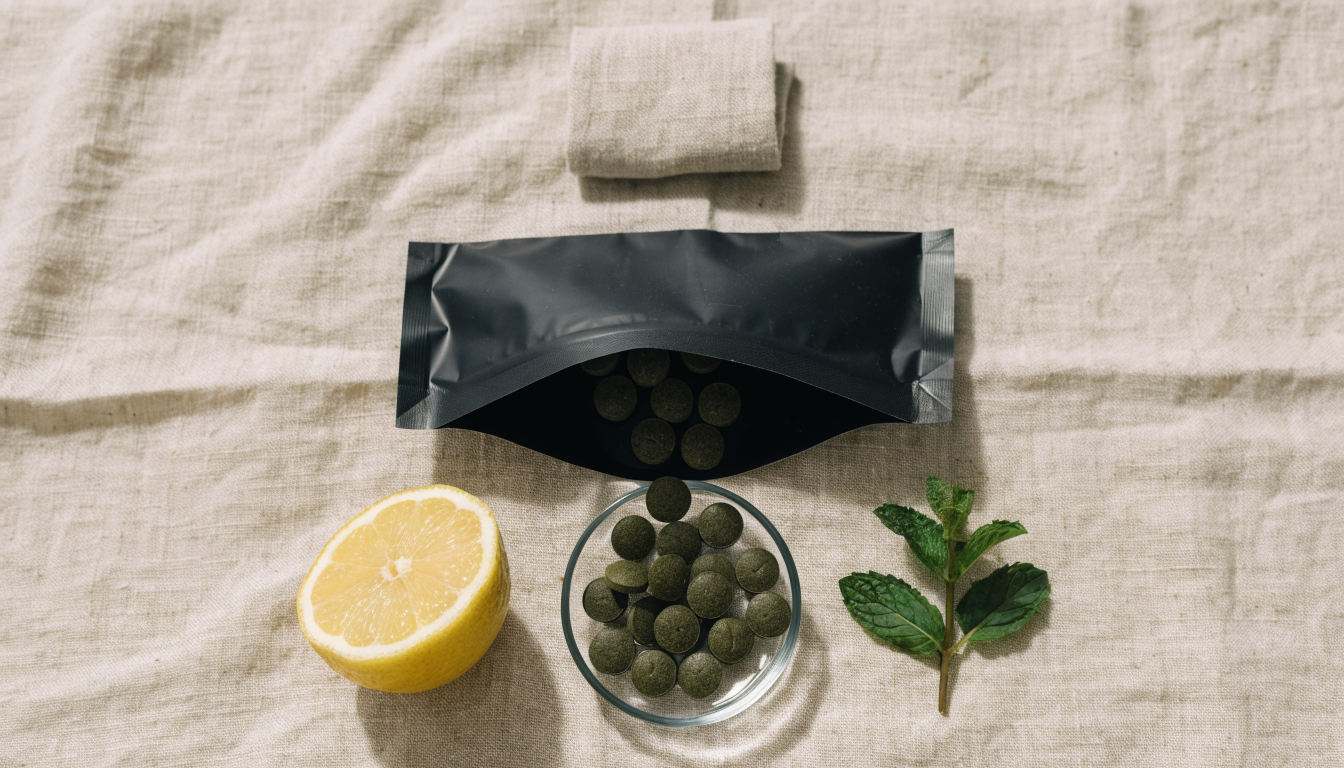
The aroma of spirulina tells you what it is, and sometimes how it was stored.
Open a fresh bag of spirulina and the first thing you notice is not the color. It is the smell. People reach for words like pond water, low tide, seaweed, or most commonly, fish. If you just spent real money on a green superfood, that can be unsettling, and plenty of people quietly push the bag to the back of a cupboard and never open it again.
Here is the honest answer instead of a comforting one. That aroma is supposed to be there. Spirulina is a cyanobacteria that grows in water, and it shares a great deal of its biochemistry with the marine organisms you associate with that smell. The useful question is not whether your spirulina smells like something. It is whether it smells like the right something.
Smell is just chemistry that happens to reach your nose. Spirulina is unusually rich in polyunsaturated fatty acids, including gamma-linolenic acid, and those long, flexible fat molecules are exactly the kind that react readily with oxygen and light. When they react, they break into smaller volatile fragments called aldehydes, and aldehydes are the same family of molecules behind the smell of fish that has been sitting out. Your nose is not wrong. It is recognizing a chemical relative.
Two other groups of compounds add to the effect. Spirulina carries sulfur-containing amino acids and trace amines, both of which are pungent in very small amounts. It also produces geosmin-type compounds, the same class of molecule that gives beets, fresh soil and a summer rainstorm their distinctive earthiness. Put all three together and you get an aroma that reads as oceanic, grassy and mineral all at once. For the flavor side of the same chemistry, our guide on what spirulina actually tastes like is worth a read.
Normal is a short list. Fresh, well handled spirulina smells green and grassy, a little oceanic, a little earthy, and quite close to a dry sheet of nori. Some people pick up a faint hay or matcha note underneath. The smell should fade within a second or two of closing the bag, and it should be consistent from one scoop to the next across the whole bag.
It also should not knock you backward. A clean aroma is noticeable but flat, with no sharp edge at the front and no sour tail at the end. If you have ever opened a package of nori, smelled it, and felt fairly neutral about it, that is roughly the reaction fresh spirulina should get from you.
There is a real line here and it is worth knowing where it sits. Sharp, sour, rancid, ammonia-like, musty or mildewy smells are not the normal aroma turned up louder. They are a different aroma entirely, and they point to one of three things: oxidation of those fragile fatty acids, moisture that found its way into the bag, or plain old age. Any of the three means the product has moved past its useful life, and you should not take it. If you are unsure how long your bag should have lasted in the first place, our explainer on whether spirulina expires covers shelf life and date codes.
| Aroma you notice | What it usually means | What to do |
|---|---|---|
| Green and grassy, like a dry sheet of nori | Normal, properly dried algae | Use it as usual |
| Earthy or mineral, like beets or wet soil | Normal geosmin-type compounds | Use it as usual |
| Mildly oceanic or seaweed-like | Normal fatty acid and amine notes | Fine to use, reseal the bag well |
| Sharp, sour or rancid, like old oil | Fats have oxidized from air, heat or light | Stop using that batch |
| Ammonia-like, musty or mildewy | Moisture exposure or age | Discard it, do not taste to check |
Surface area explains most of it. A gram of powder exposes an enormous amount of algae to the air, so far more of those volatile compounds escape at once and far more oxidation can happen over time. A pressed tablet keeps most of its mass tucked inside, which slows both effects down considerably. Processing matters too. Low-temperature, spray-dried algae holds its aroma compounds in a stable form, while harsher or slower drying tends to start the breakdown before the product ever reaches you.
Source explains the rest. Cheap or wild-harvested spirulina often smells noticeably worse, because harvest conditions, drying method, storage and age all stack on top of each other. Algae pulled from an open lake carries whatever else was living in that water. Understanding how spirulina is grown makes the difference obvious, and it is also a large part of why good spirulina costs more than the bulk powder you see online.
ENERGYbits Spirulina tablets are a single ingredient with no fillers, binders or additives, grown and dried with aroma in mind. If the smell of powder puts you off, tablets let you swallow your algae without tasting anything at all.
Shop ENERGYbits SpirulinaTreat it like a delicate oil rather than a dry pantry staple, because chemically that is closer to the truth. Press the air out and seal the bag every single time. Keep it somewhere cool, dry and dark, such as a cupboard away from the stove, and never on a sunny windowsill. Resist the urge to decant it into a pretty clear glass jar on the counter, since light and air are precisely what create the aldehyde notes you are trying to avoid. Keep it away from steam and humidity, so not above the kettle and not in the fridge where condensation forms.
One last reassurance worth stating plainly. Aroma and potency are not the same thing. A mild oceanic smell tells you nothing bad about the nutrient content of your algae, and a deodorized product is not automatically a better one. If the smell simply bothers you, use tablets, take them with a full glass of cold water, and the whole question quietly disappears.
Join our newsletter for plain-language guides on spirulina, chlorella, and everyday wellness.
SubscribeSpirulina lives in water and shares much of its biochemistry with marine organisms. Its polyunsaturated fatty acids release aldehyde compounds when exposed to air and light, and those same molecules appear in fish. Add trace amines and earthy geosmin compounds and you get an oceanic aroma that is completely normal.
Not by itself. A mild grassy, oceanic, seaweed-like smell is expected in fresh algae. What signals a problem is a different character entirely: sharp, sour, rancid, ammonia-like, musty or mildewy. Those suggest oxidation, moisture or age, and in that case you should stop using the batch.
No. Aroma and nutrient content are separate things, and a noticeable smell is not evidence of weak or spoiled algae. A deodorized product is not automatically better either. Only the warning-sign smells, which indicate real oxidation or moisture damage, suggest the product is past its useful life.
Yes, noticeably less. Powder exposes far more surface area to air, so more volatile compounds escape and oxidation happens faster. Tablets keep most of their mass sealed inside, so the aroma stays fainter. You can also swallow tablets with water without tasting anything, which solves the issue for most people.


