



Chlorella vs Spirulina for Skin: Which Is Better?
, by The ENERGYbits® Team, 10 min reading time
, by The ENERGYbits® Team, 10 min reading time
Spirulina and chlorella support skin in different ways: spirulina leans antioxidant and anti-inflammatory, chlorella leans gut and clearance. Here is how to choose based on your skin goal, and why many people take both.
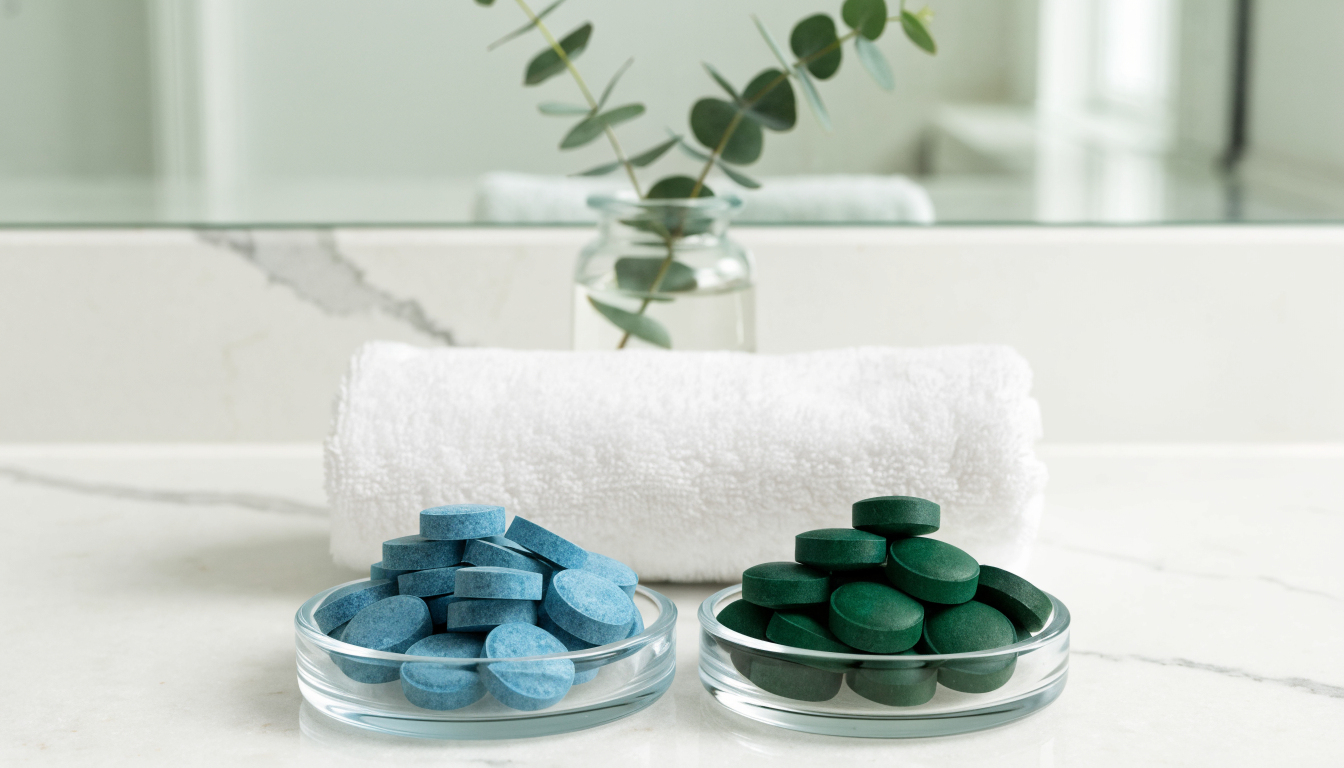
Two algae, two different routes to healthier looking skin.
If you have been comparing these two algae for your skin, you have probably noticed that both get credited with the same glowing results. That is not quite how it works. Spirulina and chlorella are different organisms with different nutrient profiles, and they reach your skin by different routes. Once you understand the mechanism, choosing gets much easier.
Below is an honest head-to-head, organised around what you actually want your skin to do.
Spirulina is a blue-green algae, and its signature compound is phycocyanin, the blue pigment that gives it colour and its antioxidant reputation. Alongside that it delivers beta carotene, vitamin E, iron and a complete protein profile including the amino acids your body draws on to build structural proteins.
The practical read: spirulina sits on the antioxidant and anti-inflammatory side of the ledger. Antioxidants may help the body manage oxidative stress, which is the process behind a lot of what we call dull, tired looking skin. Iron supports healthy circulation and oxygen delivery, which is part of why people associate it with colour and brightness. We go deeper on the mechanism in our guide to spirulina for skin, and the same nutrients show up in the conversation about spirulina for hair growth, since hair and skin draw on a shared nutrient pool.
Chlorella is a green freshwater algae with a tough cell wall, which is exactly where its skin story starts. That cell wall, plus its fiber content, supports digestion and regularity and can bind unwanted compounds as food moves through the digestive tract. Chlorella is also the richest known food source of chlorophyll, and it contains chlorella growth factor, a nucleic acid rich complex associated with cellular renewal.
The practical read: chlorella sits on the gut and clearance side. If your skin concerns track with digestion, sluggishness or a diet you are not proud of, chlorella is the more logical starting point. That is the gut-skin connection in plain terms, and it is covered in more detail in our article on chlorella for skin.
| Feature | Spirulina | Chlorella |
|---|---|---|
| Signature compound | Phycocyanin (blue antioxidant pigment) | Chlorophyll (green pigment) plus chlorella growth factor |
| Main skin angle | Antioxidant and anti-inflammatory support | Gut, fiber and clearance support |
| Protein | Very high, complete amino acid profile | High, complete amino acid profile |
| Fiber | Minimal | Meaningful, from the cell wall |
| Carotenoids and vitamin E | Notable beta carotene and vitamin E | Present, generally lower than spirulina |
| Iron | Notably high | Present |
| Best taken | Morning, with or without food | With meals |
If you want the full non-skin breakdown of how these two differ, see our explainer on the difference between spirulina and chlorella.
This is the table most people are actually looking for. Match the concern, not the marketing.
| Skin goal | Better pick | Why |
|---|---|---|
| Dullness, flat or tired looking skin | Spirulina | Antioxidants, beta carotene and iron may support circulation and healthy colour |
| Congestion and breakout prone skin | Chlorella | Fiber, chlorophyll and cell wall binding may support the gut-skin connection |
| Redness and visible irritation | Spirulina | Phycocyanin is studied for its anti-inflammatory activity |
| Fine lines and firmness | Both, leaning spirulina | Complete protein plus antioxidant protection against oxidative stress |
| Post-sun recovery | Spirulina | Antioxidant and vitamin E content may support the skin after sun exposure |
| Skin that flares with poor digestion | Chlorella | Supports regularity and the body's natural clearance pathways |
| General everyday radiance | Both | Complementary mechanisms, covering nutrition and clearance at once |
Because the mechanisms do not overlap much. Spirulina feeds the skin the raw materials and antioxidant support it uses; chlorella supports the digestive side that influences how the skin behaves. Taking one does not replace the other, and there is no reason they cannot share a routine.
A simple pattern that works for most people: spirulina in the morning, chlorella with lunch and dinner. Start at 1 to 2 grams of each and build toward 3–5 grams daily over a week or two so your system adjusts comfortably. There is no need to overthink the split.
Both are 100% algae, third-party tested, and free from fillers, binders and additives. ENERGYbits® spirulina for antioxidant and nutrient support, RECOVERYbits® chlorella for gut and clearance support. Take one, or take both.
Shop ENERGYbits® Spirulina → Shop RECOVERYbits® Chlorella →Set expectations honestly. Skin cells turn over roughly every four weeks, so nothing you eat or swallow shows up on your face overnight. Give either algae 8 to 12 weeks of consistent daily use before you judge it. Some people notice changes in digestion or energy much sooner, but visible skin changes follow the turnover cycle, not the calendar you would prefer.
Take a photo in the same light on day one. Memory is a terrible measuring tool for gradual change.
No supplement replaces the basics. Sleep, daily sun protection, hydration and a diet with enough protein and vegetables do more for skin than any tablet, and algae works best as an addition to those habits rather than a substitute for them.
If you are dealing with a genuine skin condition, persistent cystic acne, eczema, rosacea or anything painful or changing, see a dermatologist. Algae is food, not treatment, and it should sit alongside proper care rather than delay it. Some people also come across BEAUTYbits in this conversation; whichever product you choose, the same expectations apply.
Join our newsletter for a simple day-by-day plan to build your algae habit, plus subscriber-only offers.
Send me the guide →Chlorella is the more common starting point, because its fiber, chlorophyll and cell wall support digestion and the body's natural clearance pathways, which is where the gut-skin connection sits. It is not a treatment for acne. If breakouts are persistent or painful, see a dermatologist.
Yes, and many people do. The two work through different mechanisms, so they complement each other. A common routine is spirulina in the morning and chlorella with meals.
Skin turns over roughly every four weeks, so allow 8 to 12 weeks of consistent daily use before judging results. Changes in digestion and energy often show up sooner than visible skin changes.
Spirulina is the more common choice, thanks to its antioxidants, beta carotene, vitamin E and complete protein profile, which may support the skin against oxidative stress. No supplement removes wrinkles, and sun protection remains the single most effective habit.


