


Hair Shedding Nutrients: What to Check First and Why
, by The ENERGYbits Team, 30 min reading time
, by The ENERGYbits Team, 30 min reading time
Shedding more hair than usual? Learn normal vs. telogen effluvium, which nutrients clinicians check first, how strong the evidence is, and when to see a doctor.
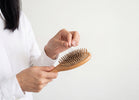
You notice it in the shower drain first, then on the brush, then on the pillow. Hair shedding is unsettling because it feels sudden, and the internet's usual answer is a shopping list of vitamins. The reality is more useful and less dramatic. Most shedding has an identifiable trigger, most of it is temporary, and a short list of nutrients is worth checking with a clinician before anyone buys anything. This guide explains what normal shedding looks like, which triggers matter, which nutrient tests clinicians actually order, how strong the evidence behind each one is, and when to book an appointment.
ENERGYbits® • Hair & Nutrition
Quick Answer
What nutrients should I check first for hair shedding? Clinicians commonly start with a complete blood count, ferritin (iron stores) and thyroid function (TSH), then add vitamin D, vitamin B12 or zinc when history or diet suggests a gap [4][6]. Evidence that fixing a deficiency stops shedding is strongest when the deficiency is confirmed. Supplementing without a result is not supported [6].
Hair grows in cycles. At any moment most scalp follicles are in the growing (anagen) phase, a small share are in a short transition (catagen), and roughly 13 percent are in the resting (telogen) phase, after which the hair is shed [4]. The American Academy of Dermatology (AAD) says it is normal to shed 50 to 100 hairs a day [1].
Telogen effluvium (TE) is what happens when a larger-than-usual share of follicles shifts into the resting phase at once. A 2015 review in the Journal of Clinical and Diagnostic Research calls it a common cause of diffuse hair loss and notes that the shedding typically begins three to four months after the triggering event [5]. Because of that delay, the cause is often long gone by the time the hair starts coming out.
Quick Answer
How much hair shedding is normal? The AAD says shedding 50 to 100 hairs a day is normal. Noticeably more than that, spread across the whole scalp, is called excessive shedding or telogen effluvium. It usually begins a few months after a trigger and generally resolves, with hair regaining its normal fullness within about six to nine months [1].
The AAD draws a useful line. Shedding (TE) is a temporary increase in the number of hairs falling out. Hair loss, in its terms, means something has stopped hair from growing, as in hereditary pattern loss, autoimmune alopecia, certain drugs or traction from tight styles [1]. The two can overlap, and they are managed differently, which is one reason an accurate diagnosis beats guessing at supplements.
The AAD lists major weight loss (20 pounds or more), childbirth, intense stress, high fever, surgery, recovery from illness and stopping birth control pills among the usual triggers [1]. The clinical literature adds crash dieting, defined in one review as protein under 0.8 g per kg of body weight with under 1,200 kcal a day, as well as thyroid disorders, certain medicines, malabsorption and severe iron or zinc deficiency [4].
| Trigger | Typical timing of shedding | What the sources say |
|---|---|---|
| Illness, high fever, surgery | About 2 to 3 months later [4] | Usually temporary; the AAD lists these as common triggers [1] |
| Childbirth | Starts around 2 months postpartum, peaks around 4 months [1] | The AAD says most women regain usual fullness by the baby's first birthday [2] |
| Crash dieting or rapid weight loss | Weeks to a few months | Low protein and calorie intake are recognized triggers [4]; the AAD also links major weight loss to TE [1] |
| Stopping hormonal contraception | A few months later [1] | Listed by the AAD as a common trigger |
| Medicines | Often 6 to 12 weeks after starting [4] | Do not stop a prescribed medicine on your own; ask your prescriber [1] |
| Thyroid disease, severe iron or zinc deficiency | Variable | Needs testing; shedding can improve once corrected [4] |
Scientific callout
Stress is a popular explanation, and the TE review in the Indian Journal of Dermatology notes that evidence for stress as a cause is limited [4]. It is a reasonable suspect when a stressful event preceded the shedding by a few months, but it should not end the search for treatable causes such as thyroid or iron problems.
The AAD says thinning after starting a GLP-1 drug is believed to reflect rapid weight loss, a form of TE, and adds that researchers still need more information to confirm the cause. Eating less can leave the body short of protein, vitamins and other nutrients, and the AAD advises people prone to hair loss to lose weight slowly and to speak to a dermatologist before starting [3].
Do not skip this
Book an appointment, and do not wait for a supplement trial to "work", if any of the following apply. A dermatologist can tell whether you have shedding, hair loss or both, and the AAD notes that starting treatment sooner is associated with a better outlook [1].
Quick Answer
When should I see a doctor about hair shedding? See a clinician if shedding lasts longer than about six months, if you have patches, scalp symptoms or signs of thyroid or iron problems, or if postpartum hair has not recovered by your baby's first birthday. A dermatologist can distinguish shedding from other types of hair loss and order the right tests [1][2].
There is no single universal "hair panel." The TE review recommends a relevant history and laboratory tests to rule out endocrine, nutritional and autoimmune causes [5]. The review in the Indian Journal of Dermatology lists a full blood count and thyroid function tests as routine, with serum zinc and others as indicated [4]. In practice, clinicians then tailor tests to the history.
Ferritin reflects iron stores. Hemoglobin alone can look normal while stores are low. A 2019 review in Dermatology and Therapy by Almohanna and colleagues found that ferritin cutoffs used across studies ranged from 15 to 70 µg/L, that many authors prescribe iron when ferritin is below 40, and, importantly, that there is insufficient evidence on the efficacy of iron replacement for TE outcomes [6]. Iron is a reasonable test; it is not a proven cure. Our ferritin and hemoglobin lab guide explains how to read the numbers, and ferritin can rise with inflammation, so context matters.
Both underactive and overactive thyroid are recognized causes of diffuse shedding, and thyroid-related shedding generally improves once thyroid status is restored [4]. This is a medical diagnosis, which is why TSH sits near the top of most checklists.
The NIH Office of Dietary Supplements (ODS) describes serum 25-hydroxyvitamin D as the best indicator of status, with levels below 30 nmol/L (12 ng/mL) indicating risk of deficiency and 50 nmol/L (20 ng/mL) or above generally adequate for most people; assay methods vary between labs [9]. For hair, Almohanna and colleagues describe the best evidence in alopecia areata, where levels tend to be lower, and call the evidence in TE conflicting [6].
The adult RDA is 2.4 mcg a day. Vegans, vegetarians, older adults, people with pernicious anemia and people taking metformin or acid-reducing drugs are at higher risk of low levels [10]. For hair specifically, the 2019 review found limited data: in one TE series only 2.6 percent of 115 patients had B12 deficiency, and the authors concluded the lack of studies precludes a recommendation for routine B12 screening in TE [6]. Check it when your diet or medicines give a reason, not because of the hair alone.
Severe zinc deficiency can cause hair loss, and the NIH ODS lists alopecia among its signs [8]. But the 2019 review found zinc data inconsistent and said screening is not recommended for TE [6]. Adult RDAs are 11 mg for men and 8 mg for women, with an upper limit of 40 mg [8]. See our guide to zinc food sources and absorption for food-first ideas.
Protein is the building block of hair, and the clinical literature names very low protein and calorie intake as a TE trigger [4]. This is the one "nutrient check" you can do at home: look closely at whether the last few months included dieting, skipped meals, appetite changes or a new medicine that suppresses hunger.
Quick Answer
Does iron deficiency cause hair shedding? Severe iron deficiency is a recognized contributor to diffuse shedding, and ferritin is the usual test [4]. But a 2019 review found insufficient evidence that replacing iron improves TE outcomes, and ferritin cutoffs vary from 15 to 70 µg/L across studies [6]. Treat it as a reason to test, not to self-supplement.
Nutrition headlines blur two different questions: does deficiency cause shedding, and does supplementing help someone who is not deficient? The 2019 review is cautious on the second. It calls for large double-blind placebo-controlled trials, and describes deficiency as a possible modifiable risk factor [6]. The grading below is our plain-language summary of that review and the other sources cited, not an official rating.
| Nutrient | What is reasonably established | Where evidence is thin | Our reading |
|---|---|---|---|
| Iron / ferritin | Severe deficiency is a recognized contributor to diffuse shedding [4] | Insufficient evidence that iron replacement improves TE; cutoffs vary [6] | Worth testing; supplement only if low and advised |
| Vitamin D | Lower levels are reported in alopecia areata [6] | Conflicting evidence in TE [6] | Test if at risk; correct a documented deficiency |
| Zinc | Severe deficiency causes alopecia [8] | Data inconsistent; screening not recommended for TE [6] | Test only if history suggests deficiency |
| Vitamin B12 / folate | At-risk groups are well defined, such as vegans and metformin users [10] | Few hair-specific data; no screening recommendation in TE [6] | Check if vegan, older, on metformin or acid reducers |
| Biotin | Low biotin was found in some women with shedding, often with another cause [6] | Supplement benefit not supported in large studies; healthy people do not need it; it can interfere with some lab tests [6] | Skip unless a clinician finds a deficiency |
| Vitamin A, selenium | Excess can itself cause hair loss [6] | No screening recommended for TE [6] | More is not better |
Scientific callout
Beware the high-dose "hair" product. The 2019 review notes that many hair, skin and nail supplements far exceed recommended biotin intakes, that biotin can cause false lab results in some immunoassays, and that excess vitamin A or selenium can themselves cause hair loss [6]. Tell your clinician about every supplement before blood work.
Quick Answer
Do hair vitamins work for shedding? Not reliably. A 2019 review found support for correcting documented deficiencies but not for routine supplementation in non-deficient people, and noted that large placebo-controlled trials are still needed. Biotin is not needed by healthy people, and excess vitamin A or selenium can themselves cause hair loss [6].
While the follicles recover on their own timeline, the useful move is to make sure the plate is not working against them. This is general nutrition, not a hair treatment.
We should be direct. We make algae products, and we are not aware of credible human trials showing that spirulina or chlorella stops hair shedding or promotes growth, so we make no such claim. What we can say is factual: dried spirulina is a nutrient-dense whole food, and a serving can contribute small amounts of nutrients that appear on the checklist above.
Each ENERGYbits tablet is 250 mg, and a full serving is 30 tablets, or 7.5 g. Using USDA FoodData Central values for dried spirulina (FDC ID 170495) [11], the table shows what a serving contributes. These are our calculations from database values, not laboratory analyses of a specific batch, and real content varies by product and harvest.
| Nutrient | USDA per 100 g [11] | Per 7.5 g serving (calculation) | Adult RDA for comparison |
|---|---|---|---|
| Protein | 57.5 g | About 4.3 g | Varies by body weight |
| Iron | 28.5 mg | About 2.1 mg | 8 mg men; 18 mg women 19-50 [7] |
| Zinc | 2.00 mg | About 0.15 mg | 11 mg men; 8 mg women [8] |
| Riboflavin (B2) | 3.67 mg | About 0.28 mg | Not compared here |
| Vitamin B12 | 0 µg listed | None listed by USDA | 2.4 mcg [10] |
Two takeaways follow. First, a serving provides a modest share of iron and little zinc, so it is a small contributor within a varied diet rather than a replacement for treatment of a deficiency. Second, USDA lists no vitamin B12 for dried spirulina, so it should not be counted on as a B12 source.
Scientific callout
The calculation shows nutrient content, not hair benefit. Whether a nutrient from spirulina is absorbed well enough to change anything in a person with low stores has not, to our knowledge, been tested for hair outcomes.
If you are curious about the hair-specific questions, we have written them up separately and keep the language measured: Is spirulina for hair growth? and Is chlorella good for hair growth?. If you would like algae as part of a whole-food routine, ENERGYbits spirulina is a single ingredient with no fillers or additives, freshwater-grown, gently dried at low temperatures and third-party tested for purity and contaminants. The VITALITYbits spirulina and chlorella blend adds chlorella, which has a cracked cell wall for improved digestibility.
Check with your healthcare provider before using spirulina or chlorella if you are pregnant or nursing, have phenylketonuria, have an autoimmune condition, have a bleeding disorder or take blood thinners or immunosuppressants, or have thyroid or iodine concerns (relevant to chlorella). If your shedding may involve thyroid disease, mention any algae you take when you have thyroid tests and appointments.
Evidence-first nutrition, weekly
Get one evidence-first nutrition article a week: what the research shows, what it does not, and how whole foods fit in. No hype, just sources.
Read more ENERGYbits articlesKey takeaways
Hair shedding is alarming, and it is also, in most cases, a temporary response to something that happened a few months ago. The sensible sequence is to identify the trigger, see a clinician if the red flags above apply, test the few nutrients that have a real rationale, and correct what is actually low. In the meantime, eat enough protein and energy, build iron- and zinc-containing meals, and give follicles the time the hair cycle requires.
Algae can sit on that plate as a nutrient-dense whole food. It is not a hair treatment, and we would rather say so than promise more than the research supports. We will keep watching the evidence and update our hair-related articles if it changes.
Yes. The AAD says it is normal to shed 50 to 100 hairs a day [1]. Concern is reasonable when the amount is clearly higher than your usual and appears across the scalp.
It is temporary excessive shedding that occurs when more hair follicles than usual move into the resting phase together. It typically starts three to four months after a trigger such as illness, childbirth or rapid weight loss, and it is a common cause of diffuse hair loss [1][5].
In most acute cases the AAD says hair regains normal fullness within about six to nine months, and a clinical review reports that acute telogen effluvium remits within a few months in about 95 percent of cases [1][4]. Shedding that persists beyond six months should be evaluated.
Intense stress appears on the AAD's list of common triggers [1]. However, a clinical review notes the evidence for stress as a cause is limited, so other treatable causes should still be checked [4].
Clinicians commonly start with a complete blood count and thyroid function tests, then add ferritin, vitamin D, B12 or zinc depending on your history and diet [4][6]. Ask your clinician which are appropriate for you.
Severe iron deficiency is a recognized contributor to diffuse shedding [4]. A 2019 review found ferritin cutoffs across studies ranged from 15 to 70 µg/L and that evidence for iron replacement improving TE is insufficient [6].
The 2019 review says supplementation is not supported by large-scale studies, that healthy people do not need it, and that it can cause false results in some lab tests [6]. Tell your clinician if you take it before blood work.
Lower vitamin D levels are reported in alopecia areata, while evidence in telogen effluvium is conflicting [6]. If you are at risk of deficiency, a 25(OH)D test is the way to find out [9].
Severe zinc deficiency can cause hair loss [8], but the 2019 review found data inconsistent and did not recommend zinc screening for TE [6]. Food sources such as beef, pumpkin seeds, lentils and eggs are a safe first step; the adult upper limit is 40 mg a day [8].
Usually. The AAD says postpartum shedding typically peaks about four months after birth and most women regain usual fullness by their baby's first birthday. See a dermatologist if it has not recovered after a year [2].
The AAD says thinning after starting GLP-1 medicine is thought to reflect rapid weight loss, a form of telogen effluvium, though the cause still needs confirming. It advises losing weight slowly if you are prone to hair loss [3].
We are not aware of credible human trials showing that spirulina stops hair shedding, so we make no such claim. By calculation, a 7.5 g serving provides about 2.1 mg iron and 4.3 g protein from USDA data, which is a modest contribution to a varied diet [11].
See one if shedding lasts beyond about six months, if you have bald patches or scalp symptoms, or if postpartum hair has not recovered after a year. The AAD says a dermatologist can tell shedding from hair loss and identify the cause [1][2].
This article is for educational purposes only and is not medical advice. These statements have not been evaluated by the FDA. ENERGYbits® products are whole-food supplements and are not intended to diagnose, treat, cure, or prevent any disease. Talk with your doctor before starting any supplement, especially if you are pregnant, nursing, taking medication, or managing a medical condition.


