



Is Spirulina Good for Gut Health and the Microbiome?
, by The ENERGYbits® Team, 10 min reading time
, by The ENERGYbits® Team, 10 min reading time
Spirulina has almost no fiber, so it is not a bulking gut supplement. Research suggests it may act in a prebiotic-like way while being unusually easy to digest, which makes it a gentle option for sensitive stomachs.
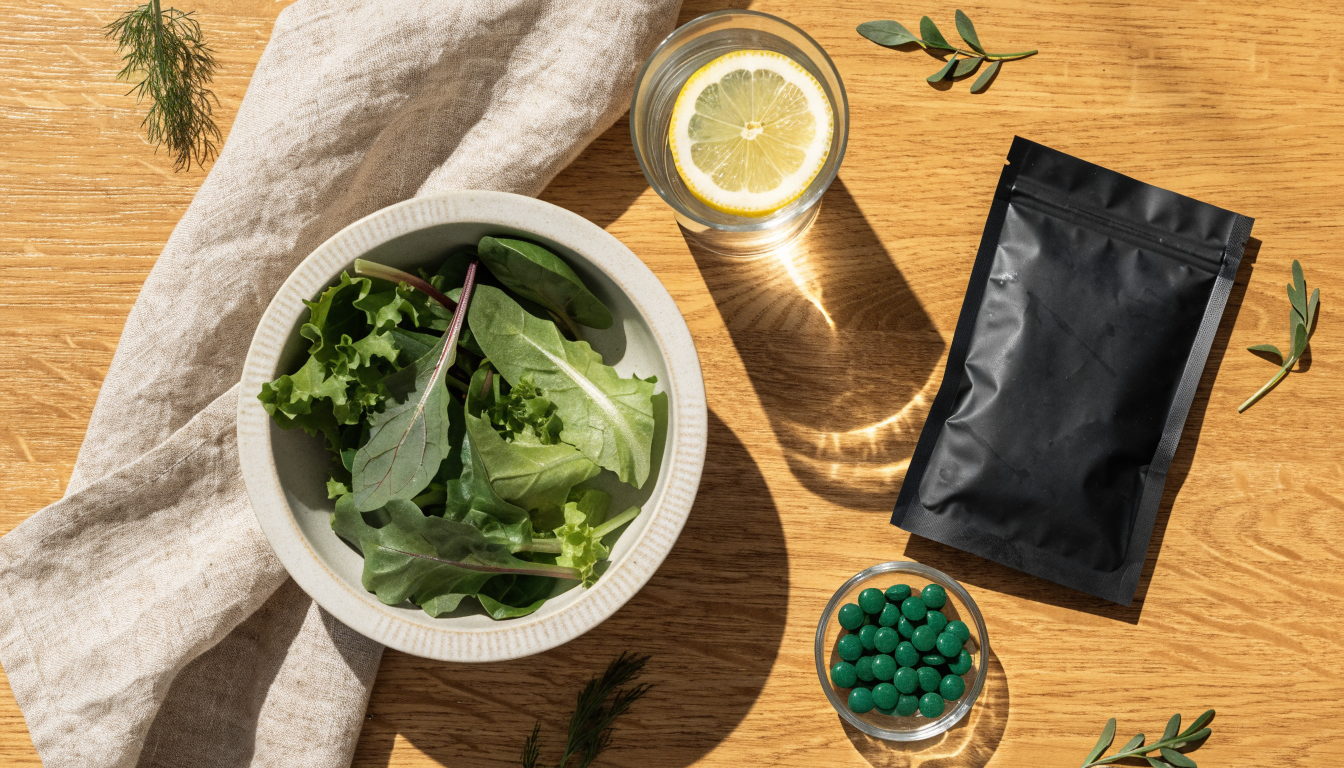
Spirulina is famous for energy, but its gut story is quieter and more interesting than most people expect.
Ask most people which algae is the gut algae and they will say chlorella. That reputation is earned. Chlorella has a tough cellulose cell wall, meaningful fiber, and a long history of being used for regularity and binding. Spirulina, meanwhile, gets filed under energy, protein and iron.
So when someone asks whether spirulina is good for gut health, the honest answer is more nuanced than a yes or a no. Spirulina does interact with the microbiome, and in ways that early research finds genuinely promising. It just does not do it the way fiber does. Understanding that difference is what lets you choose the right algae for the result you actually want.
Barely. Spirulina is a cyanobacterium rather than a true plant algae, and its cell wall is made of soft mucopolysaccharides instead of rigid cellulose. That is why it is so digestible, and it is also why a typical serving contributes only a fraction of a gram of fiber. You would have to eat an implausible amount of spirulina to reach the fiber content of a single serving of vegetables.
This matters because a lot of gut advice is really fiber advice. If your goal is more bulk in your stool, better transit time, or a prebiotic substrate in the ordinary dietary sense, spirulina is not the tool for that job. Saying so plainly is more useful than overselling it.
Not in the strict, fiber-based definition. But research suggests spirulina may produce prebiotic-like effects through a different route. Its polysaccharides and its signature blue pigment protein, phycocyanin, have been associated in animal studies and early human work with shifts in the balance of gut bacteria, including increases in beneficial groups such as Lactobacillus and Bifidobacterium.
Some of that same research has looked at gut barrier integrity and inflammatory markers, with findings that suggest spirulina compounds may help support the intestinal lining rather than simply feeding bacteria. The evidence base is still early and much of it comes from animal models, so the right framing is promising rather than proven. If you want the fiber-driven version of this story, our piece on whether chlorella is a prebiotic covers the mechanism that does rely on cell wall material.
This is the part that gets overlooked. Because spirulina has no cellulose wall to break down, your body can access its protein, vitamins and minerals with very little digestive work. Protein digestibility is high, and there is no need for the cracked cell wall processing that chlorella requires.
For people with sensitive stomachs, that is not a footnote, it is the whole point. Plenty of people cannot comfortably handle large volumes of raw greens, high-fiber powders or fibrous supplement blends. Bloating, cramping and urgency push them away from exactly the foods they are told to eat more of. Spirulina offers a way to take in dense nutrition without asking much of the digestive tract. Many people find it sits well even first thing in the morning, which we cover in our guide to taking spirulina on an empty stomach.
These two algae are often sold as interchangeable green powders. For gut purposes they are close to opposites, and choosing well starts with being clear about what you want.
| Factor | Spirulina | Chlorella |
|---|---|---|
| Fiber content | Very low, soft cell wall, almost no cellulose | Meaningful fiber from a tough cellulose cell wall |
| Prebiotic effect | Prebiotic-like, via polysaccharides and phycocyanin | Classic fiber-based prebiotic substrate |
| Digestive load | Very light, absorbed with little effort | Heavier, more noticeable in the gut |
| Regularity and bulk | Minimal contribution | Commonly used for regularity |
| Binding and detox support | Not its strength | Cell wall may bind unwanted compounds |
| Best for | Gentle daily nutrition when digestion is sensitive | Fiber, regularity, binding and cleanse goals |
Put simply, if your gut goal is regularity, bulk, binding or a general cleanse, chlorella is the better gut algae. Our article on chlorella for gut health walks through that side in detail, and if bloating is your specific concern, see whether chlorella helps with bloating.
Spirulina is roughly two thirds protein by weight, and that protein arrives in a form the body absorbs readily. There is no heavy breakdown phase, no long residence time, no fermentation load. For someone whose digestion is already struggling, getting complete protein and a spread of vitamins and minerals without a digestive cost is a real advantage, even though it is not a microbiome claim.
Some people do notice mild gas, loose stools or a slightly unsettled stomach in the first few days. This is usually temporary and tends to reflect a system adjusting to a new, very concentrated food rather than anything going wrong.
The fix is simple. Start with a small amount, perhaps a third or half of the serving you eventually want, take it with water, and build up over one to two weeks. Most people find the initial reaction fades. If it does not, or if symptoms are strong, stop and speak with your healthcare provider.
ENERGYbits spirulina tablets are a single ingredient, cold pressed, and free of fillers or binders. Easy to take, easy to digest, and made for daily use.
Shop ENERGYbits spirulina →Short, practical emails on how to use algae well, sent to your inbox.
Join the list →Spirulina is not a fiber source, but research suggests it may support the gut in a prebiotic-like way through its polysaccharides and phycocyanin. It is also unusually easy to digest, which makes it a practical option for sensitive stomachs. For bulk and regularity, chlorella is the better fit.
Animal studies and early human research have associated spirulina compounds with increases in beneficial bacteria such as Lactobacillus and Bifidobacterium. The findings are encouraging but still early, so it is best described as a prebiotic-like effect rather than a proven one.
Chlorella, if your goal is fiber, regularity, bulk or binding, because of its cellulose cell wall. Spirulina, if your goal is gentle daily nutrition and your digestion does not tolerate high-fiber greens well. Many people take both for different reasons.
Some people notice mild gas or looser stools during the first few days. Starting with a smaller amount and increasing gradually over one to two weeks usually resolves it. If symptoms persist or feel significant, stop and consult your healthcare provider.
Begin with a small serving, around a third to a half of your target amount, taken with a full glass of water. Increase slowly over one to two weeks. Consistency matters more than a large dose on any single day.


