


What Is Phycocyanin in Spirulina? Benefits Explained
, by The ENERGYbits® Team, 8 min reading time
, by The ENERGYbits® Team, 8 min reading time
Phycocyanin is the blue pigment protein that gives spirulina its blue green color, and it is found in spirulina but not in chlorella. Here is what it does, why gentle processing matters, and how to spot quality.
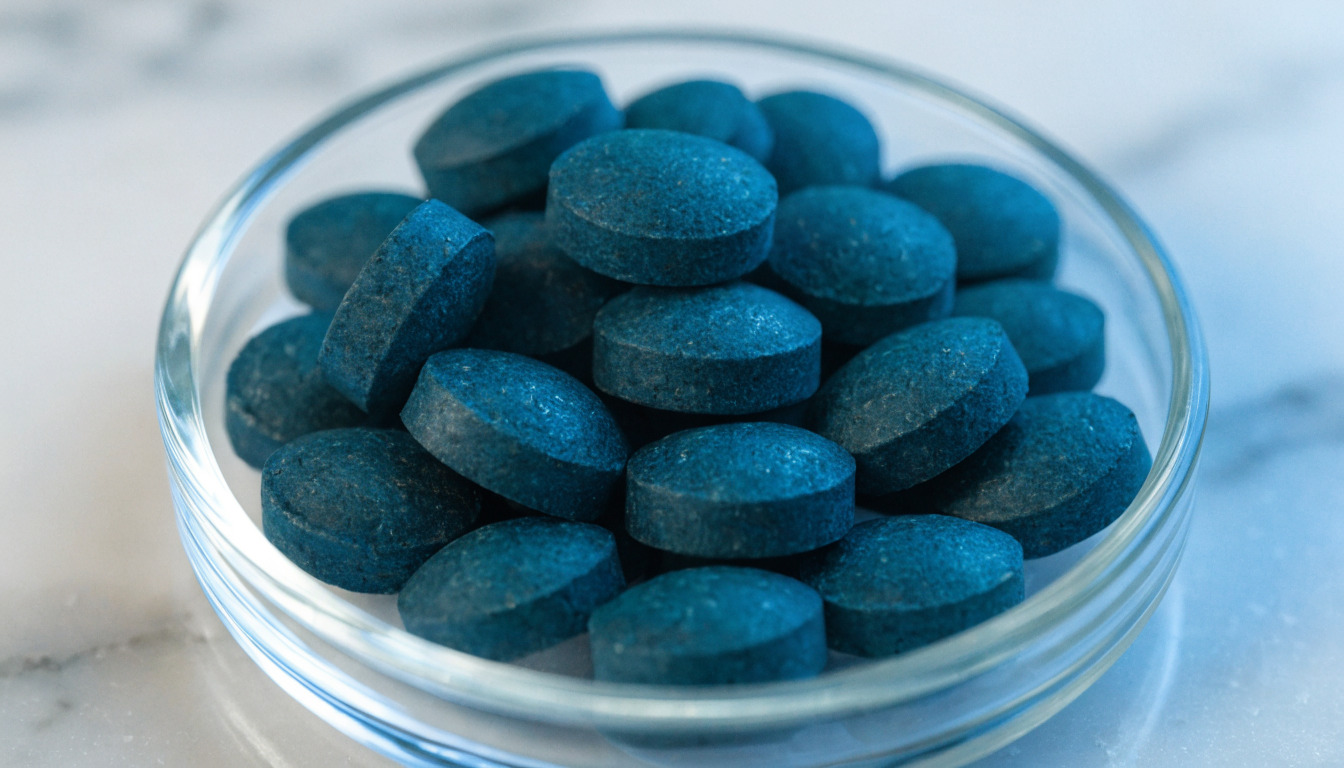
That deep blue green color is your first clue that phycocyanin is present.
If you have ever wondered why spirulina looks blue green rather than plain green, the answer is a single remarkable molecule. Phycocyanin is a pigment bound to protein, and it is one of the main reasons spirulina has been studied so widely. It is also one of the easiest quality signals you can see with your own eyes.
Phycocyanin is a phycobiliprotein, which simply means a colored pigment attached to a protein backbone. In spirulina it can make up a meaningful share of the algae's total protein, which is part of why spirulina is considered such a protein dense food. If you are curious about that side of things, we break it down in our guide to whether spirulina is a complete protein.
Its day job inside the algae cell is light harvesting. Spirulina grows in warm alkaline water where light quality shifts, and phycocyanin lets it absorb wavelengths that chlorophyll alone would miss. The pigment then hands that energy off so photosynthesis can continue.
Spirulina is a cyanobacterium, sometimes called blue green algae, while chlorella is a true green algae. Only the cyanobacteria family builds phycobiliproteins like phycocyanin. Chlorella leans almost entirely on chlorophyll, which is why it looks a deep grassy green rather than blue green. That single pigment difference is one of the clearest ways to tell the two apart, and we cover the rest in our side by side on spirulina versus chlorella.
Pigments are not interchangeable. Each one absorbs different wavelengths and plays a different role, both in the plant and on your plate.
| Pigment | Color | Where it is found | Main role |
|---|---|---|---|
| Phycocyanin | Blue to blue green | Spirulina and other cyanobacteria | Light harvesting protein that also acts as an antioxidant |
| Chlorophyll | Deep green | Chlorella, leafy greens, most plants | Primary photosynthetic pigment, often linked with cleansing support |
| Beta carotene | Orange to yellow | Carrots, sweet potato, spirulina in smaller amounts | Accessory pigment and a precursor the body can convert to vitamin A |
Research on phycocyanin is still developing, but the pattern is consistent: it behaves as an antioxidant, meaning it may help the body manage everyday oxidative stress. Some studies also suggest it may support the body's normal inflammatory balance rather than pushing it in one direction. None of this means spirulina treats or cures anything, and it should never replace care from your provider. If you want the fuller picture, see our overview of spirulina and inflammation.
True blue is rare in nature, so food makers struggled for decades to find one that was not synthetic. Extracted phycocyanin solved that. It is now used to tint candy, frosting, ice cream, and drinks a vivid blue without petroleum derived dyes. The catch is that isolated coloring extract is a very different thing from whole food spirulina, which delivers the pigment alongside protein, chlorophyll, carotenoids, and minerals.
ENERGYbits Spirulina is grown in fresh water, harvested carefully, and pressed into tablets at low temperature so the blue green pigment stays intact. One ingredient, nothing else.
Shop ENERGYbits SpirulinaHeat is phycocyanin's biggest enemy. The pigment is a protein, and like any protein it can denature when it gets too hot, fading from bright blue green toward a dull olive or gray. Aggressive spray drying, high heat tableting, and long storage in light or warmth all chip away at it. This is exactly why gentle low temperature processing matters so much, and why color is a fair proxy for care in handling. It is also why spirulina tastes best when it is not overprocessed, something we get into in what spirulina actually tastes like.
Three things to look for. First, color: a rich, saturated blue green, not a flat khaki. Second, the ingredient list: it should say spirulina and nothing else, with no binders, fillers, flowing agents, or capsule shells. Third, testing: reputable brands publish third party results for heavy metals and microcystins, because algae reflects the water it grew in.
Join our newsletter for plain-language guides on spirulina, chlorella, and everyday wellness.
SubscribePhycocyanin is the blue pigment protein that gives spirulina its blue green color. It helps the algae capture light for photosynthesis and also acts as an antioxidant. It is one of the most studied compounds in spirulina and is unique to blue green algae.
No. Chlorella is a true green algae that relies on chlorophyll, so it contains no phycocyanin. Only cyanobacteria such as spirulina produce this blue pigment protein, which is why the two algae look noticeably different in color.
Heat can degrade it. Phycocyanin is a protein, so high temperature drying, hot tableting, or prolonged storage in warmth and light can fade the pigment and reduce its activity. Gentle low temperature processing helps preserve both the color and the compound.
Look for a deep, saturated blue green color rather than a dull olive tone, an ingredient list with spirulina and nothing else, and published third party testing for heavy metals and microcystins. Dosage guidance is covered in our daily spirulina dosage guide.


