



Does Chlorella Help With Candida?
, by The ENERGYbits® Team, 9 min reading time
, by The ENERGYbits® Team, 9 min reading time
Candida is a yeast that normally lives in the body. There is no strong human evidence that chlorella affects candida, though its prebiotic fiber and nutrients may support a balanced gut environment.
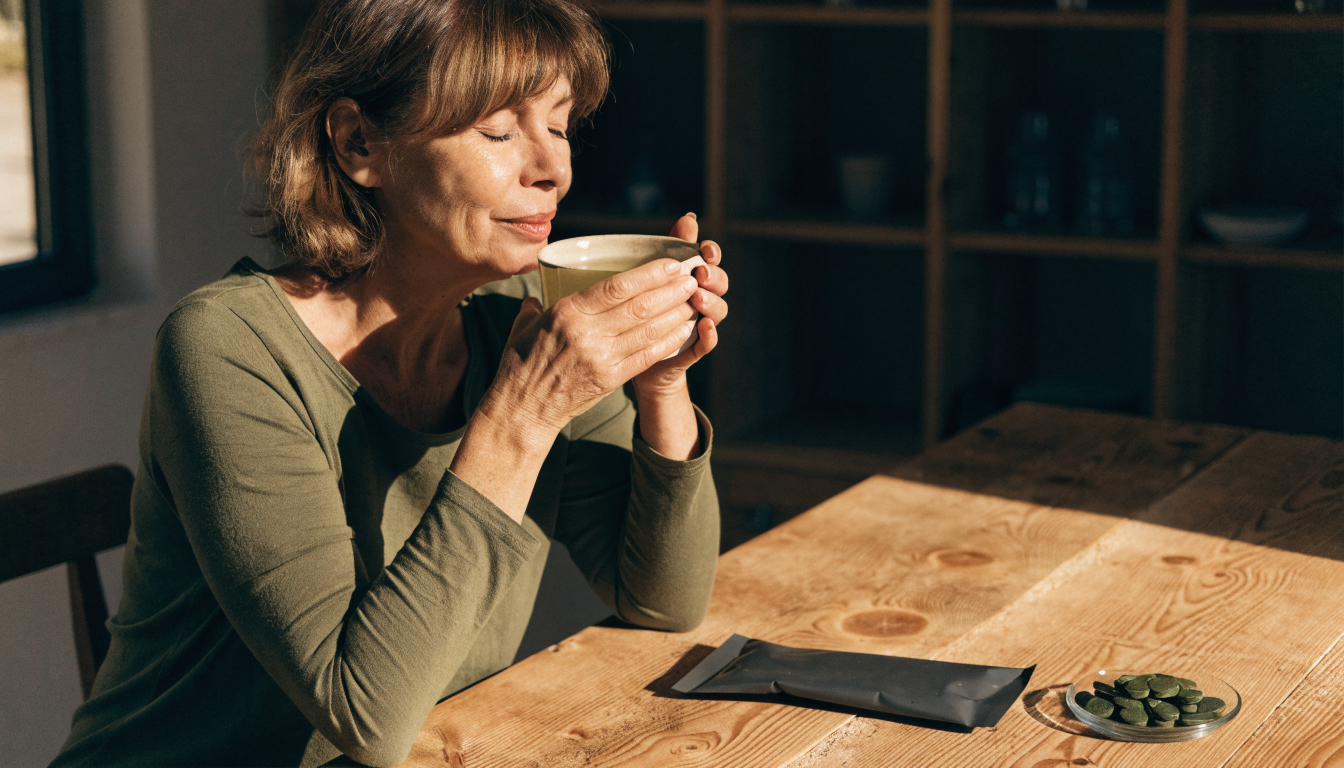
Candida is one of the most hyped topics in gut wellness, so here is the measured version.
Search for candida online and you will find a wall of confident claims, strict cleanse protocols, and supplement lists that promise a reset in 30 days. Very little of it is grounded in clinical research. Chlorella shows up on many of those lists, so it is worth separating what algae can honestly do for your gut from what the internet says it does.
Candida is a genus of yeast, and species like Candida albicans live quietly in most healthy people. It is part of the normal flora of the mouth, gut, and skin. Its presence is not a problem in itself. Problems arise only when it grows out of proportion in a specific tissue, which doctors call candidiasis. That includes oral thrush, vaginal yeast infections, and, rarely, invasive infections in people who are seriously immunocompromised. Those are real, diagnosable conditions with real treatments.
The wellness concept of "candida overgrowth" is much broader and much fuzzier. It is usually self-diagnosed from a long list of non-specific symptoms such as fatigue, brain fog, bloating, and sugar cravings, symptoms that overlap with dozens of other explanations. There is no validated at-home test for it, and the spit test circulating on social media has no diagnostic value.
In short, no. There are no well-designed human trials showing that chlorella reduces candida in the gut or resolves yeast-related symptoms. Some laboratory work has looked at algae extracts against microbes in a dish, but a compound acting on cells in a petri dish tells you almost nothing about what happens after digestion in a living person. Honest reporting means saying that out loud rather than dressing up preliminary lab data as proof.
| Claim you will see online | What the evidence actually shows |
|---|---|
| Chlorella clears candida overgrowth from the gut | No human trials support this. Lab studies on isolated cells do not translate to the human digestive tract. |
| Chlorella binds and removes yeast toxins | Chlorella's cell wall has been studied for binding certain metals in animal research. There is no human evidence for binding yeast byproducts. |
| Die-off symptoms prove it is working | Not well supported. Digestive changes are common when starting any fiber-rich food and are not proof that yeast is dying. |
| A candida cleanse resets the gut | Highly restrictive cleanses lack clinical support. A varied, fiber-rich diet is far better studied for microbiome balance. |
| Algae can replace antifungal medication | No. Diagnosed candidiasis needs medical care from a qualified clinician. |
Here is the part that is actually supported. Chlorella contains fiber and polysaccharides that behave in a prebiotic-like way, meaning they can feed the beneficial bacteria already living in your gut. Our guides on whether chlorella is a prebiotic and on chlorella and gut health walk through that research in more detail.
Why does that matter for a yeast conversation? Because a diverse, well-fed bacterial community is one of the things that keeps yeast populations in check naturally. Beneficial bacteria compete for space and nutrients and help maintain the conditions of the gut lining. Supporting that ecosystem is an indirect, gradual contribution rather than a targeted action against any single organism, and that distinction matters.
A large share of your immune tissue sits along the digestive tract, which is why gut balance and immune balance are discussed together so often. Chlorella supplies nutrients involved in normal immune function, including iron, vitamin B12, beta carotene, and protein, and small studies have looked at markers of immune activity in people taking it. Our article on whether chlorella supports the immune system covers the evidence and its limits. Nutritional support for normal immune function is a reasonable thing to say. Antifungal action is not.
"Die-off," sometimes called a Herxheimer reaction, gets used as a catch-all explanation for feeling worse after starting a protocol. The trouble is that it is unfalsifiable as usually presented: feeling better means the plan is working, and feeling worse also means the plan is working. There is no reliable way for anyone at home to tell whether symptoms come from dying yeast, a sudden increase in fiber, a restrictive diet, or something unrelated. If a new supplement makes you feel noticeably unwell, that is a reason to pause and ask a clinician, not a badge of progress.
RECOVERYbits is pure cracked-cell-wall chlorella with nothing added: fiber, chlorophyll, and micronutrients for everyday gut and immune support.
Shop RECOVERYbits ChlorellaTreat it as daily nutrition rather than a protocol. Start with a small amount, take it with plenty of water, and build up gradually so your digestion can adjust, as our guide on how much chlorella per day explains. Microbiome changes are slow and cumulative, so consistency over weeks matters far more than any loading phase. If you are pregnant, nursing, taking medication, or managing a health condition, check with your healthcare provider first, since chlorella contains vitamin K and iron that can matter in some situations.
Do not self-manage a suspected yeast infection with supplements. Oral thrush, recurrent vaginal yeast infections, skin infections that will not settle, or any symptoms alongside diabetes, recent antibiotics, or a weakened immune system all warrant a proper evaluation. Candidiasis is diagnosed with examination and testing and is managed with antifungal medication when needed. Persistent fatigue and brain fog also deserve a real workup rather than a cleanse, because the cause is often something entirely different and genuinely treatable.
Join our newsletter for plain-language guides on spirulina, chlorella, and everyday wellness.
SubscribeThere is no strong human evidence that chlorella affects candida. It is not a treatment for candida. What chlorella may do is support a balanced gut environment through its prebiotic-like fiber, and a balanced microbiome is what keeps yeast in check naturally.
Candidiasis is real and diagnosable, including oral thrush and vaginal yeast infections. The broader wellness idea of candida overgrowth, self-diagnosed from symptoms like fatigue and bloating, is much fuzzier and has no validated at-home test.
Die-off claims are not well supported. Any digestive changes when you start chlorella are more likely from the sudden increase in fiber. Start small, take it with water, and speak with a clinician if you feel unwell.
Yes. Oral thrush, recurrent yeast infections, or symptoms alongside diabetes, recent antibiotics, or a weakened immune system need medical evaluation and may require antifungal medication. Supplements are not a substitute for that care.


