



Does Spirulina Contain Heavy Metals? Purity and Testing Explained
, by The ENERGYbits® Team, 8 min reading time
, by The ENERGYbits® Team, 8 min reading time
Spirulina does not create heavy metals, but it can absorb them from the water it grows in. Here is what third-party testing covers and how to read a certificate of analysis.
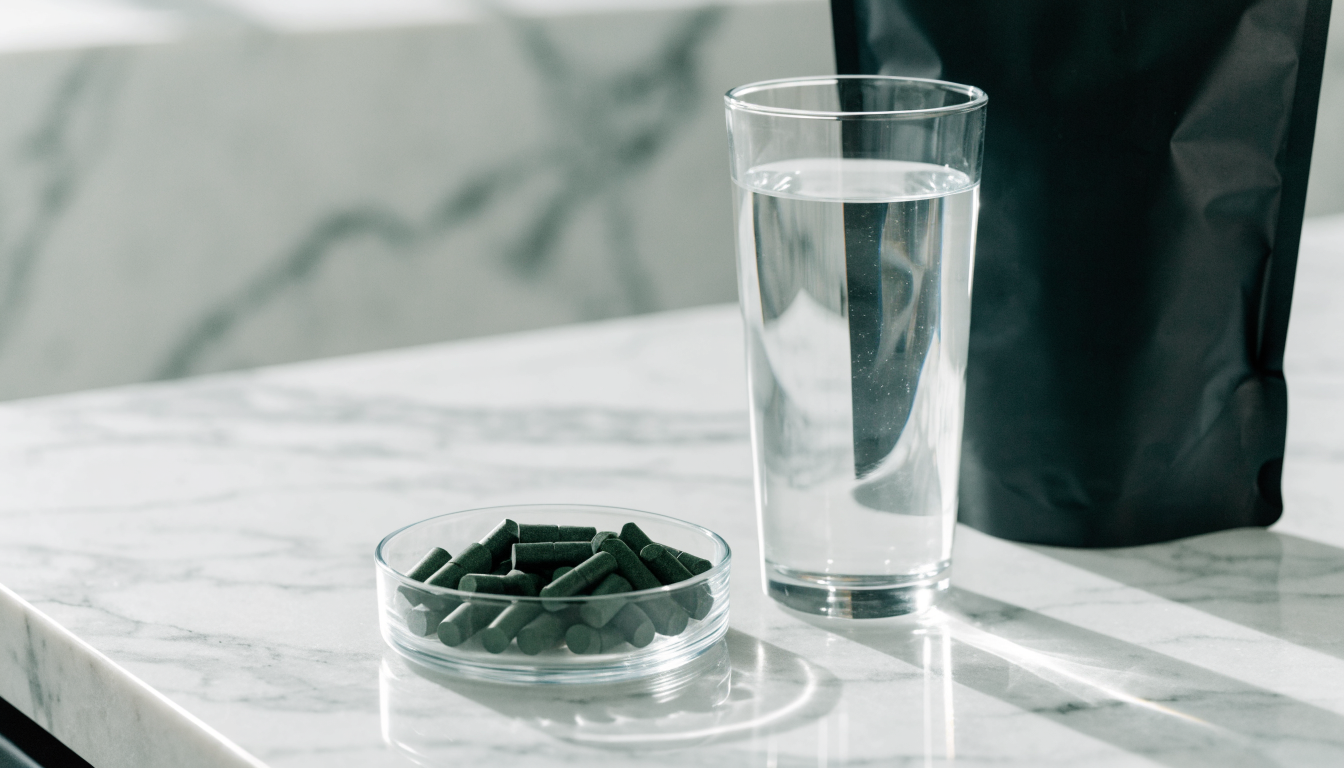
Spirulina is only as clean as the water it grows in, which is why testing matters.
It is a fair question, and one worth asking out loud. Spirulina is a filter-feeding organism in the loosest sense: it lives in water, and it takes up whatever minerals are dissolved around it. That ability is exactly why spirulina is so nutrient-dense, and it is also why growing conditions are everything.
The honest answer is that some spirulina on the market has tested high for contaminants, and some has tested exceptionally clean. The difference is almost never the species. It is the water, the pond, the harvest, and whether anyone bothered to check.
Contamination is an environment problem, not an algae problem. The most common sources are:
Open, uncontrolled ponds. Algae grown in open natural lakes or unmanaged outdoor ponds is exposed to agricultural runoff, industrial discharge, road dust, and whatever else drifts in. Nothing filters it out.
Polluted or untested source water. If the incoming water carries trace lead, mercury, cadmium, or arsenic, the algae will concentrate it over its growth cycle.
Wild or uncontrolled harvesting. Algae scraped from natural water bodies can come mixed with other cyanobacteria species, including ones that produce toxins.
Fillers and processing. Some products are cut with binders, flow agents, or unnamed "proprietary blends" that introduce their own quality questions. This is one reason format matters, and why we walk through the differences in our guide to spirulina tablets versus powder.
Microcystins are toxins produced by certain blue-green algae, most often Microcystis, which can grow alongside spirulina in open, uncontrolled water. Spirulina itself does not produce microcystins. The concern is cross-contamination from neighboring species during growth or harvest.
This is a solved problem when growing conditions are controlled and every batch is tested. Reputable producers screen for microcystins specifically, not just heavy metals, and publish the result.
A single "tested for purity" claim on a label does not tell you much. Here is what a genuinely thorough screening panel looks for.
| What is tested | Why it matters | What you want to see |
|---|---|---|
| Lead | Accumulates from soil, runoff, and industrial sources | Below established safety limits, reported per batch |
| Mercury | Enters water from air deposition and industry | Non-detect or trace, well under limits |
| Cadmium | Common in fertilizer and mining runoff | Below established safety limits |
| Arsenic | Naturally present in some groundwater | Below established safety limits |
| Microcystins | Toxin from other algae species that can grow nearby | Explicitly tested and non-detect |
| Microbiology | Bacteria, mold, and yeast from handling or drying | Within standard food-safety thresholds |
A certificate of analysis (COA) is the lab document behind a purity claim. When you look at one, check four things:
1. Is it batch-specific? A COA should reference a lot or batch number and a date. A generic, undated document tells you nothing about the bag in your hand.
2. Who ran it? Look for an independent, accredited laboratory rather than an in-house result.
3. What was actually tested? Confirm the panel includes each of the four heavy metals plus microcystins. Many COAs quietly skip microcystins.
4. Are results numeric? "Pass" is weaker than a number next to a limit. Real numbers let you see how much margin there is.
You will not always have a COA in front of you, so the label is your first filter. Look for a single ingredient (just spirulina), no fillers, binders, or flow agents, a stated controlled growing environment rather than open lake harvesting, and a clear statement that batches are third-party tested. Country of origin and a way to request test results are good signs too.
Clean sourcing also affects how spirulina feels day to day. Most of what people describe as a bad reaction traces back to quality or to starting too fast, which we cover in our breakdown of spirulina side effects and in our guide to whether you can take too much spirulina.
ENERGYbits® Spirulina is a single ingredient with zero fillers, grown in a controlled environment and third-party tested for heavy metals and microcystins, batch by batch.
Shop ENERGYbits® Spirulina →This is where a lot of confusion starts. Clean spirulina does not add a meaningful heavy metal burden. Chlorella, a different green algae, is the one most often discussed for binding support in the digestive tract, and we look at the research on that in our article on whether chlorella removes heavy metals. Either way, the same rule applies: an algae that may support your body's own pathways only helps if the algae itself is clean.
Join the newsletter for a one-page guide to reading labels and test results, plus subscriber-only offers.
Send me the checklist →For most healthy adults, yes, provided it comes from a controlled growing environment and is third-party tested. Daily use is common. If you are pregnant, nursing, or taking medication, check with your healthcare provider first.
You cannot tell by taste, color, or smell. The only reliable way is a batch-specific certificate of analysis from an independent lab showing results for lead, mercury, cadmium, arsenic, and microcystins.
No. Spirulina does not produce microcystins. They come from other blue-green algae that can grow alongside it in open, uncontrolled water, which is why controlled growing conditions and specific microcystin testing matter.
Format itself is not the issue. What matters is the growing environment, whether fillers or binders were added, and whether each batch is tested. A single-ingredient tablet with no additives and published test results is a strong sign of quality.


