



Can You Take Too Much Spirulina? Safe Amounts Explained
, by The ENERGYbits® Team, 8 min reading time
, by The ENERGYbits® Team, 8 min reading time
Wondering if there is such a thing as too much spirulina? Here are the typical safe daily ranges, why purity matters more than quantity, and how to start low and build up.
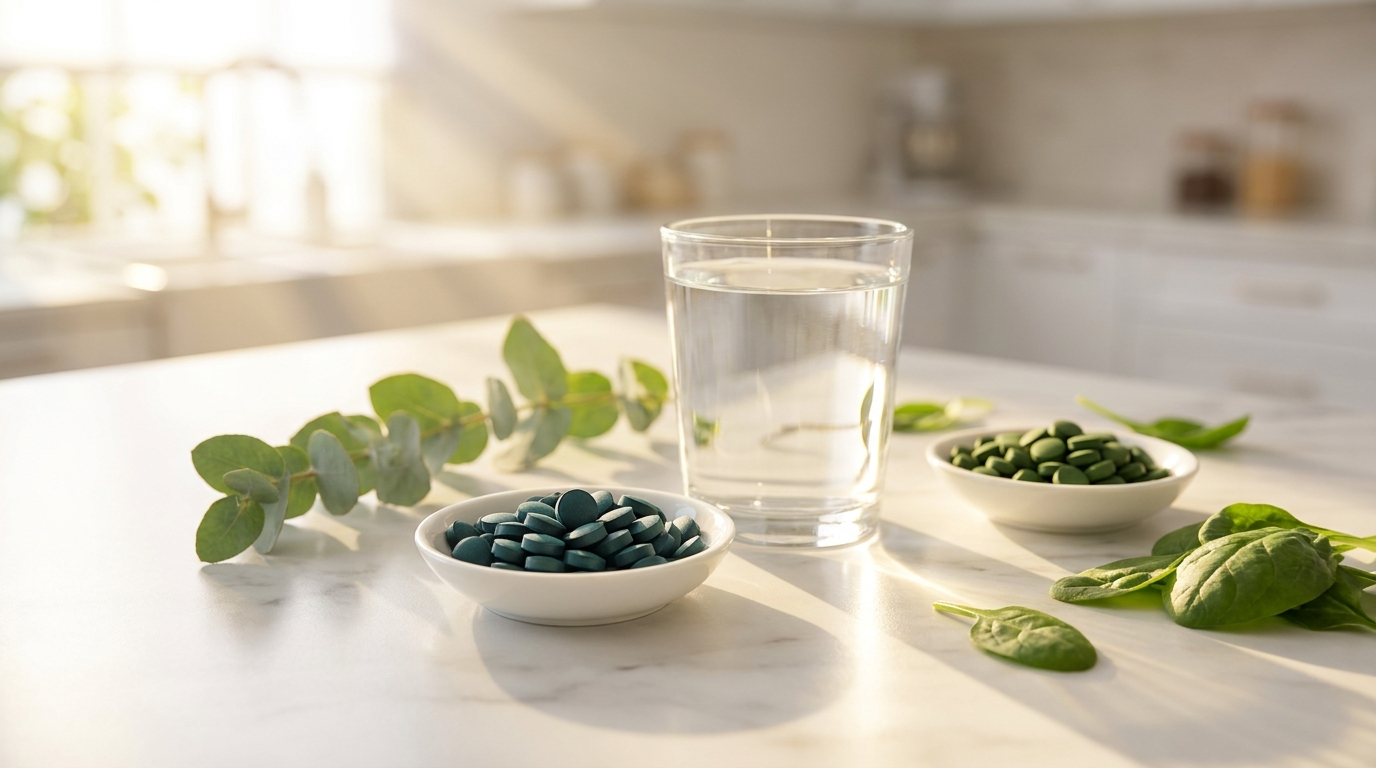
A calm morning routine makes it easy to start low and build up gradually.
Spirulina is a food, not a stimulant or a drug, so it does not carry the sharp upper limits people worry about with some supplements. In practice, most healthy adults tolerate everyday amounts well, and the body simply uses what it needs. That said, more is not automatically better. Very large amounts taken all at once, especially on day one, can feel like a lot for your digestion, and quality matters far more than sheer quantity. If you want a full breakdown of typical serving sizes, our spirulina dosage guide walks through it step by step. You can explore our approach with ENERGYbits spirulina tablets, which are grown and tested for purity.
A common everyday range is about 3 to 5 grams per day, which is a modest, food-sized amount. Many studies have used higher intakes, sometimes several times that, over set periods without trouble in healthy participants. There is no single official ceiling, so the sensible approach is to begin at the lower end, notice how you feel, and adjust from there. The table below shows what different daily ranges tend to look like for most people.
| Daily amount | What it looks like | What most people notice |
|---|---|---|
| About 1 to 2 g | A gentle introduction | Easy entry point, good for the first week |
| About 3 to 5 g | Common everyday range | A comfortable, sustainable daily habit |
| About 6 to 10 g | Higher intake seen in studies | Fine for many, best reached gradually |
| Very large, all at once | More than the body expects quickly | Possible mild digestive adjustment |
Here is the part that gets overlooked. The real safety question with algae is not how much you take, it is where it came from. Poorly grown or unregulated spirulina can pick up heavy metals or microcystins, which are compounds produced by contaminating blue-green algae. This is why third-party testing and controlled growing conditions matter so much. Clean, tested spirulina at a generous serving is far safer than a small amount of an unverified product. If you are weighing algae options in general, our look at whether chlorella is safe to take daily covers the same purity principles.
If you jump straight to a large serving, you may notice mild, short-lived effects as your body adjusts. These can include a little bloating, looser digestion, or a temporary detox-like feeling as your routine changes. None of this is dangerous for most healthy people, and it usually settles once you ease into a steady amount. For a fuller picture of what to expect, see our overview of spirulina side effects. Taking it with food, or reviewing whether to take it on an empty stomach, can also make the experience gentler.
The kindest approach is to begin with a small daily serving, stay there for several days, then increase gradually until you reach a range that feels right. Consistency matters more than intensity, so a steady 3 to 5 grams beats an occasional huge scoop. Pairing it with a set time can help it stick, and our guide to the best time to take spirulina and chlorella can help you build a rhythm. The comparison below shows the difference between rushing and pacing yourself.
| Signs you are going too fast | Signs of a good pace | |
|---|---|---|
| Large serving on the very first day | Small start, increased over a week or two | |
| Noticeable bloating or urgency | Comfortable digestion throughout | |
| Skipping days then doubling up | Same modest amount, taken consistently |
Everyday spirulina suits most healthy adults, but a few groups should check with a professional first. If you are pregnant or nursing, managing an autoimmune condition, taking medication, or living with a condition like phenylketonuria, it is worth a quick conversation with your healthcare provider before starting. This is not about spirulina being risky, it is simply good practice with any new addition to your routine.
ENERGYbits spirulina is grown in controlled conditions and third-party tested, so you can focus on building a comfortable daily habit.
Shop ENERGYbits SpirulinaJoin our newsletter for practical, no-hype guidance on algae, energy, and daily nutrition.
SubscribeFor healthy adults, spirulina is a food and is very hard to overdo at everyday amounts. The bigger concern is source purity, not quantity, so choose clean, third-party tested algae and start with a modest serving.
A common everyday range is about 3 to 5 grams per day, with higher amounts used in research. Begin at the lower end, notice how you feel, and adjust gradually from there.
Jumping to a large serving may cause mild, short-lived effects like bloating or looser digestion as your body adjusts. These usually settle once you ease into a steady daily amount.
If you are pregnant, nursing, taking medication, managing an autoimmune condition, or living with phenylketonuria, check with your healthcare provider before starting. It is simply good practice with any new supplement.


