



Does Spirulina Help With Anemia and Low Iron?
, by The ENERGYbits® Team, 7 min reading time
, by The ENERGYbits® Team, 7 min reading time
Spirulina is a plant-based source of iron that may help support healthy iron intake. Here is how it compares to spinach, lentils, and iron pills, and why diagnosed anemia still needs a doctor's care.
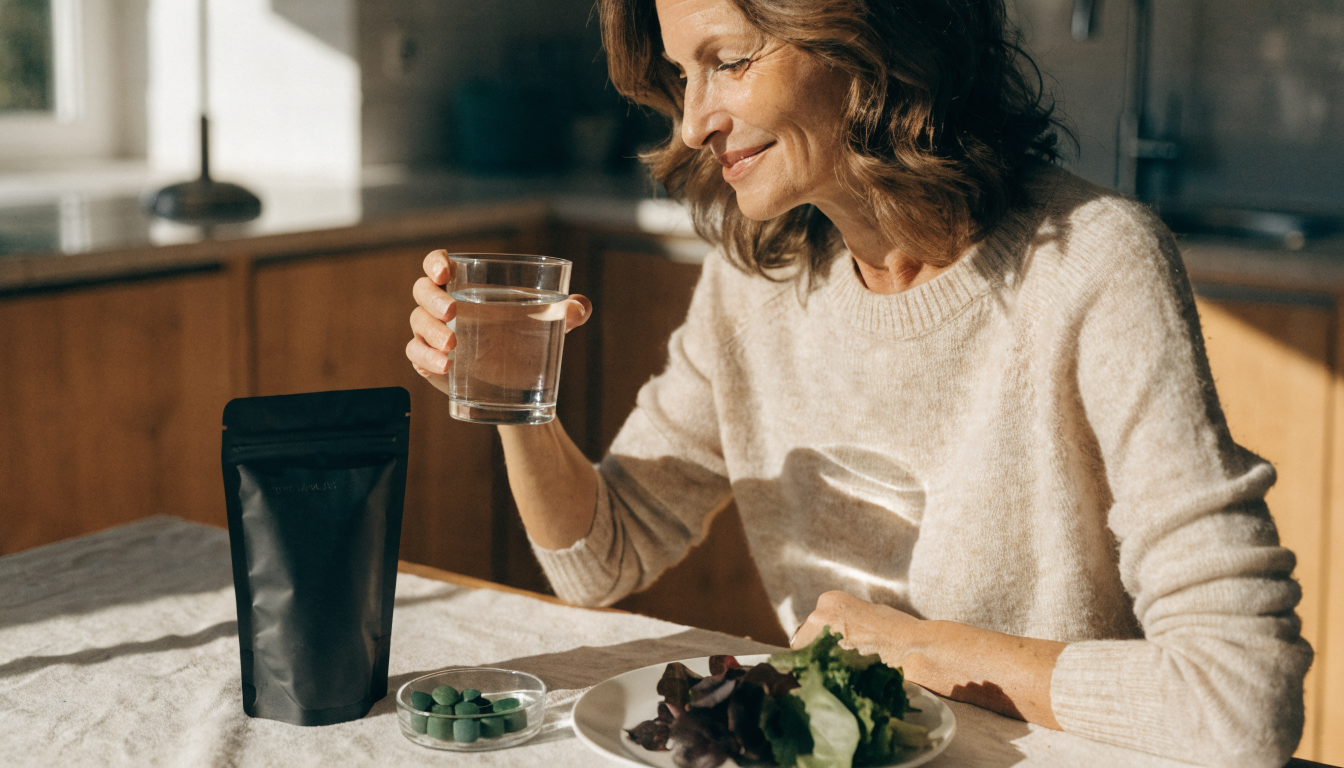
Spirulina is one of the more iron-dense whole foods you can keep on the counter.
If you have ever dragged through a mid afternoon, been told your ferritin is on the low side, or been turned away at a blood drive, iron has probably crossed your mind. Spirulina shows up in a lot of those searches, and for good reason. Gram for gram it is one of the more iron-dense foods on the shelf. It is also, importantly, a food and not a medicine, and that distinction matters when the word anemia is involved.
A 10 gram serving of spirulina, roughly 30 ENERGYbits tablets, supplies in the neighborhood of 3 mg of iron. That is a real contribution for something you can take with a glass of water and no cooking involved, and it sits in the same range as a half cup of cooked spinach or lentils. Spirulina is also close to 60 percent protein by weight, which is rare for a plant. Our guide on how much protein is in spirulina walks through those numbers in more detail.
Numbers on a label only tell part of the story. What your body does with that iron, and how your stomach feels afterward, matter just as much.
| Source | Iron per serving | Absorption and tolerability note |
|---|---|---|
| Spirulina, 10 g (about 30 tablets) | About 3 mg | Plant iron in a whole food matrix, low in oxalates, generally gentle on the stomach |
| Spinach, cooked, 1/2 cup | About 3 mg | High in oxalates, which appear to limit how much iron the body takes up |
| Lentils, cooked, 1/2 cup | About 3 mg | Solid plant source, though phytates may reduce uptake unless paired with vitamin C |
| Typical iron supplement, 1 tablet | 18 to 65 mg | Much larger dose, commonly causes constipation or nausea, take only as directed by a clinician |
Research on spirulina suggests its iron is reasonably bioavailable for a plant source, in part because spirulina has no cell wall and very little of the oxalate that ties up iron in leafy greens. The practical upside people report most often is comfort. Spirulina delivers a modest, food-level amount rather than a concentrated dose, so it rarely brings the digestive complaints that make iron pills hard to stick with.
Low iron and low energy travel together, but iron is not the only piece. Spirulina carries a spread of B vitamins along with all nine essential amino acids, which is why it is often described as a complete protein. Those nutrients support how your body turns food into usable fuel. One honest caveat: the B12 in spirulina is largely an analog form, so it should not be counted on as your B12 source. We unpack that in our piece on whether spirulina contains B12.
ENERGYbits Spirulina is a single-ingredient algae tablet grown in fresh water and third-party tested, with no binders, fillers, or additives.
Shop ENERGYbits SpirulinaSome groups simply lose or need more iron than others. Menstruating women top the list, especially anyone with heavy periods. Vegans and vegetarians rely entirely on non-heme plant iron, which the body absorbs less efficiently than iron from meat. Endurance athletes lose iron through sweat and the repeated impact of training, a topic we cover in our guide on spirulina for athletes. Women in perimenopause can be caught in an awkward middle, with unpredictable cycles that occasionally run heavy. If that season sounds familiar, our article on spirulina during menopause may be useful.
Pair it with vitamin C. That is the single most useful habit here, since vitamin C meaningfully improves absorption of plant iron. Take your tablets alongside citrus, berries, bell pepper, or a small glass of orange juice. It also helps to keep coffee and black tea an hour away from your serving, because the tannins in both bind iron and blunt uptake. Start with a smaller amount and build from there. Our daily spirulina dosage guide lays out a simple ramp.
Join our newsletter for plain-language guides on spirulina, chlorella, and everyday wellness.
SubscribeSpirulina is a plant-based source of iron that may help support healthy iron intake as part of a balanced diet. It is not a treatment for anemia. Anemia has many possible causes and needs to be diagnosed and managed by a healthcare provider, and spirulina is not a replacement for prescribed iron therapy.
A 10 gram serving, which is roughly 30 tablets, provides about 3 mg of iron. That is comparable to a half cup of cooked spinach or lentils, and far less than the 18 to 65 mg found in a typical iron supplement tablet.
Many people find it is. Spirulina delivers a modest, food-level amount of iron rather than a concentrated dose, so it tends not to cause the constipation or nausea that often come with high dose iron supplements. Individual responses still vary.
Yes, that pairing is a good idea. Vitamin C improves the absorption of plant-based iron, so taking spirulina with citrus, berries, or bell pepper may help. Keeping coffee and black tea about an hour away from your serving can also help, since tannins bind iron.


