


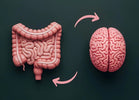
The Gut-Brain Axis: A Plain-English Guide
, by The ENERGYbits Team, 29 min reading time
, by The ENERGYbits Team, 29 min reading time
The gut-brain axis explained: how the vagus nerve, gut microbes and immune signals connect digestion and brain, plus early chlorella and spirulina research.
Your gut contains its own nervous system, hosts trillions of microbes, and is wired to your brain by one of the body's busiest nerves. That is why a stressful week can upset your stomach, and why a poor night of eating can leave you foggy. The science behind this two-way conversation is real and moving fast, and it is also surrounded by hype. This plain-English guide explains the gut-brain axis, separates what is established from what is still preliminary, and shows where food, and algae such as chlorella and spirulina, fit.
ENERGYbits® • Gut & Brain
Quick Answer
What is the gut-brain axis? The gut-brain axis is the two-way communication network linking your digestive tract and your brain. Messages travel through the vagus nerve, the enteric nervous system, immune signals, and chemicals made by gut microbes, such as short-chain fatty acids [1][2][3]. It is well established in animals; human research is still catching up [5].
The phrase sounds like a wellness slogan, but it describes anatomy. Your digestive tract is lined with the enteric nervous system, a mesh of neurons that runs digestion largely on its own. That system is connected to the central nervous system by nerves, by hormones and by the immune system. Researchers now add a third party to the conversation: the gut microbiota, the community of bacteria and other microbes living mostly in your large intestine. Together this is often called the microbiota-gut-brain axis [1].
A comprehensive 2019 review in Physiological Reviews by Cryan and colleagues describes the microbiota and the brain communicating through the immune system, tryptophan metabolism, the vagus nerve and the enteric nervous system, with microbial metabolites such as short-chain fatty acids acting as messengers [1]. Notice what that sentence contains: routes, not miracle cures. The axis is a communication channel, and what travels along it depends heavily on what you eat, how you sleep, how much stress you carry and how your immune system is behaving.
The channel runs in both directions. The brain influences the gut, which is why stress changes digestion, and the gut influences the brain, which is why researchers are studying gut signals in mood, stress response and cognition. Most of the mechanistic detail comes from animal models, and a 2021 review in Nature Reviews Microbiology is candid that insights into the gut microbiota-brain axis largely come from animal models, with human translation still the major challenge [5].
It helps to picture four overlapping routes. They do not work in isolation, but separating them makes the topic far easier to follow.
The vagus nerve is the main parasympathetic nerve of the body, and it runs from the brainstem down through the chest to the abdomen. A 2018 review in Frontiers in Neuroscience notes that about 80 percent of its fibers are afferent, meaning they carry information from the body up to the brain, and that it is able to sense microbial metabolites and relay that gut information to the central nervous system [2]. In plain terms, most of the traffic on this nerve flows toward the brain. Your brain is constantly listening to your gut.
This is also why practices that engage the parasympathetic system, such as slow breathing, unhurried meals and good sleep, are often discussed alongside gut health. The research on deliberate vagal stimulation is a separate and more clinical field; for everyday life, the practical takeaway is simply that calm, regular routines are part of the conversation too.
When gut bacteria ferment dietary fiber, they produce short-chain fatty acids (SCFAs), mainly acetate, propionate and butyrate. A 2019 review in Nature Reviews Gastroenterology & Hepatology describes SCFAs as the main metabolites of bacterial fiber fermentation and as speculated to play a key role in microbiota-gut-brain crosstalk, while stating plainly that the pathways to psychological functioning have not been fully elucidated and that human research is sparse [3]. That is the right level of confidence: SCFAs are a leading candidate messenger, not a proven mood lever.
Gut microbes also influence serotonin. A 2015 study in Cell by Yano and colleagues found that spore-forming bacteria from the mouse and human microbiota promote serotonin production by cells lining the colon, with effects on gut motility and platelet function [4]. Much of the body's serotonin is made in the gut, and it does a great deal of local work there. It would be a leap to read that finding as "gut bacteria set your mood", and the study itself did not claim that.
The gut lining is a busy meeting point between food, microbes and immune cells. Immune molecules released there can travel through the body and signal to the brain, which is one reason chronic low-grade inflammation is a recurring theme in gut-brain research [1]. A useful human example comes from Stanford: in a 17-week randomized trial in healthy adults (18 per group), published in Cell in 2021, a diet high in fermented foods steadily increased microbiota diversity and decreased inflammatory markers, while a high-fiber diet shifted microbial enzymes and produced varied immune responses depending on the person's starting microbiota [6]. It was a small study in healthy people, but it shows that diet can measurably shift immune signaling.
The enteric nervous system coordinates digestion, from muscle contractions to secretions, and it communicates with the brain through the routes above. It is the reason the gut is sometimes called the "second brain". The nickname is catchy but a little misleading: the gut does not think, it manages digestion and reports to headquarters.
Quick Answer
How does the gut talk to the brain? Through four main routes: the vagus nerve (about 80 percent of whose fibers carry signals toward the brain), chemicals made by gut microbes such as short-chain fatty acids, immune signaling, and the enteric nervous system inside the gut wall [1][2][3]. Most mechanistic detail comes from animal studies.
Good science communication means being clear about confidence levels. Here is a plain sorting of the field.
| Claim | Confidence | Why |
|---|---|---|
| The gut and brain communicate in both directions | Well established | Anatomy of the vagus nerve, enteric nervous system, hormones and immune signaling [1][2] |
| Gut microbes produce metabolites that can signal to the host | Well established in principle | SCFA and serotonin work, largely in animals and mechanistic studies [3][4] |
| Specific microbes cause mood or cognitive outcomes in people | Preliminary | Most evidence is from animal models; human translation is the main challenge [5] |
| Diet reshapes the microbiome and immune markers | Supported in humans, in small trials | Randomized diet trial of fermented foods and fiber [6] |
| A particular supplement fixes the gut-brain axis | Not supported | No supplement has this evidence; claims should be treated skeptically |
Why the caution matters
Reviews of the field repeatedly emphasize that findings in mice do not automatically carry over to people, and that correlation between gut bacteria and brain conditions does not show which one drives the other [3][5]. A responsible reading is: the axis is real, the mechanisms are being mapped, and the practical advice that follows is about whole-food patterns, not magic bullets.
If the gut-brain axis runs on fiber fermentation, immune balance and a calm nervous system, then the most useful habits are the unglamorous ones.
Quick Answer
What should I eat to support the gut-brain axis? Build meals around diverse plants (vegetables, fruit, legumes, whole grains, nuts and seeds) to feed fiber-fermenting microbes, and consider fermented foods such as yogurt, kefir or sauerkraut. In a 2021 randomized trial, a high-fermented-food diet increased microbiota diversity and lowered inflammatory markers in healthy adults [6].
Diversity is the principle. Different fibers feed different microbes, and fermentation produces the SCFAs that researchers are studying [3]. Rotating legumes, whole grains, colorful vegetables, fruit, nuts and seeds is a more reliable strategy than relying on any single food. If your fiber intake is low, increase it gradually, drink water alongside it, and give your gut time to adjust.
Yogurt with live cultures, kefir, kimchi, sauerkraut and similar foods delivered clear signals in the Stanford trial, where the fermented-food group showed rising microbiota diversity and falling inflammatory markers over the study period [6]. It was a small trial in healthy adults, so treat it as encouraging rather than final.
The brain-to-gut half of the axis is just as real. Stress and poor sleep alter digestion and gut sensations, and chronic stress is a common thread in functional digestive complaints. Regular sleep, daily movement and a few minutes of slow breathing are inexpensive inputs that support both ends of the axis.
Because the vagus nerve is carrying information from the gut to the brain all day [2], steady meals eaten without rushing give that system a calmer signal than skipped meals followed by a stressed lunch at the desk. This is practical common sense rather than a proven protocol, but it costs nothing to try.
For more on how the brain's own fuel supply connects to nutrition, see our guide to how the brain makes energy, and for the microbiome side see from mitochondria to microbiome.
Chlorella is a single-celled freshwater green alga, and it has become one of the more interesting algae for researchers who study the gut and the brain. Two pieces of research are worth knowing, and it is worth being exact about what each shows.
In 2026, Felip and colleagues published a systematic review in Nutrients, registered in PROSPERO and conducted following PRISMA guidelines, asking what chlorella intake does to the gut microbiota and to brain function. Out of 1,333 articles identified, 21 met the criteria: 10 on gut microbiota and 11 on brain-related outcomes. Nineteen of those 21 studies (90 percent) reported positive associations between chlorella consumption, gut microbiota modulation, and physiological or neurobehavioral markers related to the gut-brain axis [7].
The authors conclude that chlorella consumption may modulate gut microbiota composition and function, potentially influencing brain-related processes. They are also clear about the limits: most of the included studies were in animal models, with only a limited number of human trials, and the literature lacks studies that address both gut microbiota and brain health in the same experiment, which limits understanding of the underlying mechanisms [7]. Read this as a promising and consistent direction, not as proof of benefit in people.
Early evidence, labeled honestly
The review reports mostly positive findings, but they are predominantly preclinical. "Promising" is the accurate word. It supports continued research and informed curiosity about chlorella, not claims about any specific outcome in your own gut or brain [7].
The human trial worth knowing is a randomized, double-blind, placebo-controlled crossover study in Frontiers in Nutrition by Nishimoto and colleagues, in 40 Japanese adults with constipation. The primary outcome, defecation frequency, and the secondary outcome, blood folate, did not differ significantly from placebo. The team then analyzed the microbiome, stool metabolome and blood in an exploratory way and found that chlorella raised several dicarboxylic acids in stool, and that people with low baseline fecal propionate (one of the SCFAs discussed above) showed an increase in propionate after chlorella [8].
The authors' interpretation is the interesting part: the effect of chlorella varies with each person's gut environment, which argues for stratified, personalized nutrition. That fits the broader theme of the gut-brain field, where individual starting points matter as much as the intervention [8]. It is also a reminder not to overread: this was an exploratory analysis in a small trial, and it measured gut chemistry, not mood or cognition.
ENERGYbits chlorella is made with a cracked cell wall, a feature aimed at digestibility. For related reading, see our posts on chlorella and the brain, chlorella for gut health and whether chlorella is a prebiotic.
Spirulina's gut research has been more clinical and less microbiome-focused. The most relevant human study is a 2025 randomized, double-blind, placebo-controlled trial in Nutrition Journal by Jafari Nasab and colleagues at Isfahan University of Medical Sciences. Sixty adults aged 18 to 50 with constipation-predominant irritable bowel syndrome received either 1 g of spirulina daily (two 500 mg capsules) or placebo for 12 weeks [9].
Compared with placebo, the spirulina group had a significantly greater improvement in IBS quality of life and a larger drop in IBS symptom severity score, along with higher plasma total antioxidant capacity and lower malondialdehyde (an oxidative stress marker) and zonulin (a blood marker sometimes used as a signal of intestinal permeability). The results remained significant after adjusting for baseline values, and the authors describe a promising effect while calling for larger, dose-dependent trials in IBS-C and other IBS subtypes [9].
Why does this belong in a gut-brain article? IBS is classically regarded as a disorder of gut-brain interaction, where gut sensation, motility and stress responses are tightly intertwined. A placebo-controlled trial with symptom and quality-of-life endpoints is a meaningful step beyond the laboratory work that dominates algae research. It is also a single 60-person trial that measured symptoms and blood markers, not the microbiome or brain function, so it supports interest rather than firm conclusions [9]. For background, see our guide to spirulina and gut health.
Quick Answer
Is there human evidence for spirulina and gut symptoms? Yes, one randomized trial. In 60 adults with constipation-predominant IBS, 1 g of spirulina daily for 12 weeks was associated with better quality of life and lower symptom severity than placebo [9]. It is a single, promising trial, and larger studies are still needed.
| Chlorella | Spirulina | |
|---|---|---|
| Strongest evidence | 2026 systematic review (21 studies, 19 positive associations, mostly preclinical) [7] | 2025 randomized trial in 60 adults with IBS-C [9] |
| Human data | 2021 crossover trial; exploratory gut chemistry findings [8] | One placebo-controlled trial; symptoms and blood markers [9] |
| Microbiome link | Reported in animal and some human studies [7][8] | Mostly animal and laboratory work |
| Feature of the whole food | Cracked cell wall for digestibility | Rich in protein, phycocyanin and chlorophyll |
| Honest summary | Promising, mostly preclinical | Encouraging, needs replication |
Think of spirulina and chlorella as whole foods that can sit alongside a fiber-rich, varied diet, not as replacements for it. Neither supplies the fiber diversity that feeds your microbes, and no algae product has been shown to replace probiotics, fermented foods or vegetables. What they offer is a concentrated, single-ingredient whole food with a growing research profile.
On quantity, the ENERGYbits reference is a full serving of 30 tablets, each 250 mg, for 7.5 g in total. Many people start with a smaller amount and build up, which is common practice rather than a clinical recommendation. The spirulina IBS-C trial used 1 g per day in capsules, which is a different product and design, so it should not be taken as a dose recommendation. Our spirulina dosage guide covers typical intakes in more detail.
Spirulina and chlorella are generally well tolerated, and some people notice mild stomach upset at first. Check with your healthcare provider before using them if you are pregnant or nursing, have phenylketonuria, an autoimmune condition, a bleeding disorder, or thyroid or iodine concerns (relevant to chlorella), or if you take blood thinners or immunosuppressants. ENERGYbits products are single ingredient with no fillers or additives, grown in freshwater, gently dried at low temperatures and third-party tested for purity and contaminants.
Evidence-first nutrition, weekly
Get one evidence-first nutrition article a week: what the research shows, what it does not, and how whole foods fit in. No hype, just sources.
Join the newsletterThe gut-brain axis is a useful lens, but it is not a diagnosis. Persistent abdominal pain, ongoing changes in bowel habits, blood in the stool, unintended weight loss, fever, vomiting, or difficulty swallowing deserve prompt medical attention. So do persistent low mood, anxiety or cognitive changes, which have many possible causes that a clinician is trained to sort through. A supplement or a diet change is a complement to medical care and never a substitute for it.
Key takeaways
The gut-brain axis is one of the most fascinating ideas in nutrition science, and it deserves both enthusiasm and patience. The channel is real. The best-supported way to use it is the old-fashioned one: eat a wide range of plants, add fermented foods, sleep, move and slow down at meals. Algae earn a thoughtful place beside those habits. Chlorella has a consistent, if early, research signal around the gut microbiota, and spirulina has an encouraging randomized trial in a classic gut-brain condition.
If you want to bring algae into your routine, ENERGYbits spirulina is a single-ingredient place to start, and the VITALITYbits spirulina and chlorella blend brings both algae together. Treat them as one part of a food-first pattern, and let the science keep developing.
It is the two-way communication system between your digestive tract and your brain. Signals travel through the vagus nerve, the enteric nervous system, the immune system and chemicals produced by gut microbes [1][2].
The vagus nerve is the main parasympathetic nerve connecting the brainstem to the organs, including the gut. About 80 percent of its fibers are afferent, carrying information from the body to the brain, and it can sense microbial metabolites [2].
Animal research shows strong links, and some human studies suggest associations, but cause and effect in people is not established. Reviews emphasize that most insights come from animal models and that human translation is the main challenge [5].
They are compounds such as acetate, propionate and butyrate that gut bacteria make when they ferment dietary fiber. They are leading candidates for gut-brain messengers, though how they influence psychological functioning is not fully understood [3].
The gastrointestinal tract contains much of the body's serotonin, and a 2015 Cell study found gut microbes promote its production in colonic cells in mice and human-derived microbes. Its known roles include gut motility and platelet function [4].
Diverse plant foods supply varied fibers for gut microbes, and fermented foods such as yogurt, kefir and sauerkraut raised microbiota diversity and lowered inflammatory markers in a 2021 randomized trial in healthy adults [6].
Possibly. A 2026 systematic review found mostly positive associations between chlorella and gut microbiota markers, but most of the 21 included studies were in animals with only a limited number of human trials [7].
Not on its primary outcomes. In a 2021 crossover trial of 40 adults with constipation, defecation frequency and blood folate did not differ significantly from placebo, but exploratory analysis suggested effects depend on the individual gut environment [8].
One 2025 randomized trial in 60 adults with constipation-predominant IBS found that 1 g of spirulina daily for 12 weeks was associated with better quality of life and lower symptom severity than placebo. Larger trials are needed [9].
No. Algae are whole foods with a different nutrient profile, and they have not been shown to replace fiber, fermented foods or probiotics. Ask your clinician before substituting any product you were advised to take.
A full serving is 30 tablets. Each tablet is 250 mg, so a serving is 7.5 g. Many people start with fewer tablets and build up gradually, which is common practice rather than a clinical recommendation.
People who are pregnant or nursing, or who have phenylketonuria, an autoimmune condition, a bleeding disorder, or thyroid or iodine concerns, and anyone taking blood thinners or immunosuppressants, should consult their healthcare provider first.
See a clinician for persistent abdominal pain, ongoing bowel changes, blood in the stool, unintended weight loss, or persistent low mood or anxiety. Supplements and diet changes complement medical care and do not replace it.
This article is for educational purposes only and is not medical advice. These statements have not been evaluated by the FDA. ENERGYbits® products are whole-food supplements and are not intended to diagnose, treat, cure, or prevent any disease. Talk with your doctor before starting any supplement, especially if you are pregnant, nursing, taking medication, or managing a medical condition.


