


Why Is Spirulina So Expensive? Quality, Price and Value
, by The ENERGYbits® Team, 8 min reading time
, by The ENERGYbits® Team, 8 min reading time
A plain-language look at why quality spirulina costs more, from controlled growing and gentle drying to filler free tablets and batch testing. It also shows how to compare cost per gram of actual algae instead of price per bottle.
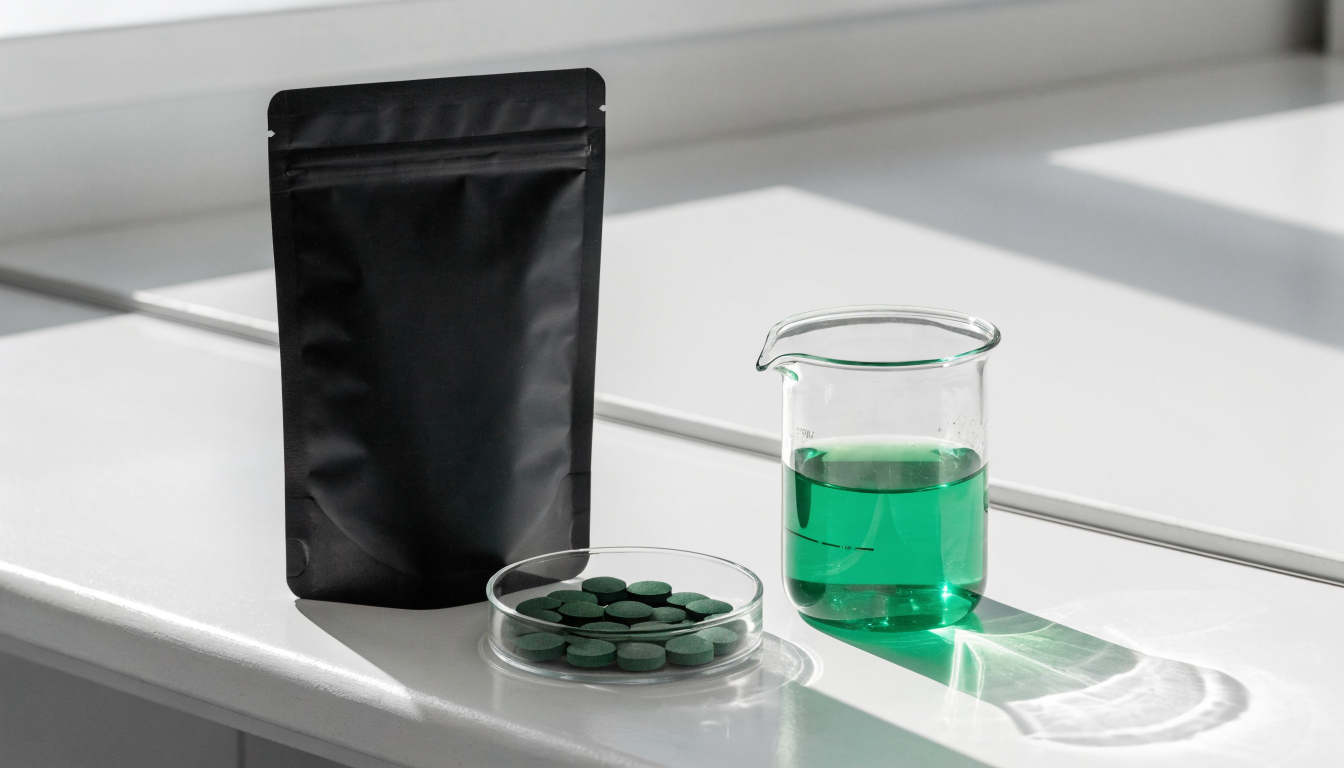
Two bottles of spirulina can look identical on a shelf and be very different products underneath.
The sticker shock is understandable. You can find spirulina for a few dollars a bottle and you can find it for many times that, and the two labels can look nearly identical. The gap is not marketing gloss. Spirulina is a living crop. It is grown in water, harvested wet, dried, pressed and tested, and every one of those steps can be done carefully or cheaply. Price is mostly a record of which choices were made.
It helps to start with the yield problem. Spirulina grows suspended in water, and a very large volume of culture produces a comparatively small amount of dry biomass. Nobody is scooping powder out of a barrel. A producer is concentrating thousands of liters of green water down to a few kilograms of finished algae, then protecting that biomass from heat, light and oxygen until it reaches your kitchen.
Growing conditions come first. Careful producers control the water source, the mineral inputs, the climate and the surrounding land, either in managed ponds or in closed photobioreactors. That control is what keeps out agricultural runoff, industrial metals and competing organisms. Land in a warm, sunny, low pollution region is not cheap, and neither is a reliable supply of clean freshwater.
Drying is the second lever. Spirulina's more delicate compounds, including the blue pigment protein that gives it its color, are heat sensitive. High temperature spray drying is fast and inexpensive. Gentler low temperature methods run slower and cost more, but they protect more of what you bought the algae for in the first place. Our explainer on phycocyanin in spirulina covers why that pigment matters.
Then there is the tablet itself. Pressing pure algae into a tablet that holds together without binders, flow agents or coatings is slower and harder than filling a capsule with loose powder, and it produces more waste. Most manufacturers add something to make the press run faster. A filler free tablet costs more to produce, and it is the reason a serving is a mouthful of algae rather than a mouthful of rice flour. We compare the formats in our guide to spirulina tablets versus powder.
Testing is the least visible cost and often the largest. Heavy metals and microcystins have to be checked batch by batch, not once at launch, and independent laboratories charge for every batch. Add organic certification, microbiology panels, and packaging designed to keep oxygen out so the algae does not degrade on a warehouse shelf, and the cost per gram climbs again. Our article on heavy metals in spirulina explains what those tests look for.
Usually for four reasons. It is bought as a bulk commodity from whichever supplier quoted the lowest price that quarter, so the farm behind it can change between batches. It is grown in open ponds with limited control over the water or the neighbors. It is diluted with fillers, flow agents and blend partners, so the algae is a fraction of what the label implies. And it is sold on old certificates, or on none at all.
| What you are actually paying for | Budget commodity spirulina | Tested premium spirulina |
|---|---|---|
| Growing method | Open ponds, sourced from changing suppliers | Controlled ponds or photobioreactors, one known farm |
| Fillers and binders | Flow agents, binders or blend partners on the label | One ingredient, nothing added to speed the press |
| Heavy metal testing | Occasional, often supplier supplied | Independent lab, every batch, metals and microcystins |
| Drying method | High temperature spray drying | Lower temperature drying to protect heat sensitive nutrients |
| Cost per gram of pure algae | Looks low, rises once fillers are subtracted | Looks higher, stays honest because the gram is all algae |
| What you get | A cheap bottle and an unverified ingredient | A known crop with paperwork you can read |
ENERGYbits Spirulina is a single ingredient tablet with no binders, no fillers and no coatings. Organically grown algae, dried gently and tested for heavy metals and microcystins.
Shop ENERGYbits SpirulinaIgnore price per bottle and work out cost per gram of actual algae. Multiply tablet weight by tablet count to get the total grams in the package, then divide the price by that number. A small bottle of 250 mg tablets and a large bag of 500 mg tablets can sit side by side and be twice apart on the math. Serving size matters too. If you need eight tablets to reach the gram count another brand delivers in three, the cheap bottle empties in half the time. Our daily dosage guide gives you a realistic gram target to run those numbers against.
Read the ingredient list first, and read it for length. One ingredient is a good sign. Anything listing magnesium stearate, silicon dioxide, maltodextrin or a long blend means you are paying for less algae than you think. Check that tablet weight and count are printed clearly rather than buried. Then ask the company for a recent certificate of analysis showing heavy metal and microcystin results for a batch you could actually buy today. A brand that tests every batch will send it without hesitating.
Value is not the lowest number on the shelf. It is the lowest number per gram of clean, verified, filler free algae, and in our experience that is a different bottle almost every time.
Join our newsletter for plain-language guides on spirulina, chlorella, and everyday wellness.
SubscribeSpirulina is a farmed crop, not a manufactured powder. Controlled growing, clean water, a low harvest yield per liter of culture, gentle drying, filler free tableting, batch testing for heavy metals and microcystins, and oxygen barrier packaging all add cost. Price mostly reflects which of those steps a producer paid for.
It can be a false economy. Budget products are often bulk sourced from changing farms, grown in uncontrolled open ponds, diluted with fillers and flow agents, and sold without recent independent testing. You may be buying fewer grams of algae than the label suggests, at a higher real cost per gram.
Compare cost per gram of algae, not price per bottle. Multiply tablet weight by tablet count to get total grams, then divide the price by that figure. Also check how many tablets make a serving, because a low price on a small package can disappear quickly.
Look for heavy metal results including lead, arsenic, cadmium and mercury, a microcystin result, and microbiology testing.


