



Can Spirulina Help You Sleep Better?
, by The ENERGYbits® Team, 9 min reading time
, by The ENERGYbits® Team, 9 min reading time
Spirulina will not knock you out, but it may support the nutritional basics behind restful sleep. Here is what it contains, when to take it, and why it does not keep most people awake.
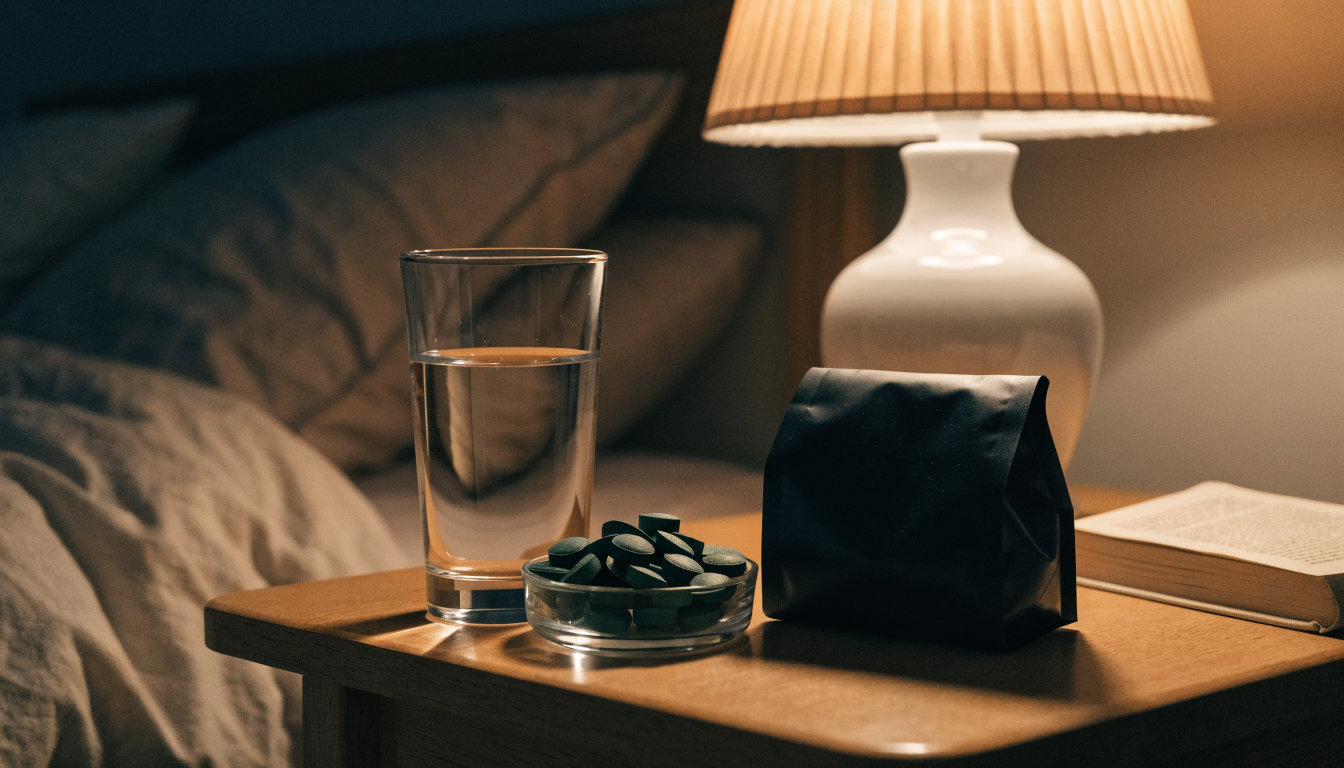
Spirulina is food, not a sedative, so the sleep story is more indirect than most people expect.
Sleep questions come up constantly in our inbox, and they usually arrive in one of two flavors. Either someone hopes spirulina will finally help them fall asleep, or someone worries that a green algae marketed for energy will leave them staring at the ceiling at 2 a.m. Both questions deserve an honest answer rather than a sales pitch, so here is the nuance.
No. Spirulina is a whole food, not a sedative, and it contains no melatonin, no valerian, no L-theanine and nothing else that acts directly on the brain to induce sleep. If you take a few tablets at 10 p.m. expecting to feel a wave of drowsiness, you will be disappointed.
The more useful way to think about it is nutritional groundwork. Sleep is not a single switch. It depends on blood sugar stability, stress load, iron status, and the raw materials your body uses to make its own sleep chemistry. Spirulina touches several of those inputs at once, which is why some people report better nights after a few weeks even though nothing about the algae is sedating.
Four things are worth knowing about. First, tryptophan. Spirulina is roughly 60 to 70 percent protein by weight and contains all nine essential amino acids, including tryptophan, the precursor your body converts into serotonin and then into melatonin. Eating tryptophan does not flip a switch, but it is the starting material.
Second, magnesium, a mineral involved in muscle relaxation and normal nervous system function. Third, B vitamins, which support the enzymes that turn amino acids into neurotransmitters. Fourth, iron. Low iron status has long been associated with restless, fragmented sleep and restless legs, and spirulina is a plant source of iron. None of this treats a sleep disorder, but it may support the foundations.
There is also a quieter, more practical pathway. People who feel foggy and depleted all afternoon tend to reach for another coffee at 3 p.m., and that caffeine is still circulating at bedtime. If algae helps you skip that fourth cup, your sleep benefits from the substitution more than from the algae itself. We cover the mental clarity side of that in our guide to spirulina for brain fog.
This is the more common worry, and the answer for most people is no. Spirulina contains zero caffeine and zero stimulants. Any lift people describe comes from nutrition and better oxygen transport, not from a jolt. That is a completely different sensation from a coffee or energy drink, and it does not carry the same bedtime penalty. If you are curious how the two interact, see our piece on taking spirulina with coffee.
That said, a small number of people are sensitive to feeling nourished and alert in the evening, in the same way some people cannot eat a large meal late. If that is you, move your algae earlier in the day.
| Factor | Morning spirulina | Evening spirulina |
|---|---|---|
| Best for | Daytime focus, replacing a second coffee, pre workout fuel | Filling a nutrient gap after a light dinner, evening protein |
| Energy effect | Steady, food based, no crash later in the day | Neutral for most people, mildly alerting for a sensitive few |
| Sleep consideration | Safest choice if you are unsure how you will react | Fine for most, but try it on a night when you can afford a late bedtime |
| Who it suits | Anyone who runs low in the afternoon or is caffeine sensitive | People who forget morning doses and want consistency |
Three groups tend to report the clearest change. People who were running low on iron or eating very little protein, because they had the biggest gap to fill. People in perimenopause and menopause, whose sleep is often disrupted by temperature and hormonal shifts, a topic we explore in our article on spirulina for menopause. And heavy caffeine users who cut back once their baseline energy improved.
If your sleep problem is stress, a snoring partner, an inconsistent schedule, or an untreated condition such as sleep apnea, no supplement will fix it. Nutrition is one lever among many, and it is not the strongest one.
ENERGYbits Spirulina is a single ingredient tablet with no caffeine, no sugar and no fillers. Just organically grown spirulina, so you can take it whenever it fits your day.
Shop ENERGYbits SpirulinaStart with a normal serving rather than a large one, and take it in the morning for the first two weeks so you can see how your body responds. Most people land somewhere around 3 grams per day, though many take more. Our daily dosage guide walks through how to find your own number.
Be consistent for at least three to four weeks before judging anything. Nutrient status changes slowly, and iron in particular takes time to rebuild. Keep a short note each morning on how rested you felt, because memory is unreliable and small improvements are easy to miss. If you want a fuller framework, read our overview of the best time to take spirulina and chlorella.
Join our newsletter for plain-language guides on spirulina, chlorella, and everyday wellness.
SubscribeSpirulina is not a sleep aid and will not make you drowsy. It may indirectly support sleep by supplying tryptophan, magnesium, B vitamins and iron, all of which are involved in normal nervous system function and the body's own sleep chemistry. Results vary and it is not a treatment for any sleep condition.
No. Spirulina contains no caffeine and no stimulants. Any sense of increased energy comes from nutrition rather than from a stimulant effect, which is why most people can take it at any hour without disrupting their night.
You can. Most people tolerate an evening serving with no effect on sleep. If you are sensitive to feeling alert in the evening, shift your serving to the morning or early afternoon instead. Taking it consistently matters more than the exact hour.
Give it three to four weeks of consistent daily use. Nutrient status, especially iron, changes gradually. Jotting a one line note each morning about how rested you felt makes small improvements much easier to spot.


