


Can You Take Too Much Chlorella? Safe Amounts Explained
, by The ENERGYbits® Team, 9 min reading time
, by The ENERGYbits® Team, 9 min reading time
Chlorella has no established toxic dose, but your digestion sets a real ceiling. Here are the typical daily ranges, the signs you have taken too much, and how to build up slowly.
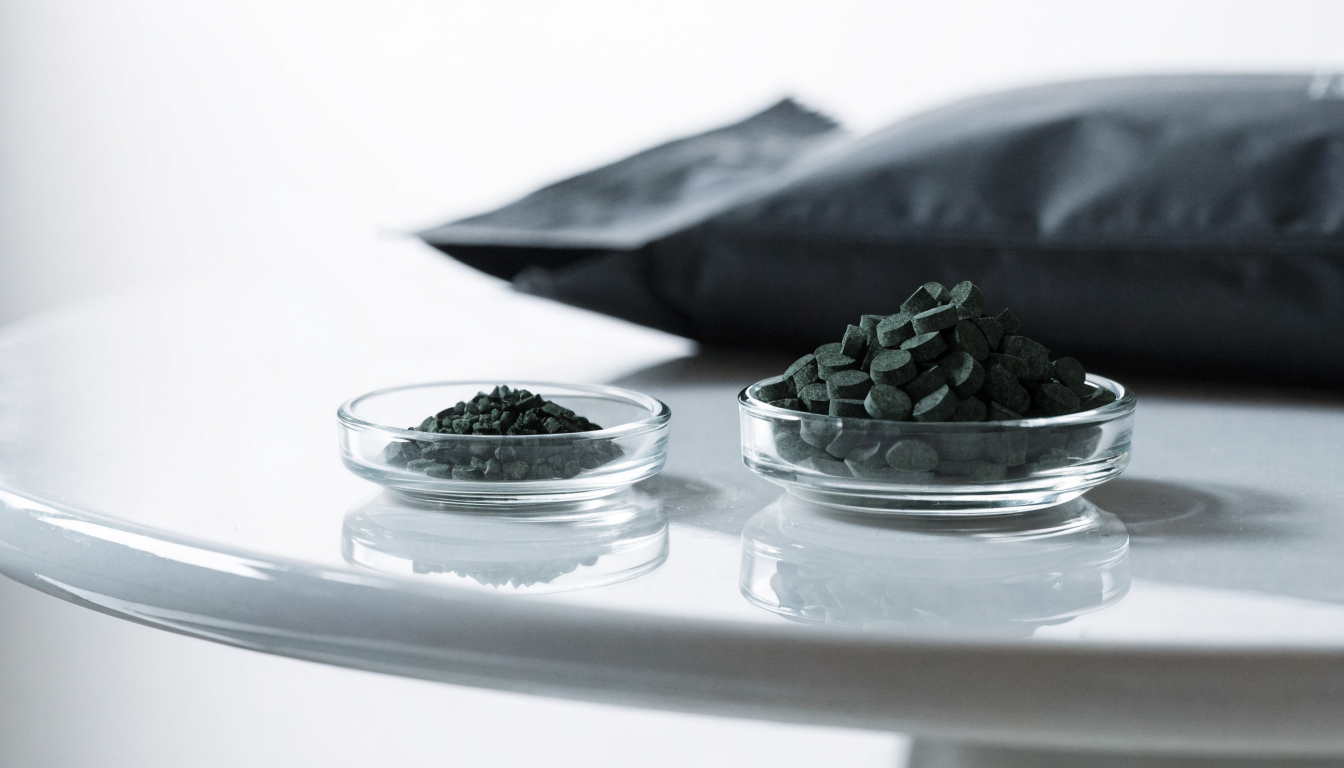
Same tablets, two very different amounts.
Chlorella is one of the few supplements people feel comfortable taking by the handful. It is a green algae sold as a whole food, and the suggested serving looks small next to the size of the bag. So it is reasonable to wonder what happens if you take double, or triple, or a generous scoop because you skipped yesterday.
The honest answer has two halves. There is no established toxic dose of chlorella and no official tolerable upper intake level the way there is for iron or vitamin A. And yet plenty of people have taken too much chlorella, felt genuinely lousy, and quit. Both are true, and knowing why makes it easier to land on an amount that suits you.
Not in any practical sense. Chlorella is treated as a food, and research has used a wide span of daily amounts, commonly somewhere around 2 to 8 grams per day, with some studies going higher for short stretches. Across that whole span the problems people report are digestive rather than dangerous, which is a very different picture from a compound with a narrow safety window.
What does exist is a comfort ceiling, and it is personal. Some people sail through 8 grams. Others feel bloated at 3. For ordinary serving sizes laid out plainly, see our guide to how much chlorella to take per day. Most people settle in the 3 to 6 gram range, roughly 10 to 20 tablets depending on tablet size.
The usual pattern is gas, bloating, cramping, loose stools, mild nausea, and a heavy feeling that sits in your stomach for a few hours. None of that is poisoning. It is what happens when you hand your gut a sudden load of fiber and tough algae cell wall material it has never had to work through.
An empty stomach concentrates everything, which is why nausea often appears when someone takes a large amount first thing in the morning with nothing but coffee. We cover those tradeoffs in our piece on taking chlorella on an empty stomach. Most people who run into trouble are not taking a dangerous amount. They are taking a reasonable amount too fast and without food.
A single large accidental dose is very unlikely to be dangerous. If you lose count and swallow far more than usual, the realistic outcome is an uncomfortable day rather than an emergency. Drink water, skip the next serving, and start again lower.
Fiber is the first one. Chlorella is largely cell wall material, so at very high amounts you stack a meaningful fiber load on top of whatever you already eat. Fine for many people, miserable for a sensitive gut.
Then there are nutrients that are welcome in ordinary amounts and less welcome in enormous ones. Chlorella contains iodine, which matters if you manage a thyroid condition or take thyroid medication. It contains vitamin K, relevant to anyone on warfarin, where steady intake is the goal rather than big swings. It contains iron and other minerals that quietly add up if you also take a multivitamin, a greens powder, and a separate mineral supplement. And because chlorella acts like a gentle binder, a very large amount taken alongside a prescription may affect how much of that medication you absorb, so spacing algae a couple of hours from medication is a sensible habit.
| Daily amount | Typical tablets | Who it tends to suit | What to watch for |
|---|---|---|---|
| About 1 gram | 3 to 4 | First week, sensitive stomachs | Very little at this level |
| 2 to 3 grams | 6 to 10 | Gentle everyday use, IBS-prone digestion | Mild gas if taken all at once |
| 3 to 6 grams | 10 to 20 | Most long-term regular users | Split into two servings with food |
| 6 to 8 grams | 20 to 26 | Larger bodies, athletes, experienced users | Bloating, loose stools, mineral stacking |
| Above 8 grams | 26 or more | Rarely necessary, ask a clinician | Fiber overload, iodine and vitamin K intake, medication spacing |
Absorption is not a straight line. Your body absorbs nutrients at a rate it can manage, and once that rate is met the extra keeps moving. Past a certain point you are mostly paying for fiber you will excrete, which is an expensive way to buy roughage.
People often push the amount up because nothing has happened yet, when the timeline matters more than the size of the scoop. Most of what people notice with algae builds over weeks of steady use, as we explain in our overview of how long chlorella takes to work. Tripling your amount on day four mostly buys you a stomachache and a shorter experiment.
RECOVERYbits is pure cracked cell wall chlorella pressed into tablets, with no fillers or additives, so the only thing you adjust is how much algae you take. That makes it easy to start low and build at your own pace.
Shop RECOVERYbits ChlorellaStart at about 1 gram, or just a few tablets, for the first three to five days. If that sits well, increase gradually over two weeks to your target amount. Take it with food, drink plenty of water, and split larger amounts into two servings rather than one. Then hold at the smallest amount that gives you the result you want.
Some people should stay at the low end of that table or check with a clinician first: anyone pregnant or nursing, anyone managing a thyroid or autoimmune condition, anyone taking warfarin or other prescriptions, and anyone with IBS or a sensitive gut. If your real question is whether long-term daily use makes sense for you, our article on whether chlorella is safe to take daily is the better place to start.
Join our newsletter for plain-language guides on spirulina, chlorella, and everyday wellness.
SubscribeYou can take more than your body comfortably handles, though there is no established toxic dose and no official upper limit for chlorella. The ceiling is digestive rather than toxic. Past a certain amount most people notice gas, bloating, or loose stools. Most do well in the 3 to 6 gram range, roughly 10 to 20 tablets a day.
That depends on tablet size and on your own digestion. Many people find that going much past about 20 tablets in one sitting brings on bloating or a heavy feeling, especially on an empty stomach. Splitting a larger daily amount into two or three servings with food is usually more comfortable.
A single large dose is very unlikely to be dangerous, but it may leave you uncomfortable for a day with gas, cramping, or loose stools. Drink extra water, eat normally, skip your next serving, and go back to a smaller amount once you feel settled.
Stay at the low end or speak with a clinician first if you are pregnant or nursing, manage a thyroid or autoimmune condition, take warfarin or other prescriptions, or live with IBS or a sensitive gut. Chlorella contains iodine, vitamin K, and iron, all worth discussing in those situations.


