


Chlorella vs Moringa: Which Green Superfood Is Better?
, by The ENERGYbits® Team, 11 min reading time
, by The ENERGYbits® Team, 11 min reading time
Chlorella and moringa are both nutrient dense greens, but they are not interchangeable. Chlorella wins on protein, chlorophyll and B12, while moringa leads on vitamin A, vitamin C, calcium and price.
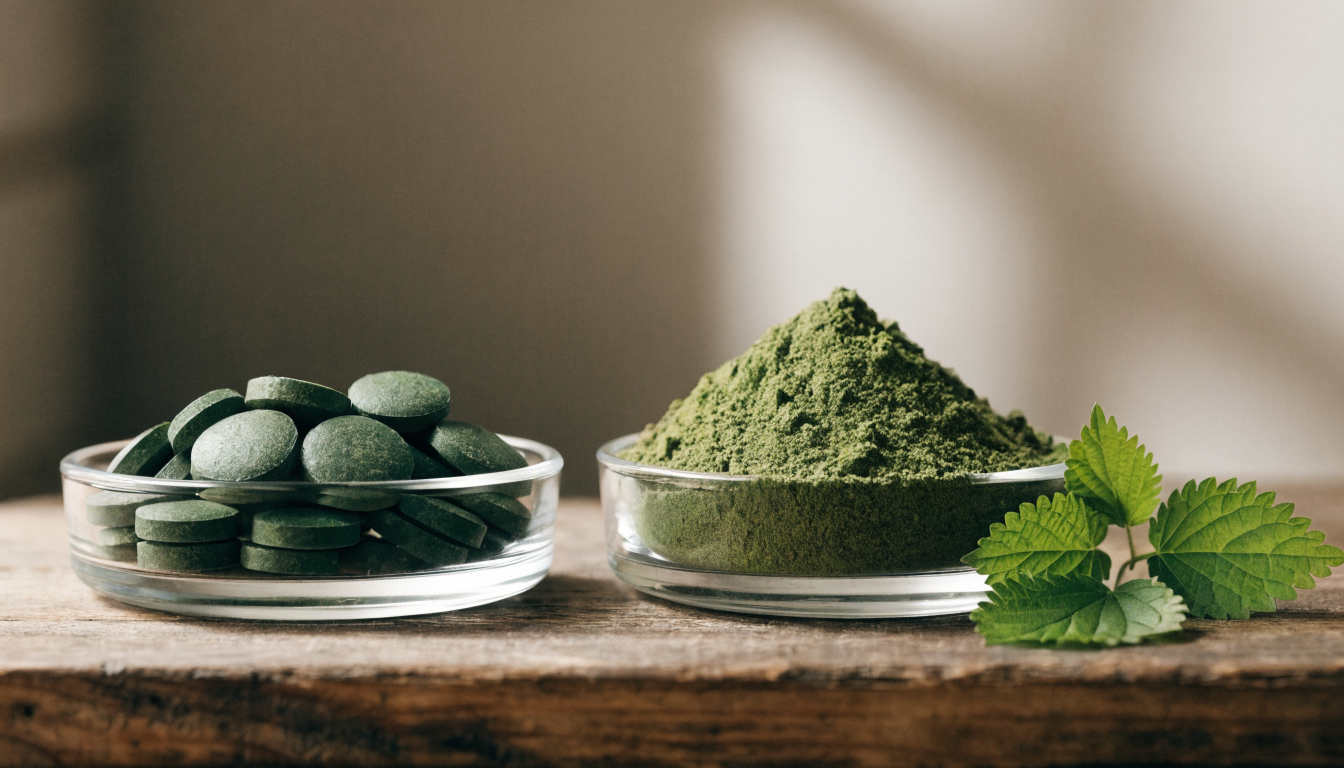
Freshwater algae on the left, dried tree leaf on the right.
Walk down any wellness aisle and you will see two green powders promising more or less the same thing. Chlorella and moringa both get called a superfood, both are deep green, and both show up in the same smoothie recipes. That similarity is mostly cosmetic. One is a microscopic freshwater algae grown in water tanks. The other is the dried leaf of a fast growing tropical tree. Their nutrient profiles reflect that difference far more than most marketing copy admits.
This comparison is deliberately fair to moringa. It is a legitimately useful plant with real research behind it, and in several categories it beats algae outright. But if you came looking for protein, B12 or binding support, the honest answer points in one direction.
Chlorella is a single celled green algae that has existed for roughly two billion years. Harvested as a fine powder or pressed into tablets, it is around 50 to 60 percent complete protein by dry weight, containing all nine essential amino acids. It is also one of the richest known food sources of chlorophyll at roughly 2 to 3 percent by weight, which is what gives it that almost black green colour. Alongside that it supplies iron, magnesium, a spread of B vitamins including a bioactive B12 form, the carotenoids lutein and zeaxanthin, and a compound cluster unique to the algae called chlorella growth factor.
Moringa oleifera is a drought tolerant tree native to South Asia, often called the drumstick tree. The powder sold in stores is its dried, milled leaf. At roughly 25 to 30 percent protein by dry weight it is impressively high for a leaf, though well below algae. Its real strength lies elsewhere: vitamin A as beta carotene, vitamin C, calcium, potassium and a broad set of polyphenols including quercetin and chlorogenic acid. Because it grows as a hardy tree in poor soil with little water, it also has a genuine sustainability advantage worth acknowledging.
The table below lays out the differences that actually matter when you are choosing between them. Figures are typical ranges for quality product and will vary by source and growing conditions.
| Feature | Chlorella | Moringa |
|---|---|---|
| What it is | Single celled freshwater green algae | Dried leaf of the moringa oleifera tree |
| Protein (dry weight) | 50 to 60 percent, all nine essential amino acids | 25 to 30 percent |
| Chlorophyll | Very high, around 2 to 3 percent | Present but considerably lower |
| Standout nutrients | Iron, magnesium, B vitamins, lutein, zeaxanthin, chlorella growth factor | Vitamin A, vitamin C, calcium, potassium, quercetin, chlorogenic acid |
| Vitamin B12 | Yes, a bioactive form | No meaningful amount |
| Detox and binding | Tough cellulose cell wall binds in the digestive tract | Not a binder, works through antioxidant pathways |
| Typical daily amount | 3 to 6 grams, often taken as tablets | 1 to 2 teaspoons of powder |
| Taste | Deep, earthy, slightly sweet green | Grassy and peppery with a mild bitterness |
| Cost | Higher, algae farming is water and labour intensive | Lower, widely available and inexpensive |
| Best for | Protein, B12, chlorophyll, binding and detox support | Vitamin A and C, calcium, antioxidant variety, budget |
There is no universal winner, but there is a clear winner per goal. If your priority is protein density, chlorella is roughly double moringa and delivers a complete amino acid profile, which matters if you are building meals around plants. If your priority is vitamin A, vitamin C or calcium, moringa is the stronger pick and it costs noticeably less per serving.
For vegans and vegetarians the B12 question tends to be decisive. Moringa is a plant leaf and contains no meaningful B12. Chlorella does contain a bioactive form, which makes it one of the very few whole food sources worth discussing in that conversation. That single difference sends a lot of people toward algae. The same logic separates chlorella from other popular greens, as we covered in our look at chlorella versus wheatgrass.
Chlorella has a tough cellulose cell wall that human enzymes cannot break down. That wall must be mechanically cracked during processing or the nutrients inside largely pass through you undigested, which is why cell wall quality is the single most important thing to check on a chlorella label. That same fibrous structure is the basis of chlorella's binding reputation, since research suggests it may attach to certain compounds in the digestive tract and support the body's own elimination pathways. We go deeper into the evidence in our article on whether chlorella removes heavy metals.
Moringa works differently. It is not a binder. Its polyphenols support antioxidant and anti-inflammatory pathways, and it has been studied for blood sugar and cholesterol markers with encouraging early results. Different mechanism, different use case.
Yes, and for many people that is the sensible answer. The two overlap very little. Taking both gives you chlorella's protein, chlorophyll and B12 alongside moringa's vitamin A, vitamin C and polyphenols. Start one at a time so you can tell which agrees with you, then combine. A common pattern is chlorella tablets in the morning and a teaspoon of moringa powder stirred into food later in the day.
If you are also weighing blue green algae into the mix, our guides on spirulina versus moringa and the difference between spirulina and chlorella cover how all three fit together.
Moringa is generally avoided during pregnancy, particularly the root and bark. Chlorella is high in vitamin K and iron, so anyone on blood thinners or managing iron levels should speak with their provider first. Both can cause mild digestive adjustment in the first week. Start low, go slow, and check with your healthcare provider if you take medication.
RECOVERYbits® are pure chlorella tablets, nothing added, with the cell wall mechanically broken so your body can actually absorb the protein, chlorophyll and B12 inside. No blender, no bitter powder.
Shop RECOVERYbits® Chlorella →Short, research-grounded emails on nutrition, energy and recovery. No spam.
Join the list →Yes. Chlorella runs roughly 50 to 60 percent protein by dry weight with all nine essential amino acids, while moringa leaf powder is closer to 25 to 30 percent. Chlorella is about twice as protein dense gram for gram.
No. Moringa is a plant leaf and contains no meaningful vitamin B12. Chlorella does contain a bioactive form of B12, which is why it comes up so often in plant-based nutrition conversations.
Moringa is generally avoided during pregnancy, especially the root and bark. Even leaf powder is best discussed with your healthcare provider first. The same caution applies to any new supplement while pregnant or nursing.
Chlorella has a tough cellulose wall that human digestive enzymes cannot break. If it is not mechanically cracked during processing, much of the nutrition passes through undigested. Always check that the label specifies a broken or cracked cell wall.
Choose chlorella if you want protein, B12, chlorophyll or binding support. Choose moringa if you want vitamin A, vitamin C, calcium and antioxidant variety at a lower price. Many people find value in rotating or combining the two.


