



Does Chlorella Help Detox Mold and Mycotoxins?
, by The ENERGYbits® Team, 8 min reading time
, by The ENERGYbits® Team, 8 min reading time
A cautious look at how chlorella's cell wall may bind mycotoxins like ochratoxin and support natural elimination, plus what the evidence shows and where its limits are.
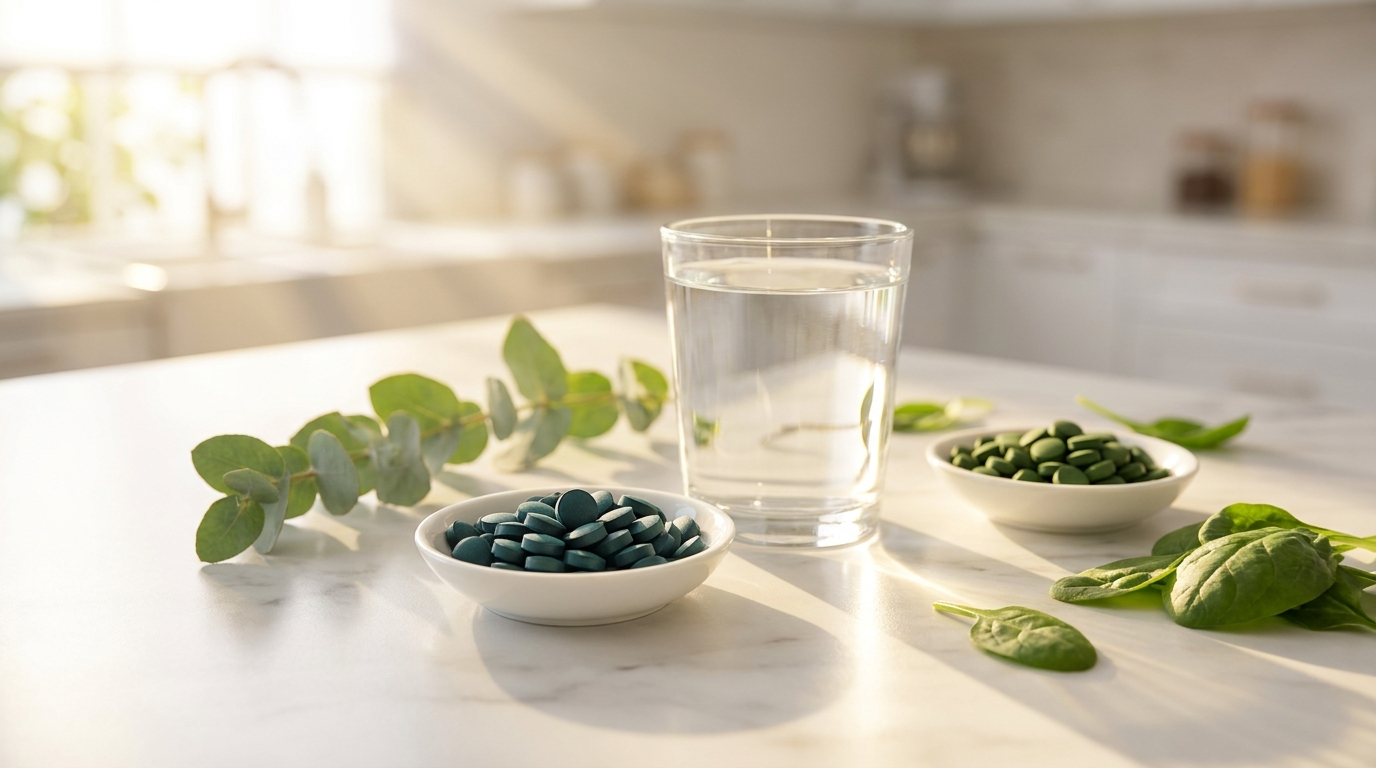
Chlorella tablets are a simple, food based way to support the body's everyday elimination pathways.
Mold is a fungus that grows in damp buildings, and mycotoxins are the small, stable compounds some molds release. Ochratoxin, aflatoxin, and similar toxins can also show up in poorly stored grains, coffee, and nuts. Once inside the body, many mycotoxins move through the liver and gut, which is why food based binders and liver friendly habits often appear in mold detox conversations. If you are also curious about how algae interacts with metals, our overview of whether chlorella may help remove heavy metals covers a closely related question.
Chlorella is a single celled freshwater algae wrapped in a fibrous, sporopollenin rich cell wall. That wall is the part researchers find most interesting. In laboratory and animal studies, chlorella and its cell wall material have been shown to bind certain mycotoxins, including ochratoxin, so that more passes out through normal digestion rather than being reabsorbed. Because chlorella is a whole food, many people fold it into a routine easily. You can find our chlorella in the RECOVERYbits chlorella large bag, which is simply pressed algae with nothing added.
The honest answer is that the strongest binding evidence comes from cell and animal studies, not large human trials. These early findings are encouraging, but they do not prove that chlorella clears mycotoxins from people who live in water damaged buildings. What we can say is that chlorella is a nutrient dense food that supplies chlorophyll, fiber, and protein, and that it may support the elimination systems your body already uses every day. For a broader look at algae and detox claims, our comparison of spirulina versus chlorella for detox puts these two algae side by side.
It helps to separate reasonable expectations from wishful ones. The table below sorts common claims into what current thinking supports and what it does not.
| Area | What chlorella may support | What chlorella cannot do |
|---|---|---|
| Gut binding | May bind some mycotoxins like ochratoxin in the digestive tract | Cannot pull toxins out of your walls, ducts, or air |
| Elimination | Fiber and chlorophyll may support regular, natural elimination | Cannot replace medical treatment for mold illness |
| Nutrition | Supplies protein, chlorophyll, and antioxidants as a whole food | Cannot diagnose or measure your toxin load |
| Daily use | Easy to take consistently as tablets with water | Cannot fix an ongoing exposure while you stay in it |
Practitioners often like chlorella because it is a food, it is easy to dose, and it pairs naturally with the other habits that matter most: removing the exposure, supporting the liver, and staying well hydrated. Chlorophyll gives chlorella its deep green color and may play a role in that supportive picture. If liver support is your main interest, our article on whether chlorella is good for your liver goes deeper on that pathway.
Most people start low and build up. A common range is 3 to 5 grams per day, taken with plenty of water and ideally near meals, though needs vary from person to person. Consistency matters more than large one time amounts, and hydration helps your body do its natural work. For a fuller breakdown of amounts, see our guide on how much chlorella per day makes sense. Because chlorella is fiber rich, it may also support digestion, which we cover in our piece on chlorella for gut health.
If you suspect mold illness, or you have lasting fatigue, brain fog, or breathing symptoms, talk with a qualified healthcare provider. The single most important step is removing the source, because no supplement can offset an ongoing exposure. Chlorella may support your everyday elimination pathways, but it works best as one small piece of a bigger, professionally guided plan.
Pure, pressed chlorella tablets with nothing added. A simple, food based way to support your daily wellness routine.
Shop RECOVERYbits chlorellaJoin our newsletter for practical, science minded guidance on algae and everyday health.
Sign upChlorella cannot be said to remove mold from your body. Early laboratory and animal studies suggest its cell wall may bind certain mycotoxins in the gut, which may support natural elimination, but human evidence is limited. It is best used alongside professional care, not as a cure.
Research has looked most at compounds like ochratoxin, where chlorella and its cell wall material showed binding in studies. This work is early and mostly preclinical, so it points to potential support rather than a proven, measurable effect in people.
Many people use a range of 3 to 5 grams per day with plenty of water, starting low and building up. Needs vary from person to person, so consistency matters more than large one time amounts. If you take medication or have a health condition, check with your provider first.
No. The most important step is removing the exposure, because no supplement can offset an ongoing source. If you suspect mold illness, see a qualified healthcare provider. Chlorella may support your everyday elimination pathways as one small part of a larger plan.


