



Does Chlorella Help With Constipation and Regularity?
, by The ENERGYbits® Team, 8 min reading time
, by The ENERGYbits® Team, 8 min reading time
A warm, non-medical look at how chlorella may support bowel regularity through fiber, its cell wall, chlorophyll, and gentle daily use, plus a realistic timeline.
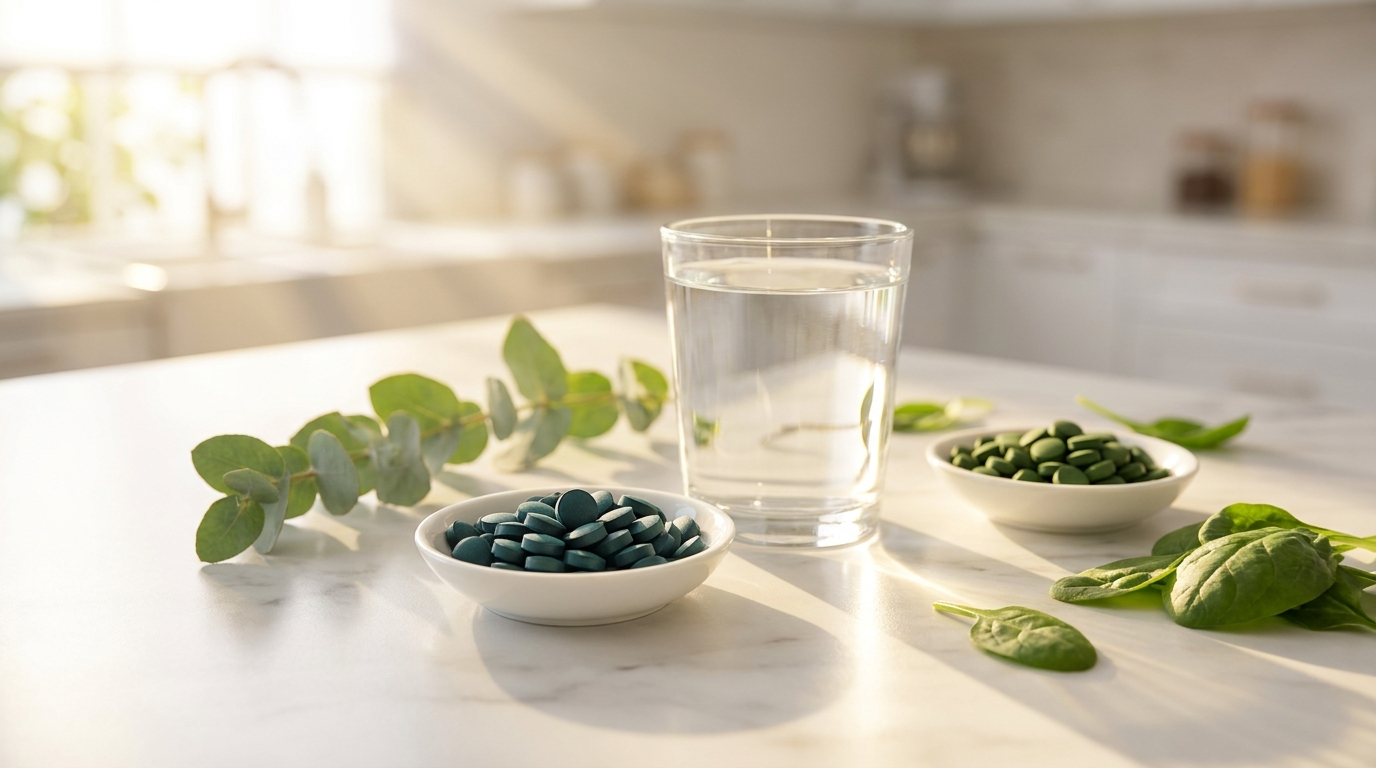
Chlorella tablets paired with a full glass of water, the simple daily ritual behind gentle digestive support.
Chlorella is a single-celled green freshwater algae that is roughly 15 to 20 percent fiber by weight, along with protein, chlorophyll, and a range of micronutrients. When people ask whether it helps with constipation, the honest answer is that it may support regularity as part of a fiber-and-hydration routine, not that it forces a result. Fiber adds bulk and helps stool move through the digestive tract more predictably, which is often what "regularity" really means.
Because it is a whole food rather than a stimulant, chlorella tends to work quietly in the background. Many people fold a daily serving into their morning, the way you might add greens to a smoothie. If you are new to algae, our guide to chlorella for gut health is a helpful companion to this article. You can also explore RECOVERYbits chlorella tablets if you want to see what a daily serving looks like.
Chlorella has a famously tough cell wall, and this is part of what makes it interesting for digestion. That fibrous outer wall is not fully broken down in the upper digestive tract, so it can act like insoluble fiber, adding gentle bulk and helping to keep things moving. The same rugged wall is often discussed alongside binding: it may attach to certain compounds in the gut, which is why chlorella comes up in conversations about whether chlorella removes heavy metals. For regularity specifically, think of the cell wall as roughage that your system can gently sweep along.
Chlorella is one of the richest natural sources of chlorophyll, the green pigment that gives it its color. Chlorophyll is often described as soothing to the digestive tract, and the plant compounds in chlorella may help create a friendlier environment for beneficial gut bacteria. A balanced microbiome is closely tied to comfortable, regular digestion, so feeding those bacteria with fiber-rich foods is a sensible long-game approach. This is also where chlorella and spirulina invite comparison, and our piece on spirulina versus chlorella for detox breaks down how the two algae differ.
Here is a simple way to see how each part of chlorella may connect to regularity.
| Component | What it is | How it may relate to regularity |
|---|---|---|
| Fiber | Roughly 15 to 20 percent of chlorella by weight | Adds bulk to stool and helps it move through the tract |
| Cell wall | Tough, fibrous outer layer | Acts like insoluble fiber, gently sweeping the gut |
| Chlorophyll | Green plant pigment | Often described as soothing to the digestive tract |
| Plant compounds | Naturally occurring nutrients | May help support a friendlier balance of gut bacteria |
| Water pairing | Fluid taken with each serving | Fiber works best with adequate hydration for soft, easy passage |
Interest in chlorella and digestion is not new. A well-known Japanese study on pregnant women looked at chlorella supplementation and reported improvements in self-reported bowel regularity among those taking it, compared with those who did not. Findings like this are encouraging and align with what you would expect from a fiber-rich green food, though they are not a promise of results for everyone. Research suggests chlorella may support regularity, and individual responses vary based on diet, hydration, and daily habits.
Consistency matters more than a single large dose. Many people start with a modest daily serving and build up gradually, giving the digestive system time to adjust. For specifics, our guide on how much chlorella per day walks through sensible serving ranges. As for timing, some people notice a difference in a few days, while for others it takes two to three weeks of daily use before regularity feels more settled. Chlorella is a food, so patience pays off.
For most healthy adults, chlorella is well suited to daily use, which is exactly why it fits a regularity routine so naturally. It is a whole food rather than a stimulant laxative, so it is not designed to jolt your system. If you are curious about long-term use, see our overview on whether chlorella is safe daily. Pair each serving with water, keep the rest of your diet fiber-friendly, and let the habit do the quiet work.
RECOVERYbits chlorella tablets are a simple, whole-food way to add fiber, chlorophyll, and greens to your morning. Just algae, nothing else.
Shop RECOVERYbits ChlorellaJoin our newsletter for simple, science-minded wellness ideas.
SubscribeNo. Chlorella is a whole food rich in fiber and chlorophyll, not a stimulant laxative. It may support regularity gently over time by adding bulk and feeding friendly gut bacteria, rather than forcing a quick result.
It varies. Some people notice a difference within a few days, while others need two to three weeks of consistent daily use. Because chlorella is a food, steady daily habits matter more than a single large dose.
Yes. Fiber works best with adequate hydration, so pairing each serving with a full glass of water helps support soft, comfortable, and easy passage through the digestive tract.
For most healthy adults, chlorella is well suited to daily use. If you are pregnant, nursing, taking medication, or managing a health condition, check with your healthcare provider first.


