


How Much Protein Is in Chlorella?
, by The ENERGYbits® Team, 9 min reading time
, by The ENERGYbits® Team, 9 min reading time
Chlorella is roughly 50 to 60 percent protein by dry weight, slightly less than spirulina. A 3 gram serving delivers about 1.5 to 1.8 grams of protein, making algae a nutrient dense contributor rather than a primary protein source.
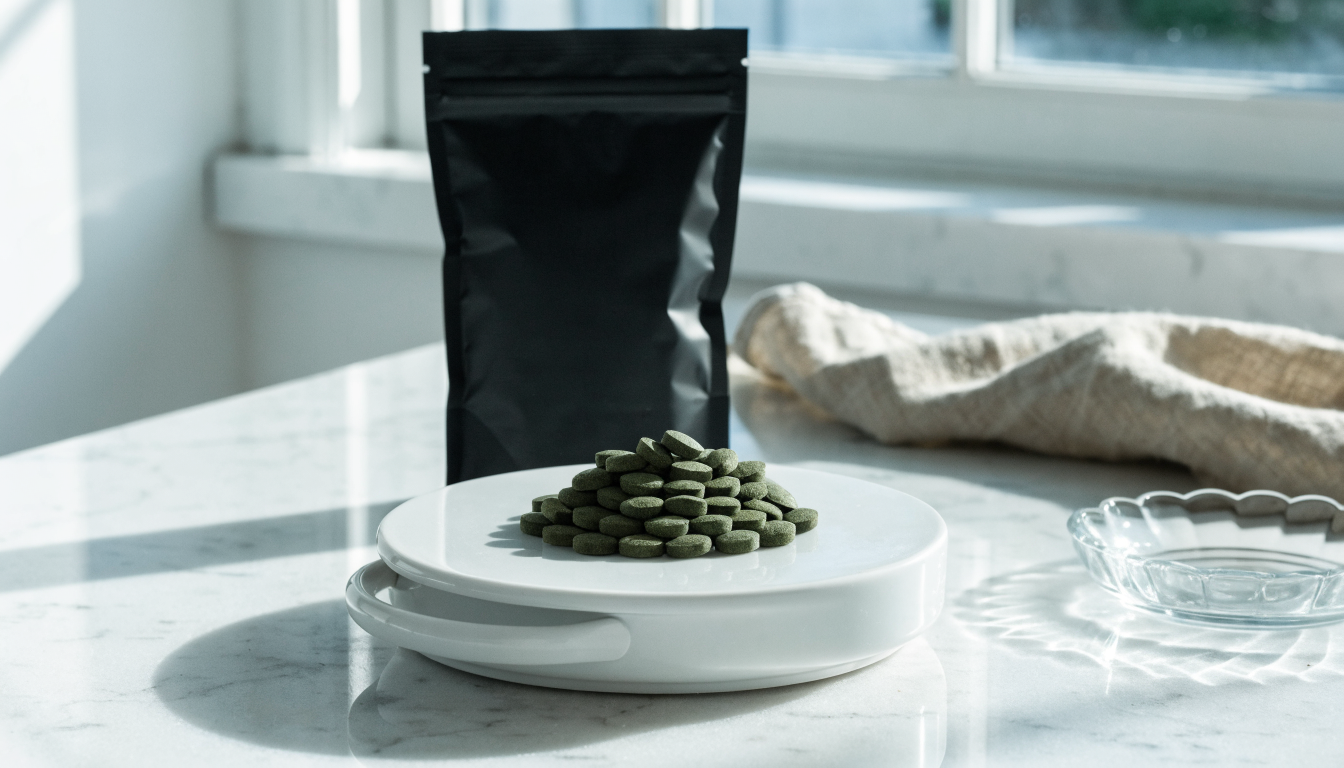
A 3 gram serving of chlorella, weighed out on a kitchen scale.
Protein claims are where algae marketing tends to get loud. You will see chlorella described as one of the most protein dense foods on the planet, which is accurate, and then hear it implied that a handful of tablets can stand in for a protein shake, which is not. Both things can be true at once if you understand the difference between concentration and quantity. Here are the real numbers.
Chlorella runs roughly 50 to 60 percent protein by dry weight, with the exact figure varying by strain, growing conditions, and harvest. Because quality chlorella tablets are simply dried whole algae pressed into a tablet with nothing added, no fillers, no binders, no sweeteners, that percentage carries straight through to what sits in the pouch. For perspective, dried lean beef lands near 50 percent protein by dry weight and most nuts sit closer to 20 percent. Very few whole foods reach this concentration, which is why chlorella keeps appearing in serious conversations about sustainable nutrition. Its cousin runs slightly higher, and our guide to how much protein is in spirulina walks through those numbers side by side.
This is where the percentage meets the kitchen scale. A typical chlorella serving is about 3 grams, which works out to roughly 10 tablets at 300 mg each. At 50 to 60 percent protein, that serving gives you approximately 1.5 to 1.8 grams of protein. A larger 30 tablet serving, about 9 grams of algae, lands somewhere near 4.5 to 5.4 grams. That is genuinely useful, and it is also nowhere close to a chicken breast or a scoop of protein powder. The honest way to think about it is that chlorella delivers that protein alongside iron, B vitamins, chlorophyll, and antioxidants for well under 40 calories. You are buying density, not volume.
Yes. Chlorella contains all nine essential amino acids, the ones your body cannot manufacture on its own, which is the definition of a complete protein. That is worth noting for a plant source, since many plant foods run low in one or two essentials and are traditionally paired with other foods to round out the profile. Chlorella is also well supplied with the branched chain amino acids leucine, isoleucine, and valine, which is one reason it comes up so often in recovery discussions. Our guide on chlorella for athletes and recovery explores that angle in more detail.
A protein number on a label only counts if your body can reach it. Chlorella is a single celled algae wrapped in a tough cellulose wall that human digestion simply cannot break down. Raw, uncracked chlorella passes through largely intact, which means much of the protein and micronutrition inside stays locked away. Cracking that wall mechanically before drying solves the problem, and research suggests it substantially improves digestibility and nutrient availability. When you compare products, cracked cell wall is not a marketing flourish. It is the difference between absorbing what you paid for and not.
Context helps more than percentages alone. The table below puts chlorella next to spirulina and two foods most people already use to hit a protein target.
| Food | Protein by dry weight | Protein per typical serving | Notes |
|---|---|---|---|
| Chlorella | About 50 to 60 percent | About 1.5 to 1.8 g per 3 g serving | Complete protein plus iron, B vitamins, and chlorophyll |
| Spirulina | About 60 to 70 percent | About 1.8 to 2.1 g per 3 g serving | Slightly higher concentration, same small serving size |
| Cooked lentils | About 26 percent | About 18 g per cooked cup | Lower concentration, much larger portion |
| Chicken breast | About 75 percent | About 31 g per 100 g cooked | Built for meeting a daily protein target |
Read that table honestly and the conclusion is clear. Chlorella wins on concentration and loses on serving size, because nobody eats algae by the cupful. A cup of lentils beats 10 tablets on grams every single time. If you are weighing the two algae against each other more broadly, our comparison of the difference between spirulina and chlorella covers where each one shines.
RECOVERYbits is pure cracked cell wall chlorella, about 60 percent protein with all nine essential amino acids, iron, and chlorophyll. One ingredient, grown and pressed into tablets.
Shop RECOVERYbits ChlorellaNo, and we would rather say so plainly. Trying to reach 100 grams of protein a day from algae tablets would mean swallowing an unreasonable number of them at an unreasonable cost. Chlorella earns its place for a different reason: it layers a small amount of highly digestible complete protein on top of a dense package of micronutrients, for very few calories. Think of it as a daily nutrition habit that quietly raises the floor, not a macro tool. Most people settle into a consistent amount and stay there, and our guide on how much chlorella per day outlines sensible starting points. If you are pregnant, nursing, taking medication, or managing a health condition, talk with your healthcare provider before adding any supplement.
Join our newsletter for plain-language guides on spirulina, chlorella, and everyday wellness.
SubscribeChlorella is roughly 50 to 60 percent protein by dry weight, one of the highest concentrations found in any whole food. A 3 gram serving delivers about 1.5 to 1.8 grams of protein.
Yes. Chlorella contains all nine essential amino acids your body cannot make on its own, which makes it a complete protein. It is also well supplied with the branched chain amino acids leucine, isoleucine, and valine.
No. Spirulina runs slightly higher at roughly 60 to 70 percent protein by dry weight, compared with about 50 to 60 percent for chlorella. Both are complete proteins and both are far more concentrated than most whole foods.
No. A 3 gram serving supplies only about 1.5 to 1.8 grams of protein, so algae is a nutrient dense contributor rather than a primary protein source. Its real value is protein plus iron, B vitamins, and chlorophyll at very few calories.


