



Is Chlorella Safe for Kids? A Parent's Guide
, by The ENERGYbits® Team, 10 min reading time
, by The ENERGYbits® Team, 10 min reading time
Chlorella is a whole food and is generally well tolerated, but the honest answer for children starts with your pediatrician. A parent's guide to choking risk, crushing tablets, starting slowly, and the purity standards that matter most for kids.
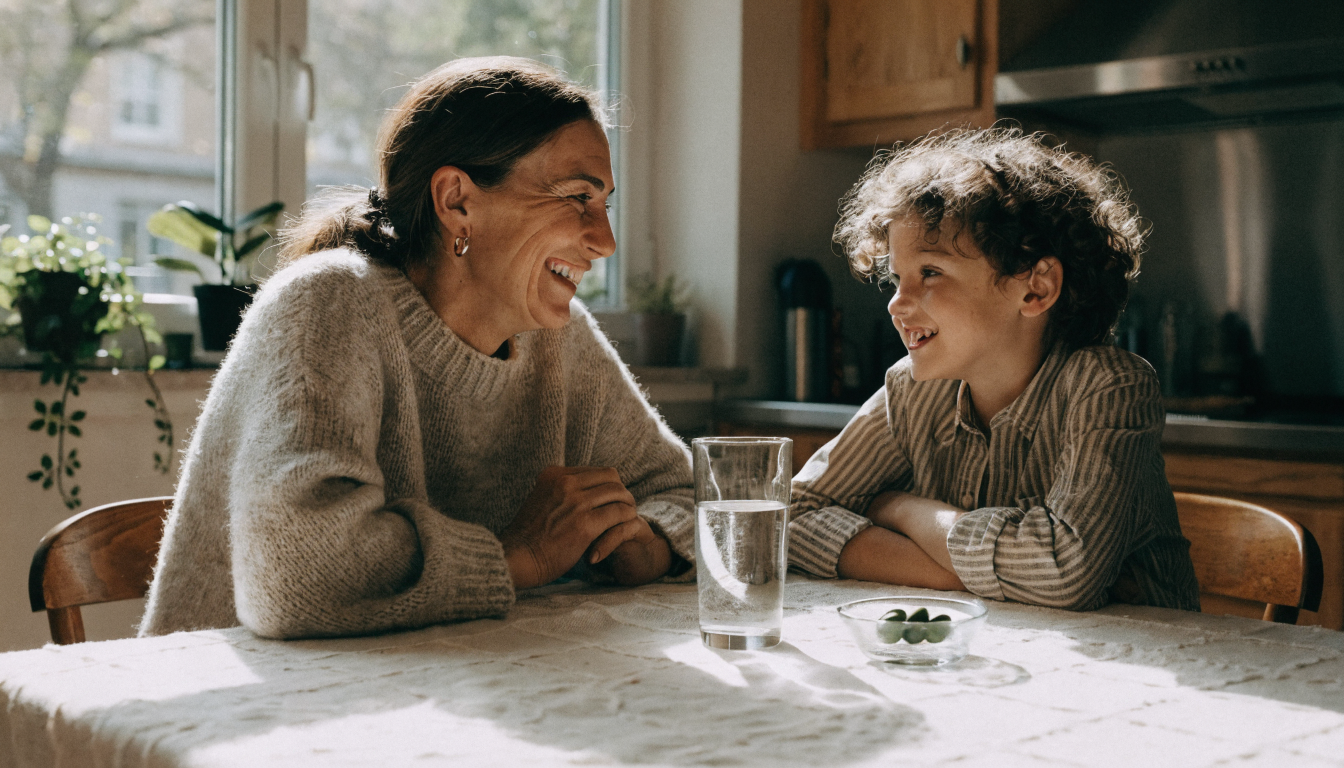
Chlorella is a green vegetable in concentrated form, but every decision about a child's supplement belongs with a pediatrician.
We hear from parents almost every week, and the question is nearly always the same: my child barely eats vegetables, would a little algae help? It is a fair question asked in good faith, and it deserves a careful answer rather than a quick yes. Here is how we think about chlorella and children, including the parts that argue for caution.
Chlorella is a single-celled green freshwater algae that has been eaten as a food in Japan, Korea and Taiwan for decades. It is not an extract or a synthetic isolate. The whole cell is harvested, dried and pressed into a small tablet, so what a child would be eating is essentially a green vegetable in concentrated form, with protein, iron, chlorophyll, B vitamins and fiber.
The reason parents ask is practical. Many children are picky eaters and the vegetable drawer loses more often than it wins. Sometimes a well visit turns up low iron, or a parent simply wants a nutritional backstop for a child who lives on pasta and crackers. Chlorella appeals because it is food rather than a pill of synthetic vitamins. That instinct is reasonable, but it does not replace a conversation with your child's doctor, which is where every one of these decisions should begin. Parents weighing the other algae can read our companion piece on whether spirulina is safe for kids.
This is the part we want parents to hear first. Tablets of any kind are a choking hazard for very young children, and algae is no exception. Toddlers and preschoolers should not be handed whole tablets. That is a physical safety issue rather than an ingredient issue, and it is the most common reason we tell parents of very young children to wait.
For older children who cannot yet swallow tablets comfortably, crushing is the practical approach. Chlorella tablets crush easily with the back of a spoon and the powder blends into applesauce, yogurt, oatmeal or a fruit smoothie. The taste is grassy and green, so pairing it with banana or mango works better than hiding it in something savory. Supervise every serving, and keep the bag out of reach of small hands.
| Age stage | Parent considerations | Practical form |
|---|---|---|
| Under 2 | Not a stage for adding supplements. Ask your pediatrician first, and expect the answer to be wait. | No tablets at all. Whole tablets are a choking hazard at this age. |
| Ages 2 to 5 | Food should still do the work here. Ask your pediatrician first before anything is added. | No whole tablets. Crushed into food only if a doctor specifically advises it. |
| Ages 6 to 12 | The stage when greens gaps and iron questions usually come up. Ask your pediatrician first. | Crushed into yogurt or a smoothie, or whole tablets only if the child swallows them easily. |
| Teens | Growth, sports and periods can change nutrient needs. Ask your pediatrician first. | Usually whole tablets, taken with food and a full glass of water. |
We are not going to give you a number, and you should be wary of any brand that does. A child's serving is much smaller than an adult's, sometimes a small fraction of it, and the right amount depends on age, weight, diet and health history. That decision belongs to your pediatrician. Our adult guide to how much chlorella per day is useful background for the conversation, not a template to scale down at the kitchen counter.
What we can say generally is that starting small and building slowly is the sensible pattern for anyone, and especially for a child. The chlorella cell wall provides fiber, and a sudden jump in fiber can cause temporary gas, bloating or looser stools. Those effects are usually mild and settle as the body adjusts, but a young child is less able to describe what they feel, so a slow ramp with food and plenty of water is the kinder route. If anything seems off, stop and call the doctor. That same gradual approach runs through our article on whether chlorella is safe daily.
RECOVERYbits Chlorella is a single ingredient tablet with no fillers, binders or sweeteners, third-party tested for heavy metals and microbiology.
Shop RECOVERYbits ChlorellaIf your pediatrician gives you the go ahead, the brand matters more than it would for an adult. Children are smaller, their systems are still developing, and there is less margin for contaminants. Algae takes up what is in its growing water, so poorly grown chlorella can carry heavy metals or microbial contamination.
Look for three things. A single ingredient on the label with no fillers, binders, sweeteners or flow agents. Documented third-party testing for heavy metals and microbiology, not just the word pure on a pouch. And a grower who can tell you where and how the algae was cultivated. Chlorella is often discussed in the context of binding to metals, a subject we cover in our piece on whether chlorella removes heavy metals, which makes it doubly important that the algae itself is clean.
Iodine is worth raising specifically. Chlorella contains iodine, and while the amounts are modest, iodine intake interacts with thyroid function. Any child with a thyroid concern, or a family history of one, needs that discussion with a doctor before starting.
Beyond that, several groups should not use chlorella without medical guidance: children taking prescription medication, since chlorella is high in vitamin K and can interact with blood thinners and other drugs; children with autoimmune conditions, where immune questions belong with a specialist; children with a history of iron overload or a family history of hemochromatosis, given the iron content; and children with a known algae or seafood allergy. In each case the answer is not automatically no. It is simply not without your doctor.
Join our newsletter for plain-language guides on spirulina, chlorella, and everyday wellness.
SubscribeChlorella is a whole food and is generally well tolerated, but the honest answer is that you should talk to your pediatrician before giving it, or any supplement, to a child. Age, weight, diet, medications and existing health conditions all change the answer, and only your child's doctor can weigh those together.
There is no universal age, and it should be set by your pediatrician rather than guessed. What is clear is that whole tablets are a choking hazard for very young children, so toddlers and preschoolers should not be given them. Older children who can swallow tablets comfortably are a different situation, but the doctor conversation still comes first.
Crush the tablets with the back of a spoon and stir the powder into applesauce, yogurt, oatmeal or a fruit smoothie. The flavor is grassy, so sweeter pairings like banana or mango tend to go down more easily. Supervise every serving and keep the bag out of reach of small children.
It can, especially at first. The chlorella cell wall provides fiber, and a sudden increase in fiber may cause temporary gas, bloating or looser stools. Starting with a very small amount, taking it with food and plenty of water, and building slowly makes that less likely. If symptoms persist, stop and contact your pediatrician.


