


Is Spirulina Vegan? What Plant-Based Eaters Should Know
, by The ENERGYbits® Team, 7 min reading time
, by The ENERGYbits® Team, 7 min reading time
Spirulina is vegan. It is a photosynthetic algae grown in water, not an animal product. Here is what plant-based eaters should know about the protein and iron wins, the B12 caveat, and the label details some brands get wrong.
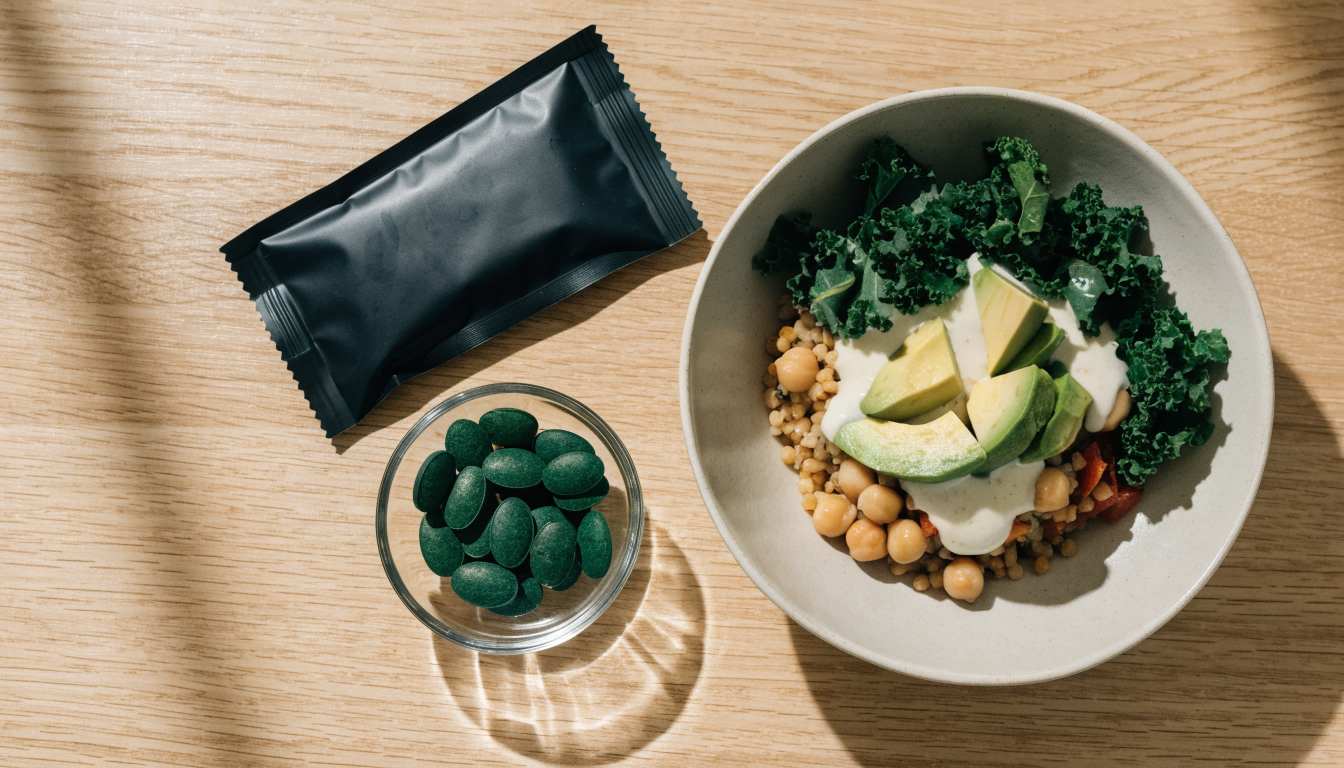
Algae grows in water and feeds itself with sunlight, which makes it one of the simplest ingredients on a plant-based shelf.
Going plant-based turns you into a label reader. Vitamin D3 from lanolin, omega 3 from fish, collagen from hides, capsules made from gelatin. So when a bright green tablet shows up claiming 60 to 70 percent protein, it is fair to ask what it came from. Spirulina passes easily, but a couple of details are worth understanding first.
Spirulina is a cyanobacterium, often called a blue green algae. It is a single celled organism that grows in warm, alkaline fresh water and makes its own food through photosynthesis, the same way a leaf does. It has no nervous system and nothing animal anywhere in its lineage.
Strictly speaking it is not a plant either. Plants belong to the kingdom Plantae, and cyanobacteria sit in a different domain altogether. That taxonomy trips people up, but it does not change the dietary answer. Veganism excludes animal products and animal exploitation. It is not a rule that every food must be botanically a plant, which is why mushrooms and nutritional yeast raise no objections either.
Yes. Algae and cyanobacteria are classified as non-animal ingredients by the major certification programs, and plenty of spirulina and chlorella products carry vegan certification marks. What certifiers actually examine is the rest of the formula: binders, coatings, capsule material and processing aids. The algae is almost never the problem. The other ingredients sometimes are.
| Source | Vegan | Complete protein | Notes |
|---|---|---|---|
| Spirulina | Yes | Yes | Photosynthetic algae grown in fresh water, roughly 60 to 70 percent protein |
| Chlorella | Yes | Yes | Green freshwater algae, notable for chlorophyll and fiber |
| Whey protein | No | Yes | A dairy byproduct made from cow's milk |
| Collagen | No | No | Made from animal hides, bones or fish skin |
| Pea protein | Yes | Not on its own | Low in methionine, so it is often blended with rice protein |
| Fish oil | No | Not applicable | From fish, though algae oil is the plant-based alternative |
ENERGYbits Spirulina is a single ingredient tablet: organically grown spirulina and nothing else. No binders, no fillers, no gelatin capsule, no coating.
Shop ENERGYbits SpirulinaThe protein is the headline. Spirulina is roughly 60 to 70 percent protein by dry weight and contains all nine essential amino acids, which makes it one of the few plant sources that is complete on its own. Most plant proteins run low in one amino acid or another, which is why people combine foods. We look at the evidence in our article on whether spirulina is a complete protein, and the serving math in how much protein is in spirulina.
Iron is the other one. Plant-based eaters are commonly low in iron, and spirulina is one of the more concentrated plant sources of it. It may support the gaps that show up most often on a vegan diet, though it is food rather than a treatment for anything.
Here is where we push back on our own category. Spirulina contains a B12 analogue, often called pseudo-vitamin B12, that shows up on lab tests but is not reliably usable by the human body. While you may get some bioavailable B12 from spirulina, vegans should also get B12 from a dedicated supplement or fortified foods and have their levels checked periodically. Please do not treat algae as your B12 insurance. We go through the research in does spirulina contain B12.
The algae can be vegan while the finished product is not. Gelatin capsules are animal derived. Magnesium stearate can come from plant or animal fat, so it is worth an email to the brand when the source is not stated. Watch for binders, flow agents, coatings and sweeteners that were never mentioned on the front of the bag. Blends deserve extra attention, since they often carry small amounts of things you were not looking for.
Yes. Chlorella is a green freshwater algae, a true alga rather than a cyanobacterium, and it is just as plant-based. It brings a different profile, with chlorophyll and fiber where spirulina leads on protein, and many people take both. Our guide to the difference between spirulina and chlorella covers which suits which goal.
Join our newsletter for plain-language guides on spirulina, chlorella, and everyday wellness.
SubscribeYes. Spirulina is a photosynthetic cyanobacterium grown in fresh water, so it is not an animal product or an animal byproduct. It is widely accepted by vegan certification programs. The only caution is that some finished products add non-vegan ingredients such as gelatin capsules, so it is worth reading the full ingredient list.
Neither, strictly speaking. Spirulina is a cyanobacterium, which sits in its own domain rather than the plant kingdom. It makes its own food through photosynthesis the way plants do, and it has no nervous system and no animal origin, so it qualifies as vegan.
No. Spirulina contains a B12 analogue, often called pseudo-vitamin B12, that appears on lab tests but is not reliably usable by the body. While some B12 may be obtained from spirulina, vegans should use a dedicated B12 supplement or fortified foods and have their levels checked periodically.
Yes. Chlorella is a green freshwater algae grown in water and harvested without any animal input, so it is vegan for the same reasons spirulina is. As with spirulina, check the label of the finished product for capsules, binders or fillers.


