


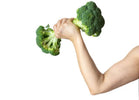
The Leucine Threshold: Plant Protein and Muscle Building
, by The ENERGYbits Team, 31 min reading time
, by The ENERGYbits Team, 31 min reading time
Leucine and plant protein explained: what the leucine threshold is, how plant proteins compare, what trials show for muscle, and how spirulina fits in.
Search interest in leucine and plant protein keeps growing, and the usual advice sounds simple: hit a leucine number at every meal. The real picture is more interesting. Leucine does act as a signal for muscle building, plant proteins do carry less of it per gram, and yet well-designed trials show plant-based eaters building muscle just fine. Here is what the threshold means, where it matters most, and where algae fit in.
ENERGYbits® • Protein & Muscle
Quick Answer
Leucine is the essential amino acid that most strongly signals muscle to build protein. Researchers describe a per-meal “threshold”, often discussed as roughly 2.5 to 3 g of leucine, above which muscle protein synthesis rises most clearly, particularly in older adults [8]. Plant proteins usually contain less leucine per gram than whey, milk or egg [2], so the practical fix is a slightly larger portion, a smart combination of plant foods, or both [4].
Muscle is in constant turnover. The body breaks down and rebuilds muscle protein daily, and dietary protein tips the balance by supplying amino acids and a signal to build. Of the nine essential amino acids, leucine is most closely linked to that signal, because it activates mTOR, a pathway that switches on muscle protein synthesis [12].
That is why leucine shows up on sports nutrition labels, in geriatric nutrition guidance and in nearly every conversation about plant-based eating and muscle. It is also easy to oversimplify. A single amino acid does not build muscle on its own: total protein, the other essential amino acids and resistance training all matter. Related reading: our guides to peptides versus protein and chlorella as a complete protein cover amino acid basics.
The “leucine trigger” hypothesis proposes that a meal must raise blood leucine past a certain level to fully switch on muscle protein synthesis. The number most often cited is about 2.5 to 3 g of leucine per meal. One review refers to a proposed 3 g threshold for maximal stimulation in older adults [8]. For scale, 25 g of whey protein contains about 2.7 g of leucine, according to the amino acid analysis by Gorissen and colleagues [2].
A 2012 trial in young men found that a small 6.25 g dose of whey, supplemented with leucine to match the leucine in a full 25 g dose, stimulated muscle protein synthesis as much as the full dose in the first hours after exercise [12]. In healthy older women, a 10 g milk protein drink with 3 g of added leucine produced similar increases in muscle protein synthesis to 25 g of whey that also supplied 3 g of leucine [9]. A 2021 systematic review found that 16 of 29 eligible studies provided sufficient support for the leucine trigger hypothesis, and 13 of those 16 were in older adults [8].
The same review shows that 13 of the 29 studies did not support the hypothesis, and that it applies best to isolated proteins in older adults rather than whole foods in mixed meals [8]. The 2012 trial also found that the leucine-matched small dose could not sustain the response as long as the full whey dose later after exercise [12]. In plain terms, leucine is a useful lever, not a complete explanation.
What the research says
The 2021 systematic review concluded that the leucine trigger hypothesis has most application in older adults and with isolated proteins, and that more mechanistic work is needed to understand how the food matrix shapes muscle protein synthesis [8]. Treat “3 g per meal” as a practical reference point, not a rigid rule.
Quick Answer
What is the leucine threshold? It is the idea that a meal needs roughly 2.5 to 3 g of leucine to maximally trigger muscle protein synthesis, with the strongest support in older adults and isolated proteins [8]. It is a working guideline from acute studies, not a proven minimum for every person or every meal.
A common reason plant proteins are described as less anabolic is their amino acid composition. Many have lower essential amino acid content overall, and less lysine, methionine and leucine in particular [2][4]. Gorissen and colleagues measured the amino acid profiles of 15 protein sources. Plant isolates ranged widely: leucine made up about 5.1 percent of hemp protein and 13.5 percent of corn protein, compared with 9.0 percent for milk, 7.0 percent for egg and 7.6 percent for human muscle protein [2].
That range is the important detail. Plant proteins are not uniformly low in leucine, and the gap shrinks with some sources and with combinations. The authors concluded that blending plant protein isolates, or mixing plant and animal sources, can produce profiles that closely mimic animal protein [2]. The same logic applies to whole foods: grains, legumes, seeds and algae are low or high in different amino acids, which is why variety works.
Gorissen’s team also calculated how much of each source supplies the leucine in 25 g of whey (2.7 g). The table shows the protein needed. The spirulina row is our own calculation from USDA data, not a figure from that paper, and the two use different analytical methods, so read it as an approximation.
| Protein source | Protein needed for 2.7 g leucine | Source |
|---|---|---|
| Whey | 25 g | Gorissen 2018 [2] |
| Corn protein isolate | 20 g | Gorissen 2018 [2] |
| Milk | 31 g | Gorissen 2018 [2] |
| Dried spirulina (whole food) | about 31 g protein, or about 55 g of spirulina (calculation) | USDA FDC [1], calculated |
| Potato protein isolate | 33 g | Gorissen 2018 [2] |
| Brown rice | 37 g | Gorissen 2018 [2] |
| Pea | 38 g | Gorissen 2018 [2] |
| Egg | 39 g | Gorissen 2018 [2] |
| Soy | 40 g | Gorissen 2018 [2] |
| Wheat | 45 g | Gorissen 2018 [2] |
| Oat | 47 g | Gorissen 2018 [2] |
| Microalgae (species not specified) | 48 g | Gorissen 2018 [2] |
| Hemp | 54 g | Gorissen 2018 [2] |
Calculation for the spirulina row: USDA lists dried spirulina at 57.5 g protein and 4.95 g leucine per 100 g [1]. Leucine is therefore about 8.6 percent of the protein (4.95 ÷ 57.5). To supply 2.7 g, you would need 2.7 ÷ 0.0495, or about 55 g of spirulina, which contains about 31 g of protein. One caution: food-database protein is typically estimated from nitrogen, so the true amino acid share can differ between assays.
Quick Answer
Do plant proteins have less leucine? Usually per gram of protein, yes, but not always. In one analysis leucine ranged from about 5 percent of hemp protein to 13.5 percent of corn protein, versus about 7 to 9 percent in egg and milk [2]. Pairing plant proteins or eating a somewhat larger portion can close the gap.
Amino acid tables describe ingredients. What matters is what happens in people, and the evidence is encouraging for plant-based eaters who eat enough protein and train.
Acute studies measure how much muscle protein synthesis rises for a few hours after a meal. Early work comparing soy, whey and casein in young men found whey produced the largest response, with soy ahead of casein at rest and after exercise. The authors suggested differences in leucine content and digestion speed could explain the ranking [13]. A 2015 review noted that soy and wheat produced lower responses than some animal proteins in the studies available, but also that few plant proteins had been tested and that strategies such as larger portions or mixing sources may close the gap [4].
Longer trials are more relevant to real life. In a 10-week resistance training study of young adults eating about 2 g of protein per kg per day, a vegan, mycoprotein-rich diet and an omnivorous diet produced similar gains in lean mass, thigh muscle volume, muscle fiber size and strength [5]. A 2021 systematic review of 18 randomized trials (16 in the meta-analysis) found that protein source did not change absolute lean mass or muscle strength. It did find a small advantage for animal protein in percent lean mass, mainly in adults under 50 [6]. The honest summary: the two are close, totals and training matter most, and any difference is small.
Research context
A 2018 meta-analysis of 49 trials found that protein supplementation improves resistance training gains in muscle size and strength, with no further benefit for fat-free mass beyond total protein intakes of about 1.6 g per kg per day [7]. For most trained adults, reaching that total from a mix of sources matters more than the leucine content of any single food.
Quick Answer
Can you build muscle on plant protein alone? Yes. In a 10-week resistance training trial, young adults eating a high-protein vegan diet gained lean mass, muscle size and strength comparably to those eating an omnivorous diet at the same protein level [5]. Meta-analyses suggest any advantage for animal protein is small and appears mainly in younger adults [6].
Leucine matters most where muscle responds less efficiently. A pooled analysis of healthy men found that muscle protein synthesis after eating was 16 percent lower in older men (about 75 years) than in younger men, and that young muscle was more than three times as responsive to protein ingestion [11]. A separate analysis found that older men needed a greater protein dose per kilogram of body weight in a single meal than younger men to maximally stimulate the response [10]. Researchers call this blunted response anabolic resistance.
The PROT-AGE expert group recommends that older adults average at least 1.0 to 1.2 g of protein per kg of body weight per day, at least 1.2 g per kg for those who exercise, and 1.2 to 1.5 g per kg for many people with acute or chronic illness. People with severe kidney disease may need to limit protein [14]. The group also noted that evidence on protein quality and timing is not yet sufficient for specific rules [14]. Per-meal leucine targets are best seen as a practical aid layered on a sound daily total.
Quick Answer
Do older adults need more leucine? Older adults show blunted muscle responses to modest protein doses, so they may need more protein per meal for the same effect [10][11]. Reviews suggest the leucine threshold idea is most relevant in this group [8].
Spirulina is a nutrient-dense whole food, and about 57.5 percent of its dry weight is protein according to USDA FoodData Central (FDC 170495, SR Legacy) [1]. The entry also lists the amino acids below, per 100 g of dried spirulina [1].
| Per 100 g dried spirulina (USDA) | Amount | Per 7.5 g serving (calculation) |
|---|---|---|
| Protein | 57.5 g | 4.3 g |
| Leucine | 4.95 g | 0.37 g |
| Isoleucine | 3.21 g | 0.24 g |
| Valine | 3.51 g | 0.26 g |
| Lysine | 3.02 g | 0.23 g |
| Methionine | 1.15 g | 0.09 g |
| Threonine | 2.97 g | 0.22 g |
| Tryptophan | 0.93 g | 0.07 g |
A full ENERGYbits serving is 30 tablets. Each tablet is 250 mg, so a serving is 7.5 g. Multiplying the USDA per-100 g values by 0.075 gives the third column. These are calculations from reference data, not lab results for any specific batch, and amounts vary naturally [1].
One 7.5 g serving supplies about 0.37 g of leucine and 4.3 g of protein (calculated). Against a 3 g reference point, that is about 12 percent. It is a meaningful contribution, but a complement to your meals rather than a replacement for a protein anchor. Reaching 3 g of leucine from spirulina alone would take about 61 g, roughly eight servings, which is neither practical nor necessary.
That honesty is a feature. Spirulina is a whole food, it is protein dense by weight, and its leucine share of protein (about 8.6 percent, calculated) sits close to milk and above many plant isolates in the table above [1][2]. Tablets make it easy to add a small, consistent amount of protein and amino acids to any meal, on top of beans, tofu, tempeh, lentils, eggs, dairy or fish.
Keep in mind
The amino acid figures come from a USDA compositional entry, not from a clinical study of spirulina tablets as a leucine source [1]. They describe what a serving contains. They do not show that a serving raises muscle protein synthesis. The trial in the next section is the relevant human evidence.
Quick Answer
How much leucine is in spirulina? Dried spirulina contains 4.95 g of leucine per 100 g in USDA data [1]. A 7.5 g serving (30 ENERGYbits tablets of 250 mg) therefore supplies about 0.37 g of leucine and 4.3 g of protein. These are calculated figures that vary by batch.
Until recently there was little human data on whether microalgae protein stimulates muscle. A 2023 randomized, double-blind trial tested exactly that. Thirty-six healthy young adults (18 men, 18 women) completed a bout of single-leg resistance exercise, then drank a beverage containing 25 g of protein from fungal mycoprotein, spirulina or chlorella. The researchers measured myofibrillar protein synthesis in rested and exercised muscle over four hours [3].
All three proteins increased muscle protein synthesis in rested and exercised muscle, with no significant differences between groups. In exercised muscle, rates roughly doubled, for example from about 0.038 to 0.086 percent per hour for spirulina and from about 0.048 to 0.090 percent per hour for chlorella [3]. The authors concluded that a single dose of algae protein raises resting and post-exercise muscle protein synthesis to a comparable extent as mycoprotein, despite differences in plasma amino acid responses [3].
What the research says
This is a small, acute trial in healthy young adults using 25 g of protein per dose. It shows that spirulina and chlorella protein can stimulate muscle protein synthesis. It does not test long-term muscle gain, older adults or tablet-sized doses [3]. The similar muscle responses despite different blood amino acid profiles also fit the review finding that blood leucine alone does not fully predict the response to whole foods [3][8].
A scale check: using USDA’s 57.5 percent protein figure, 25 g of protein is about 43.5 g of dried spirulina, or roughly six 7.5 g servings (calculation). The trial used a specific product, so real amounts differ. The takeaway is not that tablets replace a protein meal. It is that algae protein is a muscle-responsive protein source that deserves a place in a plant-forward pattern.
Quick Answer
Does spirulina stimulate muscle protein synthesis? In one randomized trial in healthy young adults, a drink with 25 g of spirulina protein raised muscle protein synthesis in rested and exercised muscle to a similar extent as mycoprotein [3]. It was a small, short-term study, so it supports the potential rather than proving long-term muscle gain.
None of this requires counting leucine grams. A few habits cover most of it, alongside resistance training, which remains the main driver of muscle gain [5][7].
Build meals around soy foods (tofu, tempeh, edamame), legumes, higher-protein grains, seeds, or dairy and eggs if you eat them. Spreading protein across the day may help older adults in particular [10].
Pair legumes with grains or seeds. Different plant proteins are low in different amino acids, and combinations produce a fuller profile [2][4].
If a plant protein carries less leucine per gram, a modestly larger portion makes up the difference. The 2015 review lists this as one strategy [4].
Spirulina tablets add a measured serving of protein, phycocyanin and chlorophyll. For both algae in one product, the VITALITYbits spirulina and chlorella blend combines them. If you are building a training stack, see how creatine and spirulina fit together, our plant-based iron guide and Zone 2 training and nutrition.
Evidence-first nutrition, weekly
Get one evidence-first nutrition article a week: what the research shows, what it does not, and how whole foods fit in. No hype, just sources.
Join the newsletterPeople with kidney disease should ask their clinician before raising protein intake, because the PROT-AGE group notes that those with severe kidney disease may need to limit it [14]. Leucine supplements and high-protein products are best discussed with a clinician if you take medication or have a medical condition.
For spirulina and chlorella specifically, people who are pregnant or nursing, have phenylketonuria (PKU), an autoimmune condition or a bleeding disorder, or take blood thinners or immunosuppressants should check with a healthcare provider first. Anyone with thyroid concerns should ask about the iodine content of chlorella. ENERGYbits is third-party tested for purity and contaminants, and each product contains a single ingredient with no fillers or additives.
Key takeaways
The leucine threshold is a useful idea with real support and real limits. Plant proteins tend to carry less leucine per gram, and the effect is most relevant for older adults and isolated proteins. Yet the trials that matter most to plant-based eaters, longer resistance training studies with adequate protein, show similar muscle gains from vegan and omnivorous diets [5][6].
The practical message is encouraging: anchor meals with protein, combine plant sources, scale portions when needed, and keep training. Spirulina and chlorella add a whole-food, protein-dense layer, and early human data show that algae protein can stimulate muscle protein synthesis [3]. To see where they fit, start with the ENERGYbits spirulina product page and read the sourcing details, or explore the VITALITYbits blend for spirulina and chlorella together.
It is the idea that a meal needs roughly 2.5 to 3 g of leucine to fully switch on muscle protein synthesis. Support is strongest in older adults and with isolated proteins, so it is best used as a practical guide rather than a strict rule [8].
Researchers often cite about 2.5 to 3 g per meal, especially for older adults [8]. For scale, 25 g of whey protein contains about 2.7 g of leucine [2]. Needs vary with age, body size, activity and total protein intake.
Yes, with attention to portion and variety. Plant proteins usually contain less leucine per gram, but the range is wide, and a 10-week trial found comparable muscle gains from vegan and omnivorous high-protein diets [2][5].
Not by much. A systematic review of 18 trials found no difference in absolute lean mass or strength, with a small animal-protein advantage in percent lean mass, mainly in adults under 50 [6]. Total protein and training matter more.
Yes. USDA data list 4.95 g of leucine per 100 g of dried spirulina, about 8.6 percent of its protein (calculated). A 7.5 g serving (30 ENERGYbits tablets) supplies about 0.37 g and 4.3 g of protein (calculated) [1].
No, and it is not meant to. Reaching 3 g of leucine would take roughly 61 g of spirulina (about eight servings, calculated). Think of it as a nutrient-dense addition to protein-rich meals [1].
A small trial in healthy young adults found that 25 g of spirulina protein increased muscle protein synthesis in rested and exercised muscle, comparable to mycoprotein [3]. Long-term muscle gain with spirulina has not been established.
In the same trial, 25 g of chlorella protein raised muscle protein synthesis similarly to spirulina and mycoprotein [3]. Chlorella’s cracked cell wall aids digestibility, and our guide to whether chlorella is a complete protein covers its amino acids.
Older adults show blunted muscle responses to modest protein doses [10][11]. Experts recommend at least 1.0 to 1.2 g of protein per kg daily, and more for those who exercise or are ill [14].
Most do not need one if they eat enough total protein from varied sources. Leucine supplements have mainly been studied in older adults and with small protein doses [9][12]. Discuss any supplement with a clinician or dietitian.
People with kidney disease may need to limit protein [14]. Anyone with a medical condition or taking medication should check with a healthcare provider before major changes or new supplements.
This article is for educational purposes only and is not medical advice. These statements have not been evaluated by the FDA. ENERGYbits® products are whole-food supplements and are not intended to diagnose, treat, cure, or prevent any disease. Talk with your doctor before starting any supplement, especially if you are pregnant, nursing, taking medication, or managing a medical condition.


