


Spirulina or Chlorella: Which Should Beginners Start With?
, by The ENERGYbits® Team, 11 min reading time
, by The ENERGYbits® Team, 11 min reading time
For most beginners spirulina is the better starting point because it is gentler on digestion and delivers steady caffeine-free energy. Chlorella is the smarter first choice if your main goal is digestion, detox support, or workout recovery.
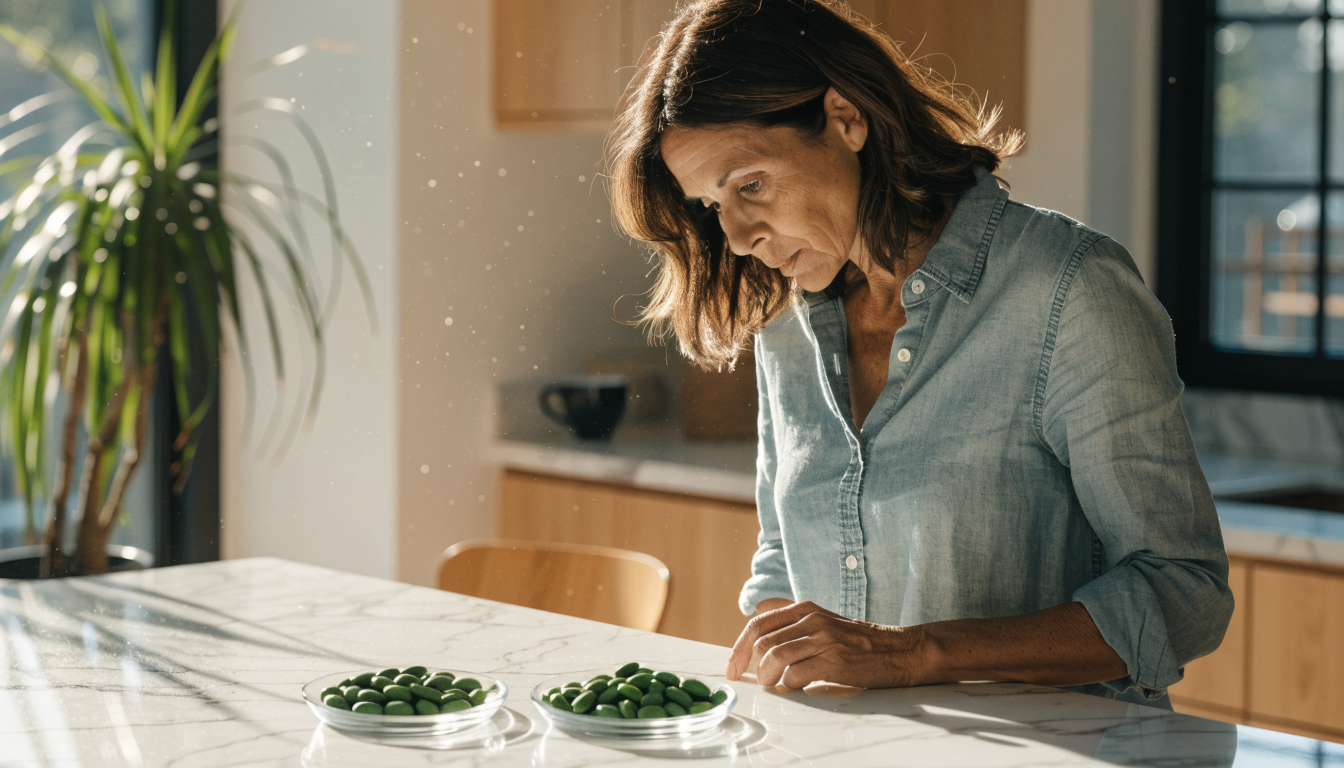
Two green algae, two different starting points. Here is how to pick the one that fits your goal.
Almost everyone who discovers algae asks the same question before their first order: spirulina or chlorella? They look similar, they are both green, and they are often sold side by side. But they are different organisms with different strengths, and starting with the wrong one is the most common reason people quit before they feel anything.
This guide gives you a straight recommendation instead of a list of caveats. We will cover what each algae actually is, who should start with which, how much to take in your first two weeks, and what a normal adjustment period looks like.
Spirulina is a blue-green algae, technically a cyanobacterium, that has been eaten as food for centuries. It is roughly 64 to 71 percent complete protein by weight, which makes it one of the most protein-dense foods on the planet, and that protein contains all nine essential amino acids. It also supplies bioavailable iron, B vitamins, and phycocyanin, the blue pigment that gives spirulina its distinctive color and much of its antioxidant reputation.
Two features matter enormously for beginners. First, spirulina has a soft cell wall, so your body can digest it without any special processing. Second, it contains very little fiber. That combination is why spirulina rarely causes the digestive surprises that newcomers worry about. If you want the deeper biology, our guide to the real difference between spirulina and chlorella breaks it down further.
Chlorella is a true green algae, a single-celled freshwater plant with a nucleus. It runs roughly 50 to 60 percent protein, slightly lower than spirulina, but it carries more chlorophyll than almost any other food, plus fiber and a compound cluster researchers call chlorella growth factor, which is often associated with cellular repair and recovery.
Chlorella has a tough cellulose cell wall that humans cannot digest. Quality chlorella has that wall mechanically cracked or broken so the nutrients are actually available to you. That fiber and chlorophyll combination is exactly why chlorella may support digestion, regularity, and binding, and it is also why a small number of people notice gas or looser stools in the first few days. RECOVERYbits chlorella is our version, and it is the one we point people toward when detox or recovery is the goal rather than energy.
Start with spirulina unless you have a specific reason not to. The logic is simple. Beginners stick with the supplement that makes them feel something quickly and never makes them uncomfortable, and for most people that is spirulina. The energy lift is caffeine-free and steady rather than a spike, it usually shows up within the first two or three weeks, and the taste is milder than chlorella's stronger, grassier profile.
Chlorella is the smarter first choice for a narrower group: people whose primary goal is digestion and regularity, people focused on binding and detox support, and athletes who care most about post-workout recovery. If energy is what you are after, our comparison of spirulina versus chlorella for energy explains why spirulina usually wins that matchup, while the detox comparison makes the case for chlorella.
| Your main goal | Start with | Why |
|---|---|---|
| More energy and focus | Spirulina | Complete protein, iron and B vitamins support steady caffeine-free energy |
| Better digestion and regularity | Chlorella | Fiber and chlorophyll may support gut function and regularity |
| Detox and binding support | Chlorella | The cracked cell wall is what researchers associate with binding |
| Workout recovery | Chlorella | Chlorella growth factor and chlorophyll are linked with cellular repair |
| Sensitive stomach | Spirulina | Soft cell wall and almost no fiber, so it is the gentler introduction |
| General nutrition and protein | Spirulina | Roughly 64 to 71 percent complete protein with all nine essential amino acids |
Start low and build. Begin with about 1 gram a day, roughly a small handful of tablets, and increase gradually over one to two weeks until you reach the amount that feels right for you. There is no benefit to starting at a full serving on day one, and going slowly is the single best way to avoid an adjustment period.
Timing helps too. Spirulina works best in the morning or early afternoon, when its energy support is useful. Chlorella is best taken with meals, where its fiber and chlorophyll can do their work alongside food. Our guide to the best time to take spirulina and chlorella covers the schedule in detail. Whichever you choose, give it two to four weeks of consistent daily use before you judge it. Algae is a food, not a stimulant, and it builds.
Most people notice very little at first, and that is normal. A minority notice mild digestive adjustment in the first few days, more often with chlorella than spirulina, which usually settles on its own as your body adapts. Green stool from chlorophyll is also common and completely harmless. If anything feels like too much, cut your amount in half for a few days and build back up more slowly.
By weeks two and three, the change people report most often is a smoother, more even energy through the afternoon rather than a sudden jolt. Many people find they reach for coffee less without ever deciding to.
Yes, and many people eventually do. They are complementary rather than competing, spirulina leaning toward energy and nutrition, chlorella leaning toward digestion and detox support. The usual path is to master one first, get the daily habit locked in over a month or two, then add the second. Starting both at once makes it impossible to tell which one is doing what.
ENERGYbits spirulina is a single ingredient, organically grown, third-party tested, and pressed into tablets with nothing added. The large bag is the simplest way to give yourself a proper two to four week trial.
Shop ENERGYbits Spirulina →Practical, science-backed tips on starting algae, sent to your inbox.
Join the listSpirulina is the better starting point for most beginners. Its soft cell wall and very low fiber content make it gentle on digestion, its taste is milder, and the steady caffeine-free energy many people notice first makes the daily habit easy to maintain.
About 1 gram is a sensible starting amount. Build up gradually over one to two weeks rather than jumping straight to a full serving. Starting small is the most reliable way to avoid any digestive adjustment.
That is chlorophyll, the green pigment chlorella is packed with, passing through. It is harmless and very common in the first week or two. It is not a sign that anything is wrong.
Give it two to four weeks of consistent daily use. Algae is a nutrient-dense food rather than a stimulant, so the effects build gradually. Most people who report a change describe it as steadier energy through the afternoon.
Yes, and many people eventually take both because they complement each other. It is usually easier to start with one, establish the habit over a month or two, then add the second so you can tell which is doing what.


