


What Does Chlorella Taste Like, and How Do You Take It?
, by The ENERGYbits® Team, 8 min reading time
, by The ENERGYbits® Team, 8 min reading time
An honest description of how chlorella really tastes, green, grassy and slightly briny, plus the practical ways to take tablets or powder so the flavor stops being an issue.
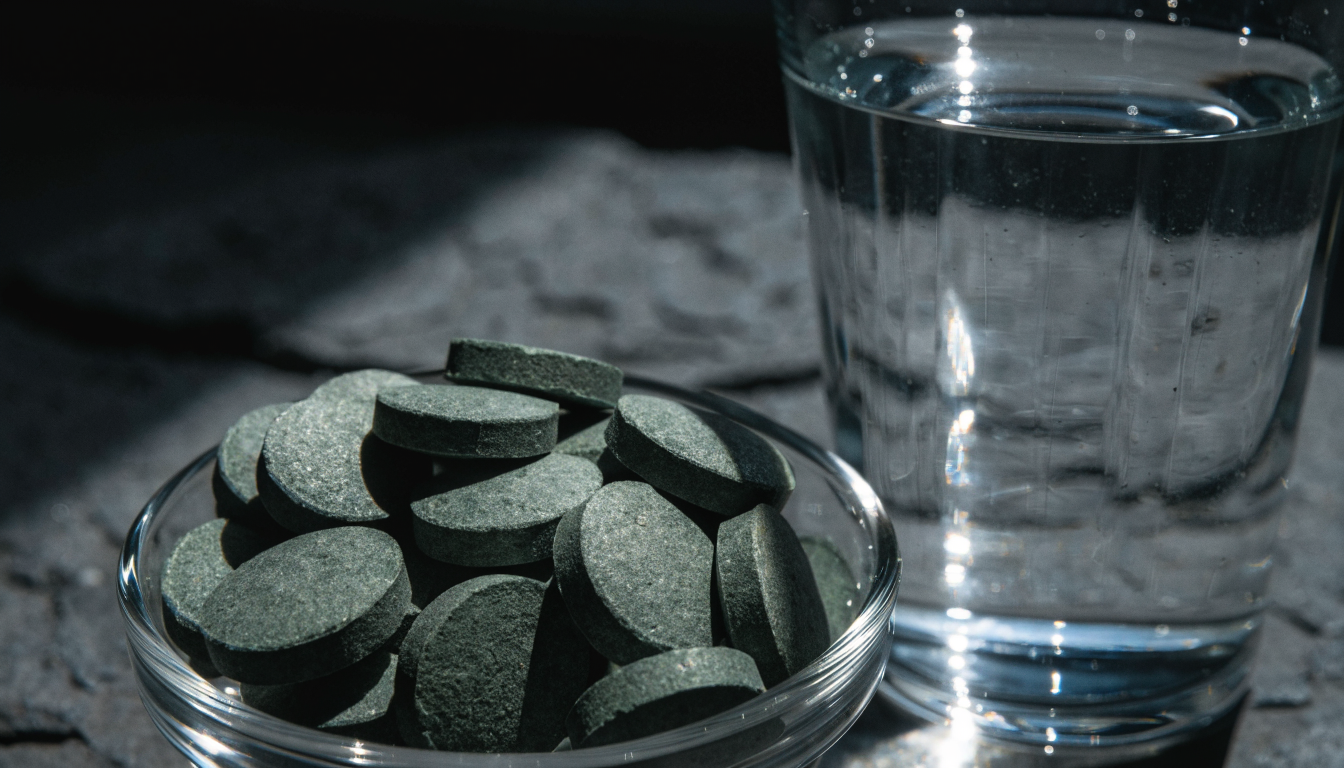
Swallowed whole with water, tablets bypass the flavor question almost entirely.
This is one of the most common questions we get, and it usually arrives a little nervously. The honest answer is that chlorella has a strong flavor, and sugarcoating that would only set you up for an unpleasant surprise. The good news is that taste is a solvable problem once you know how the tablets are meant to be taken.
Chlorella tastes intensely green. The closest everyday comparisons are seaweed, matcha, wheatgrass juice and the smell of a freshly cut lawn. There is a mild bitterness at the back of the tongue and a distinctly mineral, oceanic finish, a little briny in the way a sheet of nori is briny. Nothing about it is sweet.
Texture plays a part too. If you chew a tablet, the flavor arrives fast and lingers for a minute or two, and the tablet turns slightly chalky and coats the mouth. That coating is part of why people remember the taste as stronger than it really was.
Most people find spirulina a little milder and more savory, closer to a vegetal, umami note than to grass. Chlorella reads greener and slightly more bitter. If you have tried spirulina and found it manageable, chlorella will be a step up in intensity rather than a completely different experience. We break the flavor down in our guide to what spirulina tastes like, and the nutritional side in our comparison of spirulina and chlorella.
Four things drive it. Chlorophyll comes first: chlorella carries more chlorophyll than almost any other food, and chlorophyll is essentially what green tastes like. Second, the cell wall, a tough fibrous structure that adds a grassy note. Third, minerals, since chlorella is dense in iron, magnesium and trace minerals, and minerals taste metallic and briny. Fourth, freshness.
Freshness is the one worth paying attention to. Algae stored too long, dried at high heat or handled poorly tastes noticeably worse, and people usually describe it as fishy or rancid rather than simply green. A genuinely bad taste is often a quality signal rather than a chlorella signal. Good chlorella tastes strong. It should never taste spoiled.
| Way to take it | Taste intensity | Convenience | Best for |
|---|---|---|---|
| Tablets swallowed whole | Almost none | Highest, no prep | Anyone who simply wants the nutrition |
| Tablets chewed | Strong, green and grassy | High, no prep | People who genuinely like green flavors |
| Powder in a smoothie | Mild, easy to balance | Moderate, needs a blender | Fruit, cacao or nut butter blends |
| Powder in plain water | Very strong | High, but unpleasant | Almost no one, this is where people quit |
| Powder in savory food | Mild to moderate | Moderate, needs a recipe | Dressings, hummus, guacamole, cooled soup |
RECOVERYbits Chlorella is a single ingredient tablet with nothing added, so there is no flavoring to hide behind and nothing to mix. Take a few with water and get on with your day.
Shop RECOVERYbits ChlorellaThe simplest method is to swallow them whole with water, the way you would any other tablet. You taste almost nothing. That is the entire advantage of tablets over powder, and it is why most people stop thinking about flavor after their first week.
Take them in small groups rather than all at once. Three or four at a time with a decent mouthful of water goes down easily, while a fistful does not. Many people prefer taking them with a meal, which makes swallowing easier and tends to be gentler on a sensitive stomach. Others do fine on an empty stomach. And if you actually want the taste, and some people do, chew them. There is no rule against it. How many you take is a separate question, and our guide to how much chlorella per day covers where most people land.
Powder is where nearly all the taste complaints come from, and almost always for one reason: someone stirred it into a glass of plain water. Do not do this. Water gives the green nothing to hide behind and turns a supplement into a dare.
Blend it into a smoothie instead. Banana, mango and pineapple bring sweetness and body, citrus brightens the finish, and ginger, cacao or a spoonful of nut butter give the green something to sit against. A modest amount of powder in a well built smoothie disappears. Savory food works on the same principle, so stir it into a dressing, hummus, guacamole or a bowl of soup that has cooled slightly, and let the salt and fat do the work.
For most people, yes. After a couple of weeks the flavor stops registering as strange, the same recalibration your palate makes with black coffee, olives or dark chocolate. Long term customers often tell us they now find the green note pleasant, or at least completely neutral. If you are swallowing tablets whole this barely matters, but if you chew or use powder it matters a great deal, and it is worth giving yourself two weeks before deciding.
Join our newsletter for plain-language guides on spirulina, chlorella, and everyday wellness.
SubscribeChlorella tastes intensely green and grassy, closer to seaweed, matcha or wheatgrass than to anything sweet, with a mild bitterness and a mineral, slightly briny finish. Swallowed whole as a tablet with water, you taste almost nothing.
Most people find chlorella greener and slightly more bitter, while spirulina reads milder and more savory. The difference is one of degree rather than kind. If spirulina was manageable for you, chlorella most likely will be too.
A fishy or rancid taste usually points to freshness rather than to chlorella itself. Algae stored too long or dried at high heat tastes noticeably worse. Good chlorella tastes strong and green, never spoiled.
Swallow the tablets whole with water, three or four at a time, ideally alongside a meal. If you are using powder, blend it into a smoothie with banana, mango or cacao. Do not stir powder into plain water.


