


Chlorella Tablets vs Powder: Which Is Better?
, by The ENERGYbits® Team, 10 min reading time
, by The ENERGYbits® Team, 10 min reading time
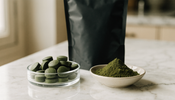
Chlorella tablets and powder start out as the same algae, but surface area, taste, dosing accuracy, and waste change the math. Here is how the two formats really compare.

Same algae, two very different formats. The container matters more than most buyers expect.
Chlorella is the same single-celled green algae whether it arrives as a loose powder or a pressed tablet. The nutrition on the label starts out nearly identical. What changes is how well that nutrition survives the trip from the harvest tank to your mouth, and how likely you are to keep taking it after week three.
That second part gets ignored in most comparisons, and it is the one that decides results. Below is an honest look at purity, oxidation, taste, dosing, portability, and real cost per serving, including where powder genuinely has the edge.
Generally, yes. Grinding algae into a fine powder multiplies its exposed surface area enormously. Every particle face is a place where oxygen, light, heat, and humidity can act on the delicate compounds inside, particularly chlorophyll and the carotenoids that give chlorella its deep green color.
A pressed tablet has a fraction of that exposure. Only the outer skin of the tablet meets the air, so the interior stays comparatively sheltered. Research on green plant pigments consistently shows that chlorophyll breaks down with light and oxygen exposure, which is why a powder bag that gets opened and scooped twice a day tends to fade and flatten in smell over a few months.
Processing matters too. Chlorella has a tough cellulose wall that has to be opened for you to absorb what is inside, and how that cell wall is cracked affects both formats equally. Format decides how long the result stays fresh.
Many do, and this is the single most important label check you can make. Most tablets on the market need flow agents and binders to hold their shape: magnesium stearate, silicon dioxide, maltodextrin, cellulose, or similar. Those ingredients are not chlorella, so a 1 gram tablet may deliver noticeably less algae than you assumed.
ENERGYbits tablets are the exception that proves the format can be clean. RECOVERYbits chlorella tablets are 100 percent chlorella, with no binders, no fillers, no flow agents, and nothing added. The algae is simply pressed. Strain also shapes the nutrition you get, which is worth understanding when you compare chlorella vulgaris and chlorella pyrenoidosa.
Powder is not automatically pure either. Cheaper powders are sometimes cut or blended, and a loose green dust is far harder to inspect by eye than a uniform tablet.
Tablets, by a wide margin, if you swallow them. Chlorella tastes strongly of the sea and of grass, and what chlorella tastes like straight from a spoon surprises a lot of first-time buyers. Stirred into plain water, the powder clumps, settles, and coats the glass.
Swallowed whole with water, tablets bypass the flavor almost entirely. Chewed, they taste like the powder, so most people do not chew them. If you want to taste nothing at all, tablets are the obvious pick.
Tablets give you unit dosing. Each one weighs a known amount, so counting out 10 tablets is exact and repeatable, which makes it simple to follow guidance on how much chlorella per day makes sense for you and then build up gradually.
A scoop of powder is an estimate. Fine green powder packs differently depending on humidity, how settled the bag is, and how heaped the spoon is, and two level teaspoons can vary by 20 to 30 percent in actual grams. If you are tracking intake carefully, that variability works against you.
| Factor | Tablets | Powder |
|---|---|---|
| Purity | Can be 100 percent algae, as ENERGYbits tablets are, but many brands add binders | No binders needed, though blending and dilution are harder to detect |
| Oxidation and shelf stability | Low surface area, interior shielded, color and aroma hold longer | High surface area, more exposure to air and light with every scoop |
| Taste | Essentially none if swallowed whole | Strong, grassy, oceanic, needs masking |
| Dosing accuracy | Exact, countable, repeatable | Scoop to scoop variation of roughly 20 to 30 percent |
| Portability | Pocketable, no scoop, no mess, travel friendly | Needs a container, a scoop, a liquid, and cleanup |
| Cost per serving | Slightly higher per gram, less waste in practice | Lower sticker price per gram, more spillage and abandoned bags |
Powder usually looks cheaper on the shelf because pressing tablets adds a manufacturing step. Compare by price per gram of actual chlorella, not price per container, and subtract any filler percentage from tablet weight before you do the math.
Then factor in waste. Powder gets spilled, left in the bottom of blenders, and abandoned half-used when people decide they cannot face the taste again. A bag you finish at a slightly higher cost per gram is cheaper than a bag you throw away. The same logic shows up in the spirulina tablets versus powder comparison.
Powder has one clear advantage: it disappears into things. If you already make a daily smoothie with banana, cocoa, or mango, the powder blends in and the flavor gets buried. Powder is also handy for energy balls, guacamole, or anything you want to tint green.
If you are not already blending something every single day, powder tends to become a bag in the back of a cabinet. Tablets travel with you, need no prep, and take ten seconds. For a daily habit you intend to keep for years, that is usually the deciding factor.
RECOVERYbits tablets are pressed from a single ingredient: broken cell wall chlorella. No binders, no fillers, no scoop, no taste.
Shop RECOVERYbits chlorella →Short, research-grounded notes on chlorella and spirulina, sent now and then. No hype.
Join the list →Gram for gram the algae is the same, so the nutrition is comparable at the moment of purchase. Tablets tend to hold that nutrition longer because less surface area is exposed to air and light, and many people find they stay consistent with tablets because there is no taste to get past.
It depends on tablet weight, so check the label and divide. A level teaspoon of chlorella powder is roughly 3 grams, which is in the range of 6 to 12 tablets for most products. Start low and build up over a few weeks rather than jumping to a full serving.
It degrades faster rather than spoiling in an unsafe way. Each scoop brings in fresh air and moisture, and the fine particles oxidize more readily than a pressed tablet would. Keep powder sealed, cool, and out of sunlight, and finish an opened bag within a few months.
Yes, and that is a reasonable way to have both options. Pure chlorella tablets with no binders grind down cleanly in a blender, which lets you keep the stable storage format and still add it to food when you want to.


