



Does Chlorella Help Protect Against Radiation?
, by The ENERGYbits® Team, 9 min reading time
, by The ENERGYbits® Team, 9 min reading time
The claim that chlorella protects against radiation traces back to mid-century research and post-Chernobyl folklore. Here is what the evidence actually shows, and why chlorella is not radiation protection.
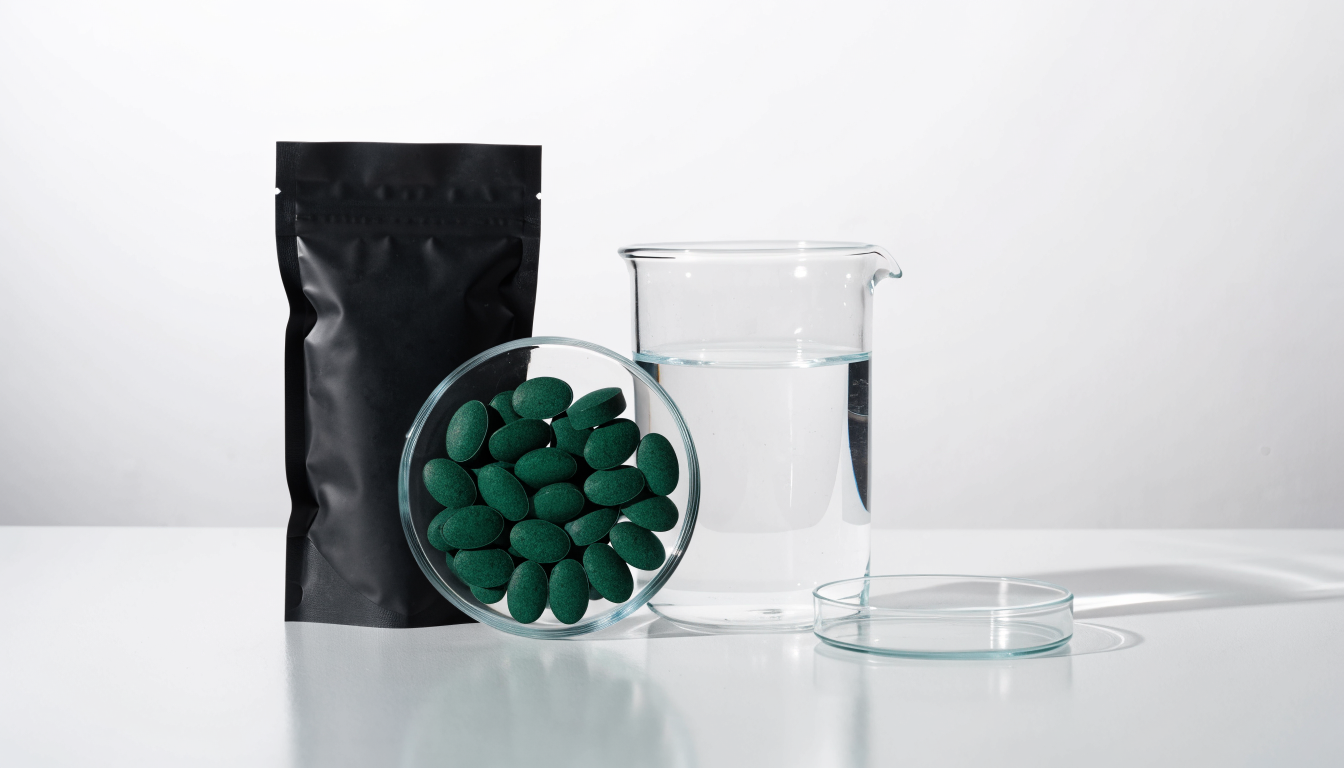
A claim this old deserves a careful look at the actual evidence.
Search chlorella and radiation and you will find confident claims stacked on top of one another, most of them decades old and very few of them properly sourced. It is one of the stickiest ideas in the supplement world. So this article does something different: it traces where the claim came from, looks at what the research base actually contains, and draws a clear line around what chlorella cannot do.
The reputation has two roots. The first is mid-twentieth-century laboratory work carried out during an era of intense public anxiety about nuclear fallout. Researchers fed algae, chlorophyll extracts, and other green plant material to irradiated laboratory animals and reported differences in survival rates and blood markers. The second root is the widely repeated story that chlorella was distributed and studied in Japan and in parts of Eastern Europe following the 1986 Chernobyl accident. Some of that history is real in the narrow sense that algae was handed out and observed. None of it amounts to a controlled demonstration that chlorella changed radiation outcomes in people.
Because it is emotionally satisfying and difficult to disprove in a sentence. Radiation is invisible and frightening. Chlorella is green, natural, and ancient. The pairing makes an appealing story, marketing repeated it, wellness content repeated the marketing, and each retelling drifted a little further from the original papers until the citation trail simply ended. The same pattern shows up in other algae claims, which is why our look at whether chlorella detoxes mold and our comparison of chlorella versus activated charcoal both spend so much time separating mechanism from marketing.
Mostly animal models, isolated cell work, and a small number of human studies with modest sample sizes. Rodents given algae or chlorophyll derivatives before or after irradiation, cell cultures exposed to oxidative stress, and test-tube binding experiments make up the bulk of it. Those designs are valuable. They generate hypotheses, they identify mechanisms worth testing, and they are how science begins. What they do not do is establish an effect in human beings. There are no large randomized controlled trials showing that chlorella changes radiation outcomes in people, and anyone discussing this topic honestly has to say that out loud rather than bury it.
This is the single most important distinction in the entire topic, and it is almost always blurred. Some laboratory work has explored whether algae cell walls bind certain ingested compounds, including particular metals and radioisotopes, inside the digestive tract so that less is absorbed. That is a chemistry question about what happens in your intestines with something you swallowed. External radiation exposure, the kind that comes from an X-ray, a CT scan, a high-altitude flight, or an environmental incident, passes through the body entirely. It has nothing to do with the contents of your gut, and no supplement taken by mouth creates a barrier against it. Our guides on whether chlorella removes heavy metals and whether chlorella is good for your liver examine the binding question in more depth, including its real limits.
Yes, in a limited and careful way, and this is where the subject stops being pure nonsense. Radiation damage involves oxidative stress, and chlorella carries chlorophyll, carotenoids including lutein and beta-carotene, and a range of other antioxidant compounds. Research has explored how dietary antioxidants influence the way tissue responds to oxidative stress in general. That is a genuine and ongoing area of nutrition science. It is also a very long way from a radiation claim. A plausible mechanism is a reason to keep studying something. It is not a reason to rely on it, and the gap between those two positions is where most of the misleading marketing lives.
| The claim | What the evidence base is | Honest verdict |
|---|---|---|
| Chlorella was used after Chernobyl | Historical accounts and small uncontrolled reports | Partly true as history, not evidence of effect |
| Chlorella binds radioactive particles | Test-tube and animal binding studies, digestive tract only | Explored, unproven in humans, gut only |
| Chlorella guards against scans or X-rays | No supporting research of any kind | False, disregard it entirely |
| Chlorella antioxidants affect oxidative stress | Animal, cell, and small human nutrition studies | Plausible and general, not radiation specific |
| Chlorella is nutrient dense and rich in chlorophyll | Compositional analysis and mainstream nutrition research | Well supported |
No. Clearly, and without qualification, no. If you are undergoing medical imaging or radiation therapy, working in a setting with occupational exposure, or responding to an environmental event, the right answers come from your physician, your radiation safety officer, and established public health guidance. Nothing in a supplement pouch belongs anywhere near that decision. If you are already taking chlorella alongside medical care, mention it to your healthcare provider, because any supplement can interact with treatment you are receiving.
RECOVERYbits is pure cracked-cell-wall chlorella. One ingredient, nothing added. Nutrient density, chlorophyll, and fiber for everyday wellness, with no dramatic claims attached.
Shop RECOVERYbits ChlorellaThe unglamorous answers are the real ones. Chlorella is a dense whole food source of protein, chlorophyll, fiber, iron, B vitamins, and carotenoids. It may support daily nutrient intake, digestive regularity through its fiber content, and the broad benefits that come from eating more nutrient-dense food more often. None of that makes a dramatic headline, and none of it needs to. A green tablet you can take every morning that quietly adds real nutrition to your day is a reasonable thing to want, and it is a claim that can stand up to scrutiny. Radiation is not on that list, and it should not be.
Join our newsletter for plain-language guides on spirulina, chlorella, and everyday wellness.
SubscribeNo. Chlorella is not radiation protection and should never be used that way. Research has explored chlorophyll, carotenoids, and the binding of certain ingested compounds, but that work is largely animal, cell, and small human studies. Rely on medical and public health guidance instead.
Algae was distributed and observed in the years after the 1986 accident, and that history gradually turned into a marketing story. Historical use is not the same thing as controlled evidence that chlorella changed any outcome.
Laboratory and animal studies have explored whether algae cell walls bind certain ingested compounds inside the digestive tract. That is limited to the gut and remains unproven in humans. It says nothing at all about external radiation exposure.
Chlorella is well supported as a nutrient-dense whole food. It provides protein, chlorophyll, fiber, iron, B vitamins, and carotenoids, and it may support daily nutrient intake and digestion as part of a balanced diet.


