


Is Chlorella a Complete Protein? A Guide for Vegans
, by The ENERGYbits® Team, 10 min reading time
, by The ENERGYbits® Team, 10 min reading time
Yes, chlorella is a complete protein with all nine essential amino acids and is roughly 50 to 60 percent protein by dry weight. Here is what a realistic daily serving actually delivers for vegans.

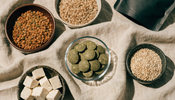
Chlorella alongside the plant proteins it is most often compared to.
If you have cut meat out of your diet and started reading supplement labels for amino acid content, chlorella earns a close look. This single-celled freshwater algae is about half protein by dry weight, and unlike most plant foods, it carries every essential amino acid your body cannot build on its own.
The honest caveat is portion size. Chlorella is measured in grams, not scoops, so the protein it adds to your day is modest. Here is what the numbers actually look like, and where this little green tablet genuinely fits in a vegan diet.
Your body can manufacture most amino acids internally, but nine of them have to arrive through food. Those nine are histidine, isoleucine, leucine, lysine, methionine, phenylalanine, threonine, tryptophan, and valine. A food earns the label "complete protein" when it supplies all nine in amounts your body can meaningfully use.
Most single plant foods fall short somewhere. Grains tend to run low in lysine, legumes tend to run low in methionine, which is why the old advice was to pair rice with beans. Animal foods are complete by default, and that gap is the usual argument against plant-based eating. Algae is one of the handful of plant-kingdom exceptions that closes it.
Chlorella contains all nine essential amino acids, which makes it a complete protein by the standard definition. The profile is well balanced rather than lopsided, with a notable share of branched-chain amino acids: leucine, isoleucine, and valine together make up roughly a fifth of its total protein.
| Essential amino acid | Approx. grams per 100g chlorella | Notes |
|---|---|---|
| Leucine | 4.2 to 4.9 | Highest of the nine, a branched-chain amino acid |
| Lysine | 2.9 to 3.3 | The amino acid grains usually lack |
| Valine | 2.9 to 3.4 | Branched-chain amino acid |
| Threonine | 2.3 to 2.7 | Comfortably within reference ranges |
| Methionine | 1.1 to 1.4 | The lowest relative value, but still present |
| Tryptophan | 0.5 to 0.7 | Small by weight, which is normal for this one |
Methionine is chlorella's limiting amino acid, so it is not a perfect protein in the way egg white is. It clears the completeness bar comfortably, though, and our fuller breakdown of how much protein is in chlorella walks through the per-tablet math if you want to see the arithmetic.
This is where honesty matters more than enthusiasm. If chlorella is 55 percent protein and you take 3 grams a day, roughly ten standard tablets, you are getting about 1.65 grams of protein. A 6 gram serving gets you a little over 3 grams. That is useful, but it is not dinner.
For context, an adult eating 2,000 calories a day typically aims for 50 to 100 grams of protein. Chlorella at a normal serving covers 2 to 4 percent of that. People who train hard sometimes take larger servings, and the discussion of chlorella for athletes and recovery covers how those higher intakes are usually structured.
The fair framing is this: you take chlorella for everything packaged alongside the protein, including chlorophyll, carotenoids, and iron. The amino acids are a genuine bonus, not the headline.
Chlorella has a tough cellulose cell wall that human digestive enzymes cannot easily break down. If that wall stays intact, a meaningful share of the protein and nutrients inside simply passes through you. This is the single most important quality variable in the category, and it is invisible on the front of the bag.
Quality producers mechanically crack or pulverize the wall before tableting, usually described as "broken cell wall" or "cracked cell wall" chlorella. Research on digestibility suggests properly processed chlorella protein lands in the range of 70 to 80 percent or higher, which is respectable for a plant source. Untreated whole-cell chlorella measures substantially lower.
Per 100 grams, chlorella outperforms almost everything on your plate, including beef. Nobody eats 100 grams of a supplement, but the comparison shows how concentrated the material really is.
| Source | Protein per 100g | Complete profile? |
|---|---|---|
| Chlorella (dried) | 50 to 60 g | Yes, all nine essentials |
| Spirulina (dried) | 55 to 65 g | Yes, all nine essentials |
| Pea protein isolate | 75 to 82 g | Low in methionine |
| Beef, lean cooked | 26 to 31 g | Yes |
| Eggs, whole | 12 to 13 g | Yes, the reference standard |
| Lentils, cooked | 9 g | Low in methionine |
Spirulina sits slightly higher on protein density, and it is also complete, as covered in our piece on whether spirulina counts as a complete protein. Pea isolate wins on grams per scoop, but it is a stripped isolate, so it brings grams and little else.
RECOVERYbits® is pure cracked cell wall chlorella pressed into tablets, with no fillers, binders, or flow agents. The large bag is the everyday size for people taking it daily.
Shop RECOVERYbits® Chlorella →Realistically, no. To reach 25 grams of protein from chlorella you would need roughly 45 grams of powder or about 150 tablets, which is neither pleasant nor sensible. Build your protein base from legumes, tofu, tempeh, seitan, and whole grains, then use algae for what it is uniquely good at.
Where chlorella does pull real weight for vegans is in the nutrients that plant-based eating tends to leave thin. It supplies highly bioavailable iron, chlorophyll, and carotenoids. The B12 question deserves its own careful answer, which is why we wrote about whether chlorella contains usable B12 rather than making a blanket claim here.
Many people end up taking both algae, since the two are complementary rather than redundant. If you are deciding where to start, the practical differences between spirulina and chlorella will help you pick. As with any supplement, check with your healthcare provider first if you are pregnant, nursing, or taking medication.
Short, research-grounded emails on how to actually use algae in a plant-based diet.
Join the list →Yes. Chlorella contains all nine essential amino acids in usable amounts, which meets the standard definition of a complete protein. Methionine is its lowest relative amino acid, but it is still present at a level that clears the completeness threshold.
At roughly 50 to 60 percent protein by dry weight, a 3 gram serving delivers about 1.5 to 2 grams of protein. That covers a small single-digit percentage of a typical daily protein target, so treat it as a nutrient-dense addition rather than a protein source.
It does. Chlorella's cellulose cell wall resists human digestive enzymes, so intact cells pass through largely unused. Broken or cracked cell wall chlorella has been studied at protein digestibility levels around 70 to 80 percent or higher.
Spirulina is marginally higher in protein by dry weight, around 55 to 65 percent versus 50 to 60 percent, and both are complete. The difference is small enough that other nutrients, such as chlorella's chlorophyll and iron content, usually matter more to the decision.
No. Reaching a 25 gram protein dose would take about 150 tablets, which is not practical. Many people find it works better as a daily nutrient supplement alongside legumes, tofu, grains, and a conventional protein powder if they use one.


