


Does Chlorella Contain Vitamin B12? What Vegans Should Know
, by The ENERGYbits® Team, 11 min reading time
, by The ENERGYbits® Team, 11 min reading time
Chlorella contains measurable vitamin B12, and research suggests a meaningful share of it is the bioactive form, unlike spirulina. Here is what vegans should know before relying on it.
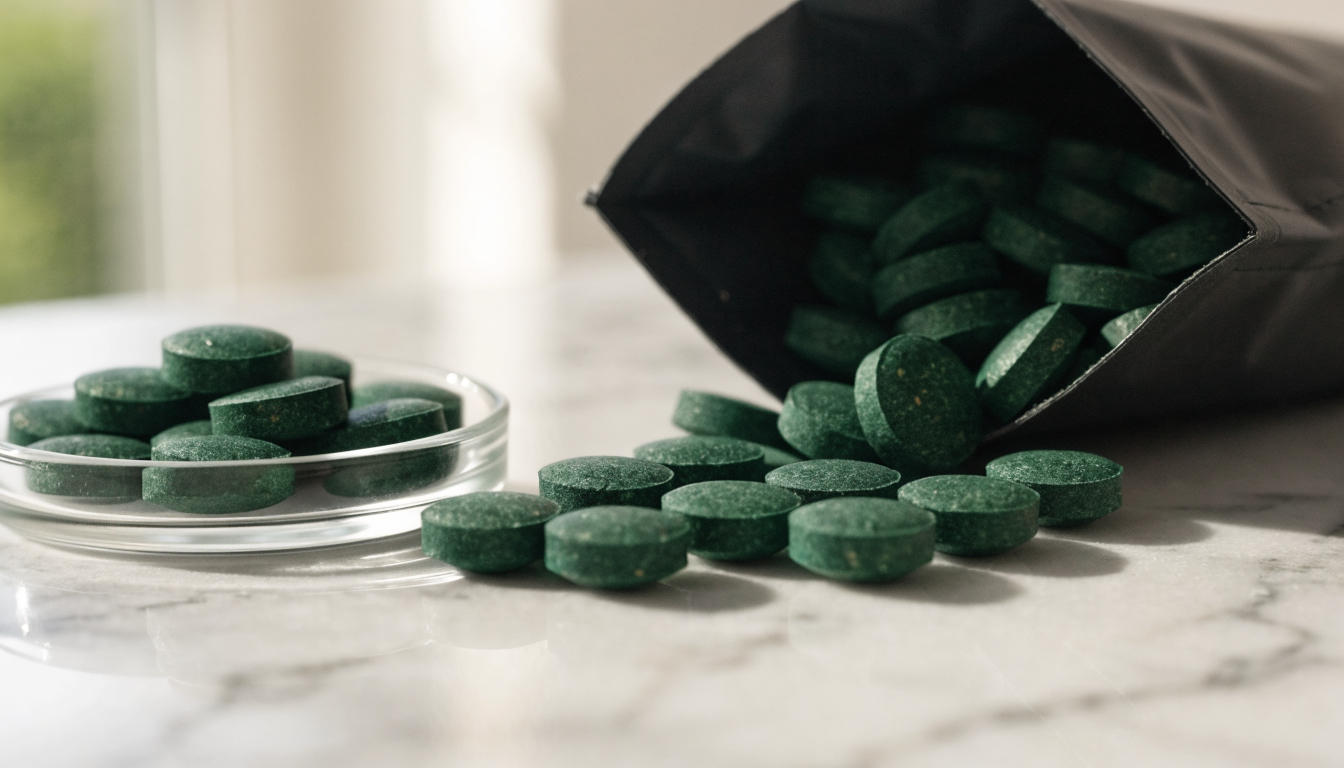
Chlorella tablets are one of the few whole plant foods studied for bioactive B12 content.
Vitamin B12 is the single nutrient that plant-based eaters worry about most, and for good reason. It is involved in red blood cell formation, nerve function and DNA synthesis, and the classic dietary sources are animal foods. So when a green algae shows up on an ingredient list claiming B12, the question is fair: is it real B12, or is it the kind that looks like B12 to a lab test but does nothing in your body?
Chlorella is one of the more interesting answers to that question. It is not marketing spin and it is not a guaranteed fix either. The honest picture sits in the middle, and understanding it will help you build a B12 strategy you can actually trust.
Yes. Laboratory analyses of dried chlorella have consistently found vitamin B12 present, typically in the range of roughly 1 to 3 micrograms per 10 grams of dried algae, though published figures vary widely depending on the strain and how it was grown.
Chlorella does not manufacture B12 on its own. Like every other B12 source on earth, the vitamin originates from bacteria. Chlorella appears to accumulate B12 through its relationship with B12-producing bacteria in its growing environment, which is exactly why the amount is not fixed from batch to batch.
This is the part that matters, and it is where chlorella earns its reputation. Vitamin B12 exists in forms your body can use, chiefly methylcobalamin and adenosylcobalamin, and in inactive look-alike molecules called pseudo-B12 or corrinoid analogues. Analogues can occupy the same testing assays without delivering any benefit, and some researchers have raised the concern that they may even compete with real B12.
Several analyses using more precise methods have reported that a substantial share of the B12 in chlorella is genuinely bioactive rather than analogue. Small human studies have gone a step further. In vegetarian and vegan participants, daily chlorella intake has been associated with improvements in B12 status markers, including reduced methylmalonic acid, a marker that rises when cells are short on usable B12.
Those studies were small and short, so they are encouraging signals rather than settled proof. Still, they point in a consistent direction.
Spirulina and chlorella are often shelved together, but on this specific question they are not interchangeable. Spirulina is a rich source of protein, iron and phycocyanin, and it is worth eating for those reasons. Its B12, however, is widely reported to be predominantly pseudo-B12, meaning the number on a label may overstate what your body can use. We cover that in more detail in our guide to whether spirulina contains B12.
| Factor | Chlorella | Spirulina |
|---|---|---|
| B12 detected in analysis | Yes, commonly reported | Yes, commonly reported |
| Predominant form | Meaningful share of methylcobalamin and adenosylcobalamin | Largely pseudo-B12 analogue |
| Bioactivity for humans | Supported by small human studies | Not established |
| Consistency across batches | Varies by strain and growing conditions | Varies, and form is the bigger issue |
| Reasonable role | A contributor to B12 intake | Valued for protein and iron, not B12 |
None of this makes spirulina a lesser algae. It simply means you should choose it for what it does well. If you are weighing the two on broader grounds, our overview of spirulina and plant-based diets is a useful companion read.
It is a credible contributor, not a guarantee. Reliability depends on three things that are hard to control from the outside: the chlorella strain, the growing conditions and the specific batch. Two products can look identical on a shelf and differ several-fold in B12 content.
The practical takeaway is that chlorella may support your overall B12 intake alongside fortified foods or a dedicated supplement, and many plant-based eaters find it a welcome addition to that stack. What it should not be is the one thing standing between you and a deficiency, particularly if you have been fully plant-based for years, are over 50, take metformin or acid-reducing medication, or are pregnant or nursing.
The commonly cited recommended daily allowance for adults is around 2.4 micrograms, rising modestly during pregnancy and breastfeeding. That sounds tiny, and it is, but absorption is the complicating factor. The body only absorbs a limited amount of B12 per dose through its active transport pathway, which is why frequency of intake matters as much as the number on a label.
Against that benchmark, a typical daily serving of chlorella can supply a real fraction of your needs, but the variability described above means you should not do the arithmetic as though it were guaranteed. If you want a starting framework for intake, see our guide on how much chlorella per day.
Even setting B12 aside, chlorella is dense. It supplies complete protein, chlorophyll, iron, RNA and DNA nucleotides, carotenoids and a compound unique to the algae known as chlorella growth factor. Its tough cell wall, when properly cracked for digestibility, is also studied for its ability to bind to certain unwanted compounds in the digestive tract.
Test, do not guess. A serum B12 test is a starting point, and markers such as methylmalonic acid or homocysteine give a clearer picture of whether your cells are actually getting what they need. Symptoms like persistent fatigue, tingling in the hands or feet, brain fog or unusual pallor deserve a conversation with your healthcare provider rather than a self-directed supplement experiment.
If you are already deficient, chlorella is not the right tool for correcting that. Work with your provider on a targeted approach, then consider chlorella for long-term maintenance.
RECOVERYbits® are 100% pure cracked-cell chlorella tablets with one ingredient and nothing added. No fillers, no binders, no capsules.
Shop RECOVERYbits Chlorella →Practical nutrition guidance delivered to your inbox, written for people who read labels.
Join the listYes. Chlorella contains measurable vitamin B12, and a meaningful portion of it appears to be the bioactive forms your body can actually use. That sets it apart from spirulina, whose B12 is largely an inactive analogue. Amounts still vary by strain and batch, so chlorella is best treated as a helpful contributor to B12 intake rather than a guaranteed sole source.
For B12 specifically, yes. Analyses suggest chlorella contains a meaningful share of bioactive methylcobalamin and adenosylcobalamin, while spirulina's B12 is widely reported to be predominantly inactive pseudo-B12. Spirulina remains valuable for protein, iron and phycocyanin.
It should not be assumed to. B12 content in chlorella varies by strain, growing conditions and batch, so it is best framed as a contributor to your total intake alongside fortified foods or a dedicated supplement. Anyone with low levels should speak with a healthcare provider.
The commonly cited recommended daily allowance is around 2.4 micrograms for adults, with modest increases during pregnancy and breastfeeding. Because the body absorbs only a limited amount per dose, how often you take B12 in matters as well as the total.
Testing is the only reliable way. A serum B12 test is a starting point, and markers such as methylmalonic acid or homocysteine give a clearer picture of cellular status. Discuss results and any symptoms with your healthcare provider.


