


L-Carnitine and Fat Metabolism: Can Food Cover It?
, by The ENERGYbits Team, 36 min reading time
, by The ENERGYbits Team, 36 min reading time
Carnitine food sources by serving, how your body makes its own, what vegans get, and what supplement trials show for fat loss and exercise, plus TMAO.
Carnitine gets sold as a fat burner, yet it is really a shuttle service: a small molecule that carries long-chain fatty acids across the mitochondrial membrane so they can be turned into ATP. Your liver, kidneys and brain build it from scratch, and meat, fish and dairy add more. So where does food fit, what do the weight-loss and exercise trials show, and what should you know before taking a supplement?
ENERGYbits® • Mitochondria
Quick Answer
Carnitine carries long-chain fatty acids into mitochondria, and healthy people make enough of it themselves. Red meat is the richest food source (roughly 65 to 74 mg in 3 oz of cooked ground beef), with smaller amounts in fish, poultry and dairy and almost none in plants. The NIH Office of Dietary Supplements says healthy adults need no dietary or supplemental carnitine [1]. Supplement trials show only modest effects on weight [5].
Your cells burn two main fuels: glucose and fatty acids. Glucose is broken down into smaller pieces that enter mitochondria readily. Long-chain fatty acids cannot. They are too bulky and too water-averse to cross the inner mitochondrial membrane on their own, so they are attached to carnitine, carried across, and then released inside, where beta-oxidation breaks them into acetyl units that feed the energy-making cycle and, ultimately, ATP production [1].
That is the whole job description, and it is an important one. Without carnitine, long-chain fat oxidation stalls. This is why tissues that burn a lot of fat, namely heart and skeletal muscle, hold most of the body's carnitine. The NIH Office of Dietary Supplements (ODS) puts it at about 95 percent of the body's total in those two tissues, with most of the rest in liver and kidney and only around 0.5 percent circulating in plasma [1].
Quick Answer
What does L-carnitine do in the body? L-carnitine acts as a transport cofactor that moves long-chain fatty acids into the mitochondria, where they are oxidized to make ATP. It also helps carry some potentially toxic compounds out of mitochondria. About 95 percent of the body's carnitine sits in heart and skeletal muscle, the tissues that burn the most fat [1].
Carnitine is classed as conditionally essential. That phrase means the body normally makes enough, but needs can outrun production in particular situations, such as premature birth or kidney dysfunction [1]. The NIH sheet notes that in 1989 the Food and Nutrition Board concluded carnitine is not an essential nutrient, which is why no Dietary Reference Intakes exist for it [1].
The logic behind carnitine supplements goes like this: fat has to be carried by carnitine, so more carnitine should mean more fat burned. Biology rarely cooperates with arguments that tidy. In a healthy person the transport system is already running at the capacity set by demand, enzyme levels and fuel availability. Adding more of the shuttle does not automatically add more cargo or more demand for it. Later in this article we look at what the trials actually found, and the answer is less dramatic than the marketing.
Healthy adults are not dependent on the plate. The liver, kidneys and brain synthesize carnitine from two essential amino acids, lysine and methionine [1][12]. Methionine donates methyl groups, while lysine, once it has been methylated within proteins, supplies the carbon skeleton that is eventually released as free trimethyllysine and converted through a short series of enzymatic steps.
Biochemical work on the pathway shows that its hydroxylation steps need iron (as Fe2+) and vitamin C (ascorbate), along with 2-oxoglutarate [11]. A later cleavage step uses a serine hydroxymethyltransferase enzyme [11], a family of enzymes that depends on vitamin B6 in its active form. Niacin, through NAD+, is generally described as supporting the final oxidation steps. The iron and vitamin C requirements are the best documented of these, so treat the B6 and niacin links as a general biochemical picture rather than a measured dietary requirement.
| Pathway need | What supplies it | Food examples |
|---|---|---|
| Lysine (carbon backbone) | Dietary protein | Legumes, dairy, eggs, fish, meat, spirulina |
| Methionine (methyl groups) | Dietary protein | Eggs, fish, poultry, dairy, seeds, spirulina |
| Iron | Hydroxylation enzymes | Meat, legumes, spinach, spirulina |
| Vitamin C | Hydroxylation enzymes | Peppers, citrus, kiwi, berries |
| Vitamin B6 | Serine hydroxymethyltransferase step | Poultry, fish, potatoes, bananas |
| Niacin (as NAD+) | Late oxidation steps | Poultry, fish, mushrooms, peanuts |
The ODS estimates that a strict vegetarian synthesizes roughly 14.4 mg of carnitine per day, based on a 165-pound adult, and notes that endogenous synthesis is not changed by dietary intake or excretion and is sufficient for healthy people [1]. That figure is a reminder that your own production, not your lunch, is the main supply for many people.
What the research says
A 2000 study in Physiological Research compared plasma carnitine in vegans, lacto-ovo vegetarians and omnivores. Carnitine levels correlated with methionine and lysine intake in the plant-based groups, which the authors read as evidence that internal synthesis covers a substantial share of needs [9]. The same study is a useful corrective to oversimplified claims, as we discuss below.
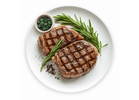
Carnitine is concentrated in animal muscle. The more red the meat, the more it tends to contain. The figures below come from the NIH ODS fact sheet. One caution applies throughout: the ODS points out that USDA FoodData Central does not list carnitine content, so these values come from small analytical studies and vary with cut, animal and cooking method [1].
| Food and portion | Carnitine (mg) |
|---|---|
| Beef steak, cooked, 3 oz | 42 to 122 |
| Ground beef, cooked, 3 oz | 65 to 74 |
| Whole milk, 1 cup | 8 |
| Codfish, cooked, 3 oz | 3 to 5 |
| Ice cream, 1/2 cup | 3 |
| Chicken breast, cooked, 3 oz | 2 to 4 |
| Cheddar cheese, 2 oz | 2 |
| Whole-wheat bread, 2 slices | 0.2 |
| Asparagus, cooked, 1/2 cup | 0.1 |
Quick Answer
Which foods are highest in carnitine? Beef is the leading source: 3 oz of cooked steak provides roughly 42 to 122 mg and cooked ground beef 65 to 74 mg. Whole milk offers about 8 mg per cup, while fish, chicken and cheese supply only a few milligrams per serving. Vegetables, fruit and grains contain very little [1].
The ODS estimates that a typical omnivorous diet supplies about 24 to 145 mg per day, while a vegan diet supplies about 1.2 mg per day [1]. Those numbers look lopsided, but the body also absorbs carnitine from food far better than from pills. ODS reports bioavailability of dietary carnitine at about 63 to 75 percent, compared with roughly 14 to 18 percent for supplemental L-carnitine [1]. A modest portion of beef therefore delivers more usable carnitine than its milligram count suggests relative to a capsule.
Cooking and cut matter. The wide range for steak (42 to 122 mg) shows how unreliable a single number is. Think in tiers rather than decimals: red meat is high, dairy and fish are low, poultry is lower still, and plant foods are close to zero.
A common claim holds that vegans eat almost no carnitine yet keep normal blood levels, proving the body makes all it needs. The ODS supports the first half: intake on a vegan diet is about 1.2 mg per day, and endogenous synthesis is considered sufficient for healthy people [1]. The second half needs a caveat.
In the 2000 Physiological Research study, vegans had significantly lower average plasma carnitine than omnivores, and 52.9 percent fell into the hypocarnitinemia range (below 30 micromoles per liter). Among lacto-ovo vegetarians the share was 17.8 percent, compared with 3.3 percent of omnivores [9]. The authors linked this to lower lysine and methionine intake in plant-based diets and concluded that these diets carry some risks related to essential amino acid and carnitine status [9]. It is a single, modest study, and low plasma values are not the same as symptoms, but it argues against saying that levels are always normal.
What the research says
Reading the two sources together gives a balanced picture. Synthesis is robust enough that healthy plant-based eaters are not generally considered deficient [1], yet measured plasma carnitine can run lower, particularly in strict vegans with low intake of lysine and methionine [9]. Whether lower plasma levels have any practical consequence in healthy people is not established.
Quick Answer
Do vegans get enough carnitine? Most healthy vegans make enough carnitine internally, and the NIH considers endogenous synthesis sufficient for healthy people. Intake is only about 1.2 mg per day, though, and one study found lower average plasma carnitine in vegans, tied to lower lysine and methionine intake. Adequate protein, iron and vitamin C support synthesis [1][9].
Because carnitine is tied to fat oxidation, weight loss is the best-known supplement claim. The evidence is thin. A 2016 systematic review and meta-analysis in Obesity Reviews pooled nine randomized controlled trials covering 911 adults and found that people taking carnitine lost an average of 1.33 kg more than controls, with a confidence interval of 0.57 to 2.09 kg. The authors also reported that the effect became smaller with longer use [5].
The NIH sheet adds context from individual trials. In 258 adults with uncontrolled type 2 diabetes, 2 g per day of carnitine plus orlistat produced an 11.3 kg loss over a year versus 9.5 kg with orlistat alone, while another trial found that 2 g per day on its own for 6 months did not change weight [1]. The consumer version of the fact sheet summarizes the picture as mixed, with larger studies still needed [2].
What the research says
A pooled difference of about 1.3 kg is statistically detectable but small, and it comes from trials that varied in dose, duration and population. It does not show that carnitine causes meaningful fat loss on its own, and the declining effect with longer use argues for caution [5]. The Australian Institute of Sport also states there is no clear evidence of added fat loss from carnitine in athletes [8].
Quick Answer
Does L-carnitine burn fat? Not in any large way. A meta-analysis of nine randomized trials (911 adults) found about 1.3 kg more weight loss with carnitine than with control, and the effect shrank with longer use. One 6-month trial of 2 g daily found no weight effect. Food, activity and sleep matter far more than this supplement [1][5].
Several reasons are offered, though they are partly theoretical. Oral carnitine is poorly absorbed, so blood levels rise only modestly. Muscle carnitine is hard to raise: the Australian Institute of Sport notes that muscle content increases only after about 12 weeks or more of supplementation and only when each dose is taken with carbohydrate, while courses of 4 weeks or less show no change [8]. And tissues take up carnitine through a regulated transporter, so a higher blood level does not guarantee higher stores where they matter.
Exercise studies produce a similarly uneven result. The NIH reports that a review of 11 trials in 251 well-trained athletes found mixed outcomes, with some showing lower lactate or faster recovery and others showing nothing [1]. A 2021 systematic review in Nutrients, covering 11 placebo-controlled studies, found improvements in high-intensity performance with 3 to 4 g taken 60 to 90 minutes before testing or with 2 to 2.72 g per day for 9 to 24 weeks, but no improvement in moderate-intensity performance. Its authors flagged small samples, varied protocols and few muscle biopsies [7].
The ODS also cites a 12-week trial of 24 men taking 1 g twice daily that found no significant change in VO2max, and a small trial of 14 recreational athletes that reported lower perceived exertion after 24 weeks at 2 g twice daily [1]. The Australian Institute of Sport describes the performance case as limited and inconsistent, and says it may be worth considering only for longer endurance efforts, with the evidence not well established [8].
| Question | Best available answer | Source |
|---|---|---|
| Does carnitine boost weight loss? | Small average effect (about 1.3 kg), shrinking over time | [5] |
| Does it help moderate-intensity exercise? | No improvement found in a 2021 review | [7] |
| Does it help high-intensity exercise? | Possible benefit at high doses, small and varied trials | [7] |
| Does it speed recovery? | Mixed; preliminary signals for soreness | [1][8] |
| Does it raise muscle carnitine? | Only after about 12 weeks or more, with carbohydrate | [8] |
None of this makes carnitine useless. It means the claims outrun the data for the typical healthy person. For athletes, the practical hurdles (long courses, high doses, carbohydrate timing) are real, and the safety question below deserves weight.
Trimethylamine-N-oxide, or TMAO, has made carnitine controversial. Gut bacteria can convert carnitine that reaches the colon into trimethylamine, and the liver then converts it to TMAO, a compound associated with atherosclerosis in observational and animal work. The NIH sheet states the implications are not well understood [1].
The 2013 Nature Medicine paper from Hazen and colleagues is the center of the debate. In mice, dietary carnitine increased TMAO and worsened atherosclerosis when gut microbes were intact. In people, omnivores made more TMAO than vegans or vegetarians after carnitine intake, and in 2,595 patients undergoing cardiac evaluation, high plasma carnitine predicted cardiovascular events only in those who also had high TMAO [3].
A 2019 follow-up in the Journal of Clinical Investigation traced the human pathway in two microbial steps, through gamma-butyrobetaine. Omnivores produced far more TMAO from a carnitine challenge than vegans and vegetarians, partly because of differences in the second step. A daily 500 mg supplement increased TMAO production. The authors also stated that the relevance to cardiovascular risk remains to be determined and noted small sample sizes [4].
What the research says
A 2022 randomized trial in 157 adults with metabolic syndrome gave 2 g per day of L-carnitine or placebo for 6 months. Total plaque volume did not differ, but carotid stenosis increased more in the carnitine group (by 9.3 percent) and total and LDL cholesterol rose more. Stenosis was not a prespecified primary outcome, and TMAO was not measured as an outcome, so the authors treated the findings as a concerning signal rather than proof [6].
Quick Answer
Is carnitine bad for your heart? The evidence is unsettled. Gut bacteria turn some carnitine into TMAO, which is linked to atherosclerosis in observational and animal data, and one 2022 trial in metabolic syndrome saw worse carotid stenosis and cholesterol with 2 g daily. Authors of the key human studies say the clinical relevance remains uncertain [1][4][6].
What does this mean for food? The comparison is not clean, because red meat contains many other compounds, and the research does not isolate carnitine from the rest of a diet. What the research supports is modest: people who take concentrated supplements, especially those with existing cardiovascular risk, should discuss it with a clinician first.
Carnitine from food carries no upper limit. The ODS states that no tolerable upper intake level has been established, and the consumer sheet describes food and drink sources as considered safe [1][2]. Supplements are a different matter.
True carnitine deficiency is a medical diagnosis. Primary deficiency is a genetic transporter disorder, and secondary deficiency follows conditions such as chronic kidney failure. The NIH lists plasma free carnitine of 20 micromoles per liter or less, or total carnitine of 30 micromoles per liter or less, as abnormally low [1]. That is something a laboratory measures, not something a symptom checklist reveals.
If the aim is to keep mitochondria well supplied with the machinery for fat oxidation, the research points toward the unglamorous basics rather than a single compound. Our guide to supporting mitochondria with food covers the broader nutrient picture.
Spirulina is not a recognized carnitine source. Standard food composition tables, including the NIH ODS fact sheet, do not list carnitine for it, and we have not found a verified analysis of spirulina carnitine content, so we make no claim that it supplies any meaningful amount [1]. What spirulina offers is general whole-food nutrition that overlaps with the building blocks of synthesis.
Using USDA data for dried spirulina (FoodData Central 170495), a full 7.5 g serving (30 ENERGYbits tablets at 250 mg each) provides, calculated from per-100 g values, about 2.1 mg of iron, 0.28 mg of riboflavin, 0.96 mg of niacin, 0.03 mg of vitamin B6 and 4.3 g of protein [10]. Those are modest contributions, not a substitute for a varied diet, and not evidence of any effect on carnitine status.
| Nutrient (calculated for 7.5 g spirulina) | Per 100 g dried (USDA) | Per 7.5 g serving |
|---|---|---|
| Iron | 28.5 mg | about 2.1 mg |
| Riboflavin | 3.67 mg | about 0.28 mg |
| Niacin | 12.8 mg | about 0.96 mg |
| Vitamin B6 | 0.36 mg | about 0.03 mg |
| Protein | 57.5 g | about 4.3 g |
| Lysine | 3.02 g | about 0.23 g |
| Methionine | 1.15 g | about 0.09 g |
If you want to add algae to a food-first routine
ENERGYbits is a single-ingredient spirulina tablet with no fillers or additives, grown in freshwater, gently dried at low temperature and third-party tested for purity and contaminants. A spirulina serving can sit alongside the other foods above, or try the VITALITYbits spirulina and chlorella blend, where chlorella adds chlorophyll in a cracked-cell-wall form. Neither is a source of carnitine, and neither replaces medical care.
For a deeper look at how spirulina compares with another nutrient-dense animal food, see spirulina vs beef liver, and for a related mitochondrial nutrient, CoQ10 vs spirulina. If you eat plant-based, note that spirulina does not supply usable vitamin B12, as explained in does spirulina contain B12.
For most healthy adults, the evidence does not support routine carnitine supplementation. The NIH states that healthy children and adults do not need dietary or supplemental carnitine [1]. The potential upsides are modest (a small weight difference, mixed exercise effects), while the possible downsides include digestive effects, interactions and the unresolved TMAO and cardiovascular questions [1][5][6][7].
Quick Answer
Who might actually need carnitine? People with diagnosed deficiency, such as a genetic transporter disorder, chronic kidney failure, or certain medication-related depletion, may be treated with carnitine under medical supervision. Healthy adults, including most vegetarians and vegans, are not advised to supplement. Anyone considering it should check with a clinician first [1].
If you and your clinician decide a trial is reasonable, keep expectations measured. The Australian Institute of Sport protocol that raised muscle carnitine required long courses with carbohydrate at each dose [8], which is a significant commitment for an uncertain return.
Evidence-first nutrition, weekly
Get one evidence-first nutrition breakdown each week, with the research read for you and the hype left out.
Join the newsletterKey takeaways
Carnitine is a real and important molecule, and the fat-shuttle story is accurate. The leap from that story to a supplement that reliably melts fat is where the evidence falls away. Healthy bodies build it, food tops it up, and trials of extra carnitine show small and inconsistent effects.
The sensible path is food first: adequate protein, enough iron and vitamin C, regular movement, and clinical advice if you have a condition or take medication that affects carnitine. Spirulina and chlorella belong in that picture as whole-food nutrition, not as carnitine sources. What does your own plate look like on a typical week, and where could a small change help most?
Beef is highest, with about 42 to 122 mg in 3 oz of cooked steak and 65 to 74 mg in cooked ground beef. Milk provides about 8 mg per cup, while fish, chicken and cheese give only a few milligrams. Vegetables, fruit and grains contain very little [1].
Yes, in most cases. Healthy adults synthesize carnitine from lysine and methionine, and food adds to that supply. The NIH states that healthy children and adults do not need dietary or supplemental carnitine, and that endogenous synthesis is sufficient for healthy people [1].
The liver, kidneys and brain build carnitine from lysine and methionine through several enzyme steps. The hydroxylation steps depend on iron and vitamin C, and other steps involve vitamin B6 and NAD-related chemistry. Muscle stores most of it [1][11].
The NIH estimates a typical omnivorous diet supplies roughly 24 to 145 mg per day, whereas a vegan diet supplies about 1.2 mg per day. Dietary carnitine is also absorbed more efficiently, about 63 to 75 percent, than supplemental L-carnitine at roughly 14 to 18 percent [1].
Vegan diets supply very little carnitine, and one 2000 study found significantly lower average plasma levels in vegans, with 52.9 percent below 30 micromoles per liter. The NIH still considers synthesis sufficient for healthy people. Adequate protein, iron and vitamin C support production [1][9].
Only modestly. A meta-analysis of nine randomized trials in 911 adults found about 1.33 kg more weight loss with carnitine than control, and the effect declined with longer use. One 6-month trial of 2 g daily found no effect on weight [1][5].
Results are mixed. A 2021 systematic review found possible benefit for high-intensity performance at high doses but none for moderate-intensity performance. The Australian Institute of Sport calls the evidence limited and inconsistent, and notes muscle carnitine rises only after about 12 weeks or more with carbohydrate [7][8].
TMAO is a compound made when gut bacteria convert carnitine to trimethylamine and the liver oxidizes it. It is associated with atherosclerosis in observational and animal research. Whether dietary or supplemental carnitine meaningfully raises cardiovascular risk in people is still uncertain [1][3][4].
Food sources are considered safe and have no upper limit. Supplements around 3 g per day can cause nausea, cramps, diarrhea and a fishy body odor, and a 2022 trial in metabolic syndrome raised cardiovascular concerns at 2 g daily. Ask a clinician before starting [1][2][6].
Valproic acid, phenobarbital, phenytoin and carbamazepine reduce blood carnitine, and chronic use of pivalate-conjugated antibiotics such as pivampicillin can deplete it. Valproic acid can also cause liver toxicity and high ammonia. Never adjust these medicines without medical guidance [1].
Spirulina is not a recognized carnitine source. Standard references, including the NIH fact sheet, do not list carnitine for it, and we have not found a verified analysis, so we do not claim any amount. Spirulina offers general whole-food nutrition such as iron, B vitamins and protein [1][10].
Calculated from USDA data, a 7.5 g serving of dried spirulina provides about 2.1 mg iron, 0.96 mg niacin, 0.03 mg vitamin B6 and 4.3 g protein. These are small contributions that support general nutrition. They are not proof of any effect on carnitine status [10].
Acetyl-L-carnitine is a form of carnitine with an attached acetyl group. The NIH notes that its bioavailability has not been well studied. Most of the weight-loss and exercise research discussed here used L-carnitine or its tartrate salt [1][7].
True deficiency is a medical diagnosis. The NIH defines abnormally low plasma free carnitine as 20 micromoles per liter or less, or total carnitine of 30 or less. It may be primary (a genetic transporter disorder) or secondary, for example from chronic kidney failure [1].
This article is for educational purposes only and is not medical advice. These statements have not been evaluated by the FDA. ENERGYbits® products are whole-food supplements and are not intended to diagnose, treat, cure, or prevent any disease. Talk with your doctor before starting any supplement, especially if you are pregnant, nursing, taking medication, or managing a medical condition.


