


Chlorella vs Spirulina for Weight Loss: Which Is Better?
, by The ENERGYbits® Team, 10 min reading time
, by The ENERGYbits® Team, 10 min reading time
Neither chlorella nor spirulina causes weight loss or burns fat. Here is what each one genuinely offers a calorie-controlled diet, where they differ, and why most people do best taking both.
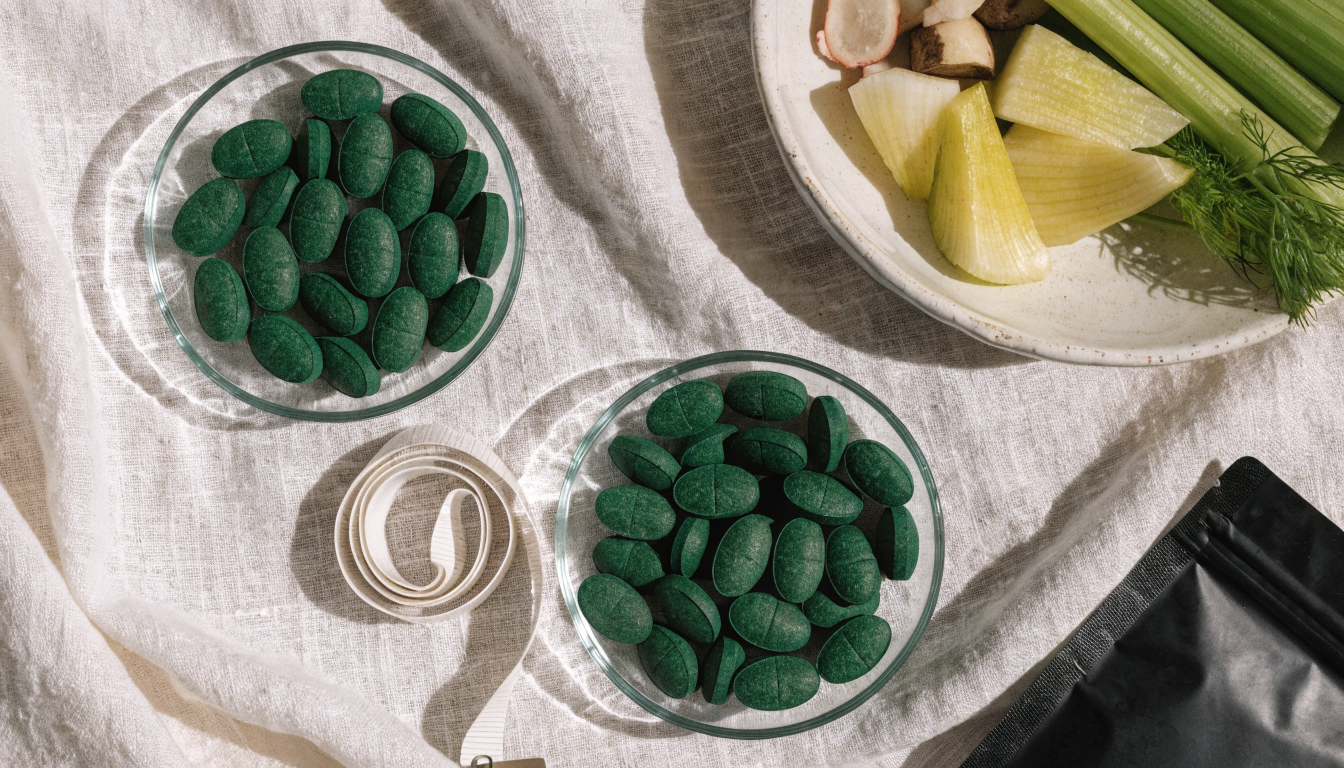
Neither algae is a weight loss product, but both can make a calorie-controlled diet easier to sustain.
We get this question every January, and again every spring. People want to know which green algae is the better fat burner, and the honest answer is that this is the wrong question. Neither one is a fat burner. Anyone selling algae as a weight loss product is overselling it, and you should be skeptical of the claim no matter how green the packaging is.
That does not mean algae is useless when you are trying to lose weight. It just means the mechanism is quieter and less exciting than the marketing suggests. Here is what each one actually does, where they genuinely differ, and how to think about the choice.
No. Weight loss happens when you consistently take in less energy than you use, and no tablet changes that arithmetic. Chlorella does not boost your metabolism. Spirulina does not burn fat. If a product page tells you otherwise, that page is not being straight with you.
What algae can do is make a calorie deficit easier to live with. When intake drops, so does the total volume of nutrients coming in, and that is where a lot of diets quietly fall apart. You feel flat, training suffers, cravings get louder, and by week three you are done. Filling nutrient gaps with something dense and low in calories is a real, if unglamorous, form of support. We go deeper into the evidence in our article on whether chlorella helps with weight loss.
Chlorella's distinguishing feature is its tough cellulose cell wall. That wall material is what gives chlorella meaningfully more fiber than spirulina, and fiber matters here for two reasons.
The first is regularity. Cutting calories often means eating less food overall, which frequently means less fiber, and digestion slows down accordingly. That sluggishness is one of the most common complaints during a diet, and it is worth addressing directly. We wrote a full guide on chlorella and constipation if that is where you are stuck.
The second is fullness. Fiber contributes to satiety, so chlorella may help on the appetite side, though the effect from a tablet serving is modest compared with a bowl of vegetables. There are also small human studies looking at chlorella and body fat percentage, along with markers like blood lipids and fasting glucose. The results are interesting but the trials are small, short, and often industry funded, so treat them as preliminary rather than settled.
Spirulina's angle is protein. It is roughly 60 to 70 percent complete protein by weight, with all nine essential amino acids, delivered in very few calories. When you are eating less, protein is the macronutrient you most want to protect, because it supports lean mass retention and tends to be the most satiating of the three.
Spirulina is also extremely nutrient dense per calorie, carrying iron, B vitamins, and a long list of trace minerals. Small trials have looked at spirulina alongside appetite regulation and blood lipid markers, and some are encouraging, but again the sample sizes are small and the follow-up periods short. If blood sugar is part of your picture, our piece on spirulina and blood sugar covers that research honestly, and if you are eating low carb, spirulina on keto answers the carb question.
| Factor | Chlorella | Spirulina |
|---|---|---|
| Primary mechanism | Fiber and digestive support | Protein density and satiety |
| Fiber | Higher, from the cellulose cell wall | Lower, minimal cell wall fiber |
| Protein | Around 50 to 60 percent by weight | Around 60 to 70 percent, complete profile |
| Best for | Sluggish digestion and regularity during a diet | Protecting protein intake when eating less |
| Honest limitation | Human trials are small and short | No effect on appetite for many people |
If you want the broader nutritional comparison beyond weight, our guide to the difference between spirulina and chlorella lays out the full picture.
You will see this advice everywhere: take a handful of tablets with a large glass of water twenty minutes before eating, and you will eat less. It can work, but be clear about why. The water and the pause are doing most of the lifting, and so is the simple act of deciding, before you sit down, that you are eating with intention. That is a behavioral nudge, not a physiological one.
RECOVERYbits Chlorella is a single ingredient tablet with no fillers, no binders, and no sugar. Just cracked cell wall chlorella, easy to take with water before a meal.
Shop RECOVERYbits ChlorellaThere is nothing wrong with a useful ritual. Just do not confuse it with a metabolic effect, and do not expect it to override genuine hunger. Real hunger deserves food, not a workaround.
This is where the conversation changes. If appetite is already suppressed, whether by medication or by an aggressive deficit, your problem is not eating less. It is getting adequate protein and micronutrients into a much smaller volume of food. That is a nutrient density problem, and it is exactly the situation where something concentrated and low in calories earns its place.
Talk to your clinician about your overall plan, especially if you are taking prescription medication. But the priority in that scenario is clear: protein first, micronutrients second, and everything else after that.
For most people, both. They are complementary rather than competing, and the combination covers fiber and protein at the same time. If you have to choose one, choose based on your actual complaint. Digestion sluggish and irregular, go chlorella. Struggling to hit your protein target on fewer calories, go spirulina.
And keep the ranking honest. Consistency, sleep, adequate protein, and daily movement will outperform any supplement, every time. Algae sits at the edges of that picture, filling gaps and making the plan easier to stick to. That is a genuinely useful role. It is just not the headline.
Join our newsletter for plain-language guides on spirulina, chlorella, and everyday wellness.
SubscribeNeither causes weight loss on its own. Chlorella offers more fiber, which may support digestion and the fullness side of appetite. Spirulina offers more complete protein per calorie, which helps protect protein intake when you are eating less. Most people do best taking both rather than choosing between them.
Barely. A typical serving of either spirulina or chlorella contributes only a handful of calories, so neither meaningfully affects your daily intake. That is precisely why they work well in a deficit: you get a concentrated dose of nutrients without spending much of your calorie budget to get it.
No. Neither algae has been shown to increase metabolic rate or burn fat, and we would not make that claim. The realistic benefit is nutritional. Covering nutrient gaps may support energy levels and training consistency, and consistency is what actually moves results over weeks and months.
Timing matters far less than consistency. Many people take tablets with water before a meal because it builds a helpful pause into their routine. Others take them in the morning and forget about it. Pick whichever version you will actually repeat daily for several weeks.


