



Does Chlorella Help You Sleep?
, by The ENERGYbits® Team, 10 min reading time
, by The ENERGYbits® Team, 10 min reading time
Chlorella contains no melatonin and nothing sedating, so it will not make you drowsy. The more interesting story runs through the gut, where the body produces most of its own serotonin.
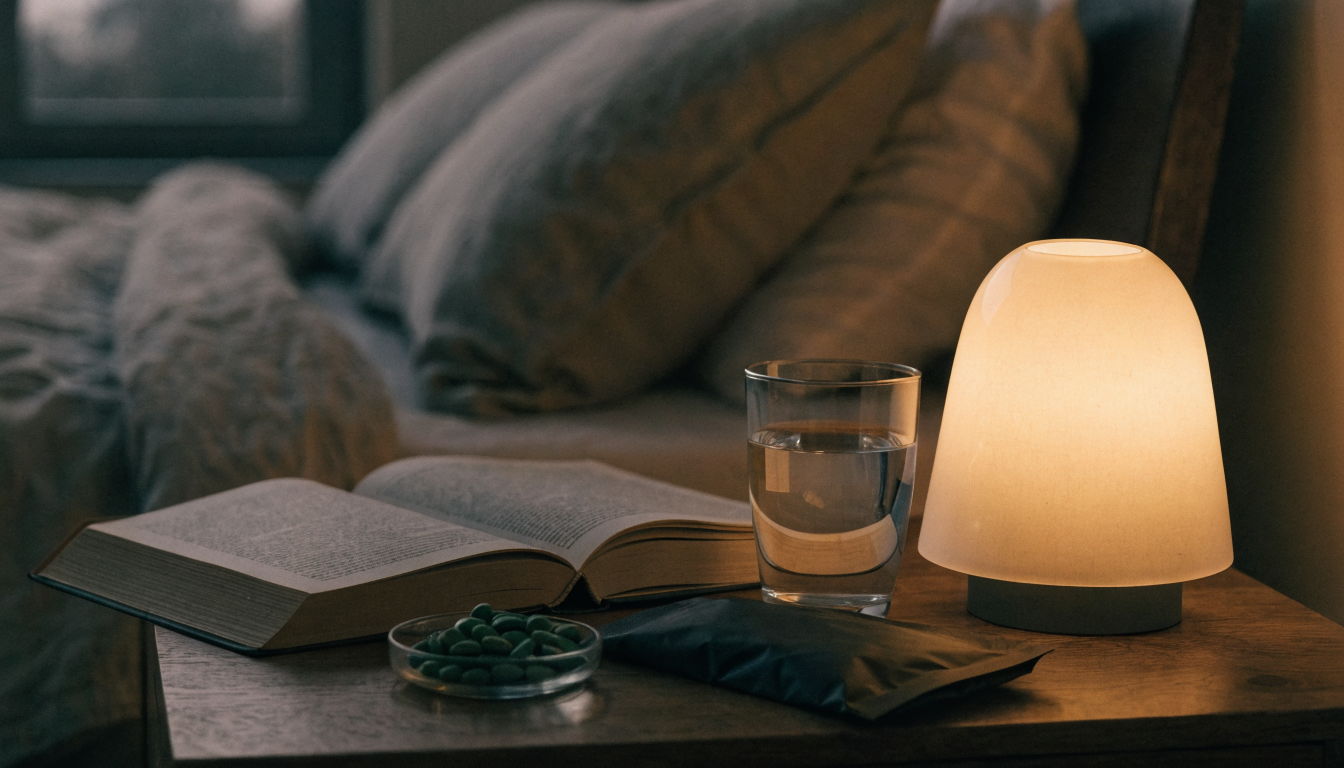
The chlorella and sleep connection runs through the digestive tract, not the brain.
This question usually arrives in a particular tone. Someone has been reading about the gut-brain axis, has seen chlorella described as a gut supplement, and wants to know whether the two threads connect at bedtime. It is a smart question, and it deserves a careful answer rather than a hopeful one.
Here is the honest version up front. Nothing in chlorella acts on your brain, so if you swallow a handful of tablets at eleven at night expecting heavy eyelids, that will not happen. What is genuinely interesting is a slower pathway that starts in your intestines.
Because of where serotonin is made. The overwhelming majority of the body's serotonin, commonly cited at around ninety percent, is produced in the gut rather than the brain. Serotonin is also the molecule your body converts into melatonin, the hormone that governs the timing of sleep. That is the whole basis of the idea.
Chlorella does not contain serotonin and it does not contain melatonin. What it contains is fiber, roughly a quarter of its dry weight, and that fiber behaves as a prebiotic. It is food for the bacteria already living in your colon. A better fed, more diverse microbial community is associated with a healthier gut environment overall, and that environment is where the serotonin machinery lives. We go deeper into that story in our guide to chlorella and gut health.
Notice how many steps that chain has. Fiber feeds bacteria, bacteria shape the gut environment, that environment relates to serotonin production, and serotonin becomes melatonin. Each arrow is real. None of them is fast or guaranteed.
Chlorella carries magnesium and a spread of B vitamins, both of which are involved in normal nervous system function. Magnesium plays a role in muscle relaxation and in hundreds of enzymatic reactions. B vitamins are cofactors in the conversion of amino acids into neurotransmitters, which is the same pathway that eventually produces melatonin.
Iron deserves its own mention. Low iron status has long been associated with restless, fragmented sleep and with restless legs, and chlorella is a plant source of iron. Correcting that gap over months may do more for your nights than any bedtime ritual. Ask your doctor to check your levels rather than guessing.
Yes, and it may be the most reliable one. If you go to bed bloated, gassy or uncomfortable, you wake up more. Digestive discomfort fragments sleep in a plain mechanical way that has nothing to do with neurotransmitters. People who find that chlorella settles their digestion often notice their nights improve simply because there is less going on in their abdomen at two in the morning.
It is not a romantic mechanism, and it does not require you to believe anything about the gut-brain axis. Fewer wake-ups is fewer wake-ups.
A little. A small Japanese study reported that chlorella supplementation was associated with improved measures of sleep quality in participants. That result is the reason this question keeps circulating. It is also preliminary and small, and one promising study is a reason to stay curious, not a reason to make claims.
For a companion perspective on the same question from the other algae, see our piece on whether spirulina can help you sleep better, which follows a different nutritional route entirely.
| Approach | How it works | Speed and best use |
|---|---|---|
| Chlorella | Prebiotic fiber supports the gut ecosystem tied to serotonin production, plus magnesium, B vitamins and iron | Weeks. Best for people whose sleep is disturbed by digestive discomfort |
| Spirulina | Supplies tryptophan and protein, the raw material further along the same conversion pathway | Weeks. Best for filling a protein or iron gap rather than for bedtime |
| Melatonin | Supplies the timing hormone directly, acting on the body clock | Same night. Best for jet lag and shifted schedules, under guidance |
| Magnesium glycinate | Targeted single mineral at a far higher dose than any food provides | Days to weeks. Best if you have a known magnesium shortfall |
| Valerian or herbal blends | Plant compounds with mild sedative activity | Same night for some, no effect for others. Short-term use |
RECOVERYbits Chlorella is a single ingredient tablet with no melatonin, no fillers and no sweeteners. Just cracked cell wall chlorella you can take with a meal at any point in your day.
Shop RECOVERYbits ChlorellaWith meals, and not at bedtime. This surprises people who assume a sleep-adjacent supplement belongs on the nightstand. The logic is simple: chlorella is dense in fiber, and a large serving of fiber late in the evening can leave some people feeling full and unsettled right when they want to be comfortable. That is the opposite of what you were after.
Spread your serving across breakfast and lunch, or breakfast and dinner if that suits you better. Our daily amount guide covers how to find a serving that works for you, and if you have wondered about timing on an empty stomach, we address that in taking chlorella without food.
Then give it three to four weeks before you decide anything. Gut ecology and iron status both change slowly. Keep a one line note each morning on how rested you felt, because memory is a poor judge of small improvements. If you are also curious about the daytime side of the same question, our article on whether chlorella gives you energy is the natural companion.
Everything else, frankly. Stress load, when you drink your last coffee, how much screen light your eyes get before bed, and whether you sleep at roughly the same time each night are all stronger levers than a supplement. So is an untreated condition. If you snore heavily, wake gasping, or feel exhausted no matter how long you were in bed, sleep apnea is worth investigating with a doctor.
Chlorella belongs in the background of a sleep routine, not at the center of it. It is nutrition that may support the systems involved in resting well, not a treatment for insomnia.
Join our newsletter for plain-language guides on spirulina, chlorella, and everyday wellness.
SubscribeChlorella is not a sleep aid and contains no melatonin or sedating compounds, so it will not make you drowsy. Any effect is indirect and slow, working through prebiotic fiber that supports the gut ecosystem involved in serotonin production, and through nutrients such as magnesium, B vitamins and iron.
Generally no. Chlorella is high in fiber, and a large serving late in the evening can leave some people feeling full or unsettled at exactly the wrong time. Taking it with meals earlier in the day is more comfortable for most people, and consistency matters far more than the hour you choose.
No. Chlorella contains no melatonin, no valerian and nothing else that acts directly on the brain to induce sleep. It is a whole food algae. The connection people are reaching for runs through the gut, where the body produces most of its own serotonin, which is the precursor to melatonin.
Give it three to four weeks of consistent daily use. Gut ecology shifts gradually and iron status changes even more slowly, so there is nothing to notice on night one. Writing a single line each morning about how rested you felt makes small changes much easier to see honestly.


