


Glycine Before Bed: What the Sleep Studies Show
, by The ENERGYbits Team, 31 min reading time
, by The ENERGYbits Team, 31 min reading time
Glycine for sleep explained: what the 3 g bedtime trials found, how core body temperature may play a role, food sources, safety, and who should ask a doctor.
Sleep researchers have long observed that falling asleep is accompanied by a drop in core body temperature, as heat leaves the body through the skin. Over the past two decades, a plain amino acid found in gelatin, fish and beans has been studied for its ability to nudge that process along. Glycine, taken as a 3 g dose before bed, has appeared in a handful of small Japanese human trials as a way to improve how rested people feel. This guide walks through what those trials did and did not show, how the proposed mechanism works, where glycine occurs in food, what dried spirulina really contains, and who should check with a clinician first.
ENERGYbits® • Sleep & Nutrition Science
Quick Answer
Does glycine help you sleep? Small human trials suggest that 3 g of glycine taken shortly before bed can improve subjective sleep quality and shorten the time it takes to fall asleep in people with unsatisfactory sleep [1][2]. The studies are small and mostly from one research group, so glycine is best described as promising, not proven [6].
Most people think of sleep as something that happens to the brain. Physiologists also describe it as a thermal event. In the evening, core temperature begins to fall as heat leaves the body through the skin. Sleep onset is known to involve that decline, and a lower core temperature is maintained during sleep in humans [4].
That framing is useful because it explains why glycine became interesting. Japanese researchers studying glycine, an inhibitory neurotransmitter in the spinal cord and brainstem, found that it also acts on receptors in a brain region that helps time daily rhythms. If it could gently encourage the body to release heat, it might make the transition into sleep easier without behaving like a sedative [4][5].
We should be clear from the start about the size of the evidence base. This is a short list of small studies, and glycine is not a treatment for insomnia. It is a topic worth understanding, and one where the honest answer is “encouraging early research.” If you are curious about other nutrition angles on rest, our guides on whether spirulina can help you sleep and whether chlorella helps you sleep cover what is known about those algae.
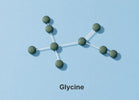
Glycine is the smallest amino acid, a single carbon with an amino group and a carboxyl group. It is classed as non-essential, which means the body can make it. Bannai and colleagues put endogenous synthesis at roughly 45 g per day in adults, with a further 3 to 5 g arriving through a typical diet [3]. Glycine is a building block of proteins (it is especially abundant in collagen), and it is a precursor for molecules such as glutathione, creatine and heme.
In the nervous system it plays two roles that matter here [4]:
Quick Answer
What is glycine? Glycine is the simplest amino acid and a non-essential one, meaning your body synthesizes it. It forms part of collagen and other proteins, and it acts as a neurotransmitter in the central nervous system. Typical diets supply roughly 3 to 5 g a day, while the body makes far more internally [3].
The human work that launched the topic is a pair of studies from a Japanese group, both using a 3 g dose taken before bedtime.
Inagawa and colleagues reported in Sleep and Biological Rhythms that 3 g of glycine before bedtime improved subjective sleep quality in people who had complained about their sleep [1][3]. It was a short report built on questionnaires, which is a useful early signal but not the strongest design. Self-reported sleep is meaningful (how rested you feel is the point), yet it is also vulnerable to expectation effects.
A follow-up by Yamadera and colleagues added overnight polysomnography, the laboratory standard for measuring sleep. In volunteers who had continuing dissatisfaction with their sleep, 3 g of glycine before bed improved subjective sleep quality and sleep efficiency (the share of time in bed spent asleep). It shortened the time to sleep onset and to slow-wave sleep, with no change in overall sleep architecture. Participants also reported less daytime sleepiness and performed better on a memory recognition task [2].
The authors noted that this pattern differs from classic hypnotic drugs such as benzodiazepines, which alter sleep stages [2]. We would stress that this is the authors’ interpretation of a small study, not a head-to-head comparison.
A third study asked a different question. Healthy volunteers with normal sleep (average Pittsburgh Sleep Quality Index of 4.7) had their sleep restricted to 25 percent less than usual for three consecutive nights. Taking 3 g of glycine before bed significantly reduced fatigue the next day and tended to reduce sleepiness, and performance on a psychomotor vigilance test improved. Glycine did not significantly change plasma melatonin [3].
| Study | Population | Dose | Main findings | Evidence level |
|---|---|---|---|---|
| Inagawa 2006 [1] | People with sleep complaints | 3 g before bed [3] | Improved subjective sleep quality | Small, questionnaire-based |
| Yamadera 2007 [2] | Volunteers with unsatisfactory sleep | 3 g before bed | Better subjective quality and sleep efficiency; faster sleep onset and slow-wave sleep latency on polysomnography; less daytime sleepiness | Small, objective measures added |
| Bannai 2012 [3] | Healthy adults, 3 nights of restricted sleep | 3 g vs placebo before bed | Less next-day fatigue; improved vigilance task; melatonin unchanged | Small, placebo-controlled |
| Systematic review, Soh 2024 [6] | Healthy and clinical groups | Varied | Longer-term glycine improved sleep in healthy groups, but studies were small with high risk of bias | Review of limited evidence |
Quick Answer
How much glycine was used in the sleep studies? The key human trials used 3 g of glycine taken shortly before bedtime [1][2][3]. That is a supplement-level amount, comparable to what a typical diet supplies across an entire day. These trials do not establish that smaller or larger amounts work, or that taking it over months is beneficial.
The most detailed mechanistic work comes from rats. Kawai and colleagues, publishing in Neuropsychopharmacology in 2015, found that orally administered glycine induced non-REM sleep, shortened the time to non-REM sleep, and lowered core temperature in rats with an acute sleep disturbance. Glycine raised blood flow in the skin of the paws, which is consistent with increased heat loss [5].
The experiments then narrowed down where this happens:
The authors concluded that ingested glycine promotes sleep through peripheral vasodilation, via NMDA receptor activation in the SCN shell [5]. In plain terms, glycine seems to tell the clock region to open up the blood vessels in the skin, so heat leaves the body, and that shift in temperature is part of what helps sleep begin.
Scientific callout: rats are not people
The detailed pathway (NMDA receptors, SCN shell, skin blood flow) was worked out in rats [5]. Human trials show better sleep outcomes, and the temperature explanation is a plausible and well-supported hypothesis, yet it has not been proven to be the reason glycine helped the volunteers. The rodent findings should be read as mechanism, not as evidence of effect size in people.
A related finding from the sleep-restriction study is that glycine did not change melatonin or the expression of core clock genes in rats, though it did increase two neuropeptides in the SCN [3]. That fits with the idea of glycine modulating how the body clock communicates, not resetting it.
Reading the evidence candidly protects you from overpromising. Several caveats apply:
None of this makes the research uninteresting. It means that glycine for sleep sits in the same category as many nutrition topics: biologically plausible, modestly supported, worth discussing with a clinician if sleep problems persist, and no substitute for sleep basics like consistent timing, a cool dark room and limiting late caffeine.
Glycine is found in most proteins, and it is richest in collagen-based foods such as gelatin, skin, tendon and bone broth. Using USDA FoodData Central values (per 100 g of the food as listed), the differences are large [7][8]:
| Food (USDA FDC entry) | Glycine per 100 g | Notes |
|---|---|---|
| Gelatin, dry powder, unsweetened (169599) | 19.0 g | Collagen-derived; by far the richest listed here |
| Beef chuck arm pot roast, lean only, raw (174056) | 1.34 g | Connective tissue raises glycine in tougher cuts |
| Salmon, Atlantic, farmed, raw (175167) | 0.96 g | Typical for fish and poultry |
| Soybeans, mature, cooked, boiled (174271) | 0.77 g | A plant protein source |
| Lentils, mature, cooked, boiled (172421) | 0.367 g | Cooked weight includes water, so values look lower |
| Spirulina, dried (170495) | 3.10 g | Per 100 g of dry powder; see calculation below [7] |
A few practical points follow from this table. Gelatin is the only common food with a gram-scale amount of glycine in a small serving. Cooked legumes appear lower mainly because they hold water. And because the sleep trials used a 3 g bolus, ordinary dinner foods will not match that on their own: you would need roughly 220 g of raw lean beef chuck or over 300 g of raw salmon to reach 3 g of glycine (by calculation from the values above). Food is still an excellent source of the amino acid for general nutrition, which is a separate question from the trial dose.
Quick Answer
What foods are high in glycine? Glycine is most concentrated in gelatin and other collagen-rich foods such as skin, tendon and bone broth. USDA data list dry gelatin at 19.0 g per 100 g, lean beef chuck at 1.34 g, farmed salmon at 0.96 g and cooked soybeans at 0.77 g. Most protein foods contribute some [8].
Because spirulina is about 57 percent protein by dry weight, readers often ask whether it is a meaningful glycine source. USDA FoodData Central lists dried spirulina (FDC 170495) at 57.47 g protein and 3.099 g glycine per 100 g, which means roughly 5.4 percent of its protein is glycine [7]. It also provides every essential amino acid, including 0.929 g tryptophan per 100 g [7].
Here is the calculation for a full ENERGYbits serving. Each tablet is 250 mg and a serving is 30 tablets, or 7.5 g:
Labeled calculation (not a lab analysis)
3.099 g glycine per 100 g × 7.5 g serving = about 0.23 g glycine per 30-tablet serving. Compared with the 3 g dose used in the sleep trials, that is roughly 8 percent. Values are derived from USDA FDC 170495 and will vary with the batch, so treat them as estimates [7].
That is far below the studied amount, so we do not suggest algae as a substitute for the dose in those trials, and no research connects spirulina’s amino acids to the glycine-sleep effect. What the numbers do show is that spirulina contributes a complete amino acid profile as a whole food. A serving provides about 4.3 g of protein by calculation (57.47 g per 100 g × 7.5 g) [7]. If you want to read what is known about algae and sleep specifically, see our guides to spirulina and sleep and chlorella and sleep.
| Amino acid (dried spirulina, USDA 170495) [7] | Per 100 g | Per 7.5 g serving (calculated) |
|---|---|---|
| Glycine | 3.099 g | 0.23 g |
| Glutamic acid | 8.386 g | 0.63 g |
| Aspartic acid | 5.793 g | 0.43 g |
| Leucine | 4.947 g | 0.37 g |
| Alanine | 4.515 g | 0.34 g |
| Tryptophan | 0.929 g | 0.07 g |
Quick Answer
Can spirulina replace a glycine supplement for sleep? No. Dried spirulina contains about 3.1 g of glycine per 100 g, so a 7.5 g serving supplies roughly 0.23 g by calculation, well below the 3 g used in sleep trials [2][7]. Spirulina is valuable as a protein-rich whole food, but it should not be framed as a glycine substitute.
If you and your clinician decide glycine is worth a try, the research offers a few cautious guideposts. These are reflections of how the trials were run, not a prescription:
Pairing a sleep experiment with good daytime nutrition makes sense too. Whole foods rich in protein, magnesium and other micronutrients support overall health, and a daily ENERGYbits spirulina serving can sit comfortably in that routine as a single-ingredient whole food. We keep expectations realistic: it is a nutrient-dense addition, not a sleep aid.
Glycine is a normal component of food. The 3 g trials were short-term, and we have not found a long-term safety dataset for supplemental use in healthy adults. Be sensible about the unknowns. Talk with a doctor or pharmacist before trying glycine if any of the following apply:
For algae: spirulina and chlorella are generally well tolerated, but check with your healthcare provider first if you are pregnant or nursing, have phenylketonuria, have an autoimmune condition, have a bleeding disorder or take blood thinners or immunosuppressants, or have thyroid or iodine concerns (relevant to chlorella). ENERGYbits products are a single ingredient with no fillers or additives, freshwater-grown, gently dried at low temperatures and third-party tested for purity and contaminants.
More evidence-first nutrition
Explore our library of evidence-first articles: what the research shows, what it does not, and how whole foods fit in. No hype, just sources.
Read more articlesKey takeaways
Glycine for sleep is a good example of nutrition science done carefully: a plausible mechanism, a small number of encouraging human trials, and plenty of room for larger studies. The thermal explanation is elegant, since it ties a simple amino acid to the body’s own cooling rhythm, but it is still a hypothesis in humans. If sleep is a concern, start with the fundamentals, keep a diary and involve a clinician when problems persist.
Algae do not replace the studied glycine dose, and we would not want you to think otherwise. They do offer something steady and honest: a whole food, rich in protein, phycocyanin, chlorophyll, vitamins and minerals. If you would like to add one, the ENERGYbits spirulina page explains sourcing and testing, and the VITALITYbits spirulina and chlorella blend brings both algae together, with chlorella made with a cracked cell wall for digestibility. Educate first, choose second.
Small trials suggest 3 g of glycine before bed may improve subjective sleep quality and shorten sleep onset in people with unsatisfactory sleep [1][2]. The studies are small, so the evidence is preliminary. Glycine is not a proven treatment for insomnia.
The human trials used 3 g shortly before bedtime [1][2][3]. No research in these studies shows that higher amounts work better. Because supplement needs vary and medications can interact, discuss any use with your doctor or pharmacist.
In rats, oral glycine lowered core temperature and increased skin blood flow, consistent with heat loss through the skin. The effect depended on NMDA receptors in the suprachiasmatic nucleus [5]. Human temperature data are less extensive, so treat this as a mechanism hypothesis.
Inagawa and colleagues reported improved subjective sleep quality after 3 g of glycine [1][3]. Yamadera and colleagues added polysomnography and found faster sleep onset, shorter latency to slow-wave sleep and better sleep efficiency, without changes in sleep architecture [2].
No. The Yamadera authors noted that glycine’s pattern of effects differed from traditional hypnotics such as benzodiazepines, and sleep architecture was unchanged [2]. Glycine is an amino acid found in food, not a prescription sedative, but it has not been compared directly with sleep medications.
In a small trial of healthy adults whose sleep was restricted for three nights, 3 g of glycine before bed reduced next-day fatigue and improved psychomotor vigilance [3]. Yamadera 2007 also reported less daytime sleepiness [2]. These are small studies and need replication.
Gelatin is the richest, at 19.0 g per 100 g dry powder in USDA data. Beef chuck (1.34 g per 100 g), farmed salmon (0.96 g), cooked soybeans (0.77 g) and cooked lentils (0.367 g) also contribute [8]. Collagen-rich foods such as skin and bone broth are generally good sources.
Yes. USDA lists dried spirulina at 3.099 g glycine per 100 g, within 57.47 g protein [7]. A 7.5 g serving (30 ENERGYbits tablets) provides about 0.23 g by calculation. That is well below the 3 g used in sleep trials.
No. A full serving of spirulina supplies roughly 0.23 g of glycine by calculation, compared with the 3 g studied for sleep [2][7]. Spirulina is a nutrient-dense whole food, but it should not be presented as a substitute for the studied dose.
Glycine is a normal dietary amino acid, and 3 g doses in the sleep trials were studied in short-term settings [3]. Long-term safety data in healthy adults are limited [6]. People who are pregnant, nursing, on medication or managing a medical condition should check with a clinician first.
Anyone who is pregnant or nursing, takes prescription medicines (especially psychiatric or neurological ones), has kidney or liver disease, or is considering it for a child. Persistent sleep trouble, loud snoring or nighttime gasping also warrants a medical evaluation.
In the sleep-restriction study, glycine did not significantly change plasma melatonin, and clock gene expression in rats was unchanged [3]. The authors suggested glycine modulates SCN function through neuropeptides, not by shifting the clock itself.
The studies gave glycine shortly before bedtime [1][2][3]. There is no strong evidence about earlier or later timing. A consistent bedtime routine, a cool dark room and limited late caffeine remain the best-supported sleep habits.
No trial tests this. The sleep studies used a 3 g bolus, which is far more than a typical serving of protein foods supplies [3][8]. Balanced dinners are good for overall nutrition, but we cannot say they produce the glycine effect seen in trials.
This article is for educational purposes only and is not medical advice. These statements have not been evaluated by the FDA. ENERGYbits® products are whole-food supplements and are not intended to diagnose, treat, cure, or prevent any disease. Talk with your doctor before starting any supplement, especially if you are pregnant, nursing, taking medication, or managing a medical condition.


