


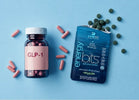
Protein on a GLP-1: How Much to Eat When Appetite Is Low
, by The ENERGYbits Team, 31 min reading time
, by The ENERGYbits Team, 31 min reading time
Protein on GLP-1: how much to eat when appetite is low. Get proposed daily targets, small-portion strategies, a sample day and where spirulina fits in.
You open the fridge, look at a chicken breast, and feel full just thinking about it. That is a common experience on GLP-1 medications, and it creates a real puzzle: your body still needs protein, but your appetite has shrunk. Here are the actual targets experts have proposed, what they work out to in grams and bites, and how to hit them when food holds little appeal.
ENERGYbits® • GLP-1 Nutrition
Quick Answer
How much protein should you eat on a GLP-1? A 2025 joint advisory from the American College of Lifestyle Medicine, American Society for Nutrition, Obesity Medicine Association and The Obesity Society notes that 1.2 to 1.6 g of protein per kg of body weight daily has been proposed during active weight loss, or a simpler 80 to 120 g per day [1]. Protein should be paired with resistance training and individualized with your care team.
GLP-1 receptor agonists such as semaglutide and tirzepatide reduce appetite and slow gastric emptying. That is the point of the medication, and for many people it is a relief. The side effect on the plate is that protein-rich foods, which tend to be dense and filling, are often the first to feel unappealing. Meat can taste dry, large portions feel heavy, and a normal-looking dinner may be half-finished.
This article zooms in on one question: how much protein, in real grams and real foods, when you are eating much less? For the wider picture of vitamins, minerals and energy on these medications, see our broader guide, Beyond the Scale: Nourishing Your Body While Using Weight Loss Injections.
Protein matters during weight loss because it supplies the amino acids the body uses to maintain muscle and other lean tissue, and because lean tissue is lost along with fat whenever weight drops. Reviewing the trial data, Noronha and colleagues found that about 25 percent of the weight lost on GLP-1 agents was lean mass in a network meta-analysis of 22 randomized trials, with the share differing by drug [2]. Lean mass is not the same as muscle alone, and the studies did not test protein intake directly, but it explains why clinicians now talk about quality of weight loss, not only quantity.
What the research says
The 2025 advisory published in Obesity describes protein, resistance training, hydration and micronutrients as core nutrition priorities on GLP-1 therapy. It also states plainly that it is an expert advisory combining literature appraisal with clinical experience, not a systematic review, and that higher protein ranges are “proposed” [1]. That honesty is worth keeping in mind as you read any number, including the ones below.
Several target styles circulate. Here is how they compare, all drawn from the joint advisory unless noted [1].
| Approach | Target | Example (70 kg / 154 lb) | Notes |
|---|---|---|---|
| General adult RDA | 0.8 g/kg/day | 56 g | For healthy adults at stable weight; the advisory says it is under review. |
| Proposed during weight loss | 1.2 to 1.6 g/kg/day | 84 to 112 g | Proposed range; direct evidence in GLP-1 users is limited [2]. |
| Per kg of fat-free mass | About 1.5 g/kg FFM | Depends on body composition | Possibly more accurate; needs a body-composition scan. |
| Absolute range | 80 to 120 g/day | 80 to 120 g | Simpler, may help adherence. |
| Floor | Not below 0.4 to 0.5 g/kg/day | 28 to 35 g | The advisory says intake should not fall below this. |
| Ceiling | Avoid prolonged 2 g/kg/day or more | 140 g or more | More is not automatically better. |
The calculations in the example column are ours, using a 70 kg adult for illustration. If you weigh 90 kg, the proposed range becomes 108 to 144 g. Because the advisory notes that actual weight can overestimate needs, the 80 to 120 g absolute range is often the more usable starting point [1].
Quick Answer
Which number should I use? If you have no body-composition data, the absolute 80 to 120 g per day range is a practical starting point, adjusted toward the lower end if your appetite is very small and always with kidney health in mind. The weight-based range of 1.2 to 1.6 g/kg is a proposal, not a proven requirement for GLP-1 users, so confirm your target with your prescriber or a registered dietitian [1][2].
You may have seen advice to eat 0.7 to 1 g of protein per pound of goal weight. That works out to 1.5 to 2.2 g/kg and sits at or above the top of the range the advisory discusses. Because the advisory recommends avoiding prolonged intakes of 2 g/kg or more, and because a small appetite makes very high targets discouraging, the more moderate figures above are a reasonable place to begin [1].
This is the part rarely spelled out. Protein provides 4 calories per gram, so 100 g of protein is 400 calories (our calculation). If you are eating 1,500 calories a day, that is about 27 percent of your intake. At 1,200 calories it is about 33 percent. The advisory frames 80 to 120 g as about 16 to 24 percent of energy on a 2,000-calorie diet [1], but as total intake shrinks, the same grams demand a much higher protein density per bite.
| Daily calories | 80 g protein | 100 g protein | 120 g protein |
|---|---|---|---|
| 1,200 | 27% | 33% | 40% |
| 1,500 | 21% | 27% | 32% |
| 1,800 | 18% | 22% | 27% |
| 2,000 | 16% | 20% | 24% |
Percentages are calculated (grams x 4 calories divided by daily calories). The practical takeaway: when calories are low, choose foods with a lot of protein per calorie and per spoonful. Eggs, plain Greek yogurt, cottage cheese, fish, tofu, lean poultry, and protein shakes do this well. Heavily buttered, fried or sugary foods do not.
Protein gets most of the attention, but the evidence is clear on one point: it works alongside movement. The advisory states that protein alone is likely inadequate to preserve muscle without structured resistance training, and suggests clinicians assess muscle strength and function with simple tests such as a sit-to-stand [1]. In the S-LiTE trial discussed by Noronha and colleagues, liraglutide combined with supervised exercise produced greater fat loss and preserved lean mass, whereas liraglutide alone was linked to loss of both fat and lean tissue [2].
Quick Answer
Does protein protect muscle on a GLP-1? Protein supports muscle, but it is one part of a combination. Experts cited in the 2025 advisory say protein alone is likely inadequate without structured resistance training, and direct trials of protein targets in GLP-1 users are lacking [1][2]. The best-supported plan pairs steady protein with strength work, adequate fluids and regular follow-up.
The advisory offers a practical playbook for low appetite: small, frequent meals every 3 to 4 hours with fluids, avoiding long gaps and large meals, using reminders or alarms to eat when hunger cues are quiet, and favoring smoothies, protein drinks, cottage cheese and soups over heavier foods [1]. Here is how to put that into practice.
The advisory suggests eating protein-rich foods first in a meal [1]. Take three or four bites of the egg, yogurt or fish before the side dishes, because fullness arrives quickly and you want the most useful bites to count.
Liquids leave the stomach more readily than dense solids for many people. A smoothie with milk or soy milk, plain Greek yogurt and fruit, or a ready-to-drink protein shake sipped across an hour, can deliver 20 to 30 g without feeling like a meal. Go slowly and watch your tolerance, since very sweet or very cold drinks bother some people.
Instead of three large meals, aim for five or six protein moments of 15 to 20 g. One review cites about 25 to 30 g per meal from a feeding study in healthy adults, not GLP-1 users, so treat it as a ceiling to approach rather than a hurdle to clear every time [2].
| Easy protein option | Typical protein (approx.) | Why it suits low appetite |
|---|---|---|
| 1 large egg, soft or scrambled | 6 g | Small, soft, quick to prepare |
| 3/4 cup plain Greek yogurt | 15 to 18 g | Cold, smooth, little chewing |
| 1/2 cup cottage cheese | 12 to 14 g | Named by the advisory as often well tolerated [1] |
| 3 oz canned tuna or salmon | 17 to 22 g | Compact, no cooking |
| Ready-to-drink protein shake | 15 to 30 g (check label) | Sip over time; fits the advisory [1] |
| 1/2 cup firm tofu, cubed | 10 to 12 g | Mild, plant-based, easy to add to soup |
| Lentil or bean soup, 1 cup | 9 to 18 g | Soups are listed as better tolerated [1] |
Values are typical ranges and vary by brand and preparation; check labels. They are not drawn from the studies cited.
The advisory encourages adequate fluids and gradual increases in food fiber, and cautions that dehydration from vomiting, diarrhea or severe nausea can strain the kidneys [1]. If protein shakes or dairy leave you constipated or bloated, report it to your care team rather than quietly eating less.
The advisory notes that fatty and very high-fiber foods may be best avoided in the first days of treatment to ease nausea [1]. If protein foods make you queasy, switch the form (cold instead of hot, liquid instead of solid, plain instead of seasoned) before you give up on the goal.
This is an illustration, not a prescription. Your needs, allergies and preferences may differ. Totals use the typical values above.
| Time | What | Protein (approx.) |
|---|---|---|
| Morning | 2 scrambled eggs and a small cup of plain yogurt | ~25 g |
| Mid-morning | Half a protein shake, sipped | ~12 g |
| Lunch | Cottage cheese or tuna, with a few vegetables | ~15 to 20 g |
| Mid-afternoon | Smoothie with Greek yogurt and milk | ~15 to 20 g |
| Dinner | Few bites of fish or tofu first, then sides | ~20 g |
| Evening | Warm bean or lentil soup, small bowl | ~9 g |
That is six small eating moments, in line with the advisory’s every-3-to-4-hours approach [1]. If you are on a lower-calorie plan, a registered dietitian can adjust the portions.
Evidence-first nutrition, weekly
Get one evidence-first nutrition article a week: what the research shows, what it does not, and how whole foods fit in. No hype, just sources.
Join the newsletterSpirulina is a whole food that is unusually protein-rich. USDA FoodData Central lists dried spirulina at 57.5 g of protein per 100 g, with 290 kcal, 7.7 g fat and 23.9 g carbohydrate [3]. That ratio, close to 20 g of protein for every 100 calories, is why people interested in protein density pay attention to it.
The serving math is where honesty matters. Each ENERGYbits tablet is 250 mg, and a full serving is 30 tablets, or 7.5 g. Here is what that serving provides, calculated from the USDA per-100 g values [3]:
| Nutrient | Per 100 g dried spirulina (USDA) | Per 7.5 g serving (calculated) |
|---|---|---|
| Protein | 57.5 g | about 4.3 g |
| Energy | 290 kcal | about 22 kcal |
| Leucine | 4.95 g | about 0.37 g |
| Lysine | 3.02 g | about 0.23 g |
| Iron | 28.5 mg | about 2.1 mg |
| Fat / carbohydrate | 7.72 g / 23.9 g | about 0.6 g / 1.8 g |
Values are calculations and vary by batch and product; they are not a label claim. Even so, the picture is clear. A full serving contributes roughly 4 to 5 percent of a 90 to 100 g daily protein goal. Ten tablets (2.5 g) would add about 1.4 g.
Quick Answer
Can spirulina help you reach your protein goal on a GLP-1? Spirulina can contribute modestly: a 7.5 g serving (30 ENERGYbits tablets) provides about 4.3 g of protein, calculated from USDA data, with almost no volume and no appetite required [3]. It does not replace a 25 to 30 g protein meal, so it works best as an add-on to eggs, dairy, fish, tofu or shakes.
Spirulina is not a proven muscle-builder. A 2022 systematic review of 13 small trials in exercise and sport found mixed, limited evidence for performance and recovery, and the authors called for higher-quality research [5]. We also do not claim that spirulina prevents muscle loss on GLP-1 medications, because no study has tested that. We see it as a nutrient-dense whole food that helps fill in around the main protein sources. More on its protein profile is in How Much Protein Is in Spirulina? and Is Spirulina a Complete Protein?.
Serving-size note
ENERGYbits tablets are single-ingredient, whole-food algae, grown in freshwater, gently dried at low temperatures and third-party tested for purity and contaminants. Each tablet is 250 mg; 30 tablets make a 7.5 g serving. Because the tablets are small and need no prep, many people on low appetites find them easy to keep in a routine. If you prefer spirulina and chlorella together, the VITALITYbits spirulina and chlorella blend is another option.
General ranges are a starting point. People on GLP-1 medications should coordinate nutrition and supplements with their prescriber or registered dietitian, and the following groups especially need individualized advice:
ENERGYbits is third-party tested for purity and contaminants, and our guide to spirulina and medications explains what to discuss with a clinician.
Key takeaways
Eating enough protein on a GLP-1 is less about willpower than about design. Know your range, shrink the portions, use liquids and soft foods, put protein first, and pair it all with strength training and clinical follow-up. Where whole-food algae fits, it fits as a nutrient-dense supporting player.
If you would like to try it, read the ENERGYbits spirulina product page and the sourcing details first, and check with your care team that it suits your plan. We would also love to hear which small-portion tricks work for you.
A joint advisory from four U.S. obesity and nutrition societies notes that targets of 1.2 to 1.6 g per kg of body weight per day have been proposed during active weight loss, or a simpler absolute range of 80 to 120 g per day [1]. These are proposed ranges based largely on expert opinion, so personalize them with your prescriber or dietitian.
The 0.8 g/kg RDA was set for healthy adults at stable weight. The 2025 advisory points out that it is under review and that higher intakes have been proposed during weight reduction [1]. Needs vary with age, kidney function, activity and how much weight you are losing, so ask a clinician what fits you.
Intake below about 0.4 to 0.5 g/kg/day is the floor the advisory says not to go under [1]. If you are near it, tell your prescriber, because it may mean the dose or side effects need adjusting. Liquid proteins, protein-first meals and frequent small servings are the usual first steps.
Experts have not settled this. The advisory notes that actual body weight can overestimate needs and that per kg of fat-free mass (about 1.5 g) may be more accurate but requires body-composition data [1]. The absolute 80 to 120 g range is a practical shortcut when you do not have those numbers.
Spreading intake across the day works better than forcing large meals. One review cites about 25 to 30 g per meal from a feeding study in healthy adults, not GLP-1 users [2]. If that is too much, 15 to 20 g across four or five small servings can still add up.
Not by itself. The advisory states protein alone is likely inadequate to preserve muscle without structured resistance training [1]. A network meta-analysis found roughly 25 percent of weight lost on GLP-1 agents was lean mass, though the share varied by drug [2].
GLP-1 medications slow gastric emptying and increase fullness, so dense, fatty or large portions can feel heavy. The advisory suggests smaller meals every 3 to 4 hours, with smoothies, protein drinks, cottage cheese and soups often better tolerated than heavy foods [1].
The advisory says high-protein shakes, bars and fortified products can help some people reach targets, while giving no product-specific advice [1]. Check the label for protein per serving, added sugar and sweetener tolerance, and use shakes to fill gaps rather than replace every meal.
USDA data for dried spirulina list 57.5 g of protein per 100 g [3]. A full 7.5 g serving (30 ENERGYbits tablets of 250 mg each) therefore provides about 4.3 g of protein, a calculation that varies by batch. It is a small, convenient contribution, not a replacement for primary protein foods.
No. At about 4.3 g of protein per 7.5 g serving (calculated from USDA data [3]), spirulina cannot supply a 25 to 30 g meal target. It fits as a low-volume whole-food add-on that also brings iron and other nutrients, alongside eggs, dairy, fish, tofu or shakes.
Spirulina contains all nine essential amino acids; USDA lists leucine at 4.95 g and lysine at 3.02 g per 100 g [3]. Researchers examining spirulina's amino acid profile describe it as fairly well balanced, with histidine the most limiting in a rat study [4]. Pair it with other proteins for variety.
Spirulina is a whole food and no interaction with GLP-1 medications is established in the sources reviewed here, but absence of evidence is not proof of safety. Tell your prescriber or dietitian what you take, especially if you have an autoimmune condition, PKU, a bleeding disorder or take blood thinners or immunosuppressants.
The advisory advises against prolonged intake at or above 2 g/kg/day [1]. People with kidney disease should get an individualized protein target from their care team rather than following general ranges. More protein is not automatically better, especially on a small appetite where it can crowd out fiber and produce.
This article is for educational purposes only and is not medical advice. These statements have not been evaluated by the FDA. ENERGYbits® products are whole-food supplements and are not intended to diagnose, treat, cure, or prevent any disease. People using GLP-1 medications should coordinate nutrition and supplements with their prescriber or dietitian. Talk with your doctor before starting any supplement, especially if you are pregnant, nursing, taking medication, or managing a medical condition.


