


Blue Spirulina vs Green Spirulina: What Is the Difference?
, by The ENERGYbits® Team, 9 min reading time
, by The ENERGYbits® Team, 9 min reading time
Blue spirulina is not a separate algae. It is phycocyanin, a single pigment extracted from whole green spirulina. Here is what the extraction removes, what it costs, and how to decide which one belongs in your routine.
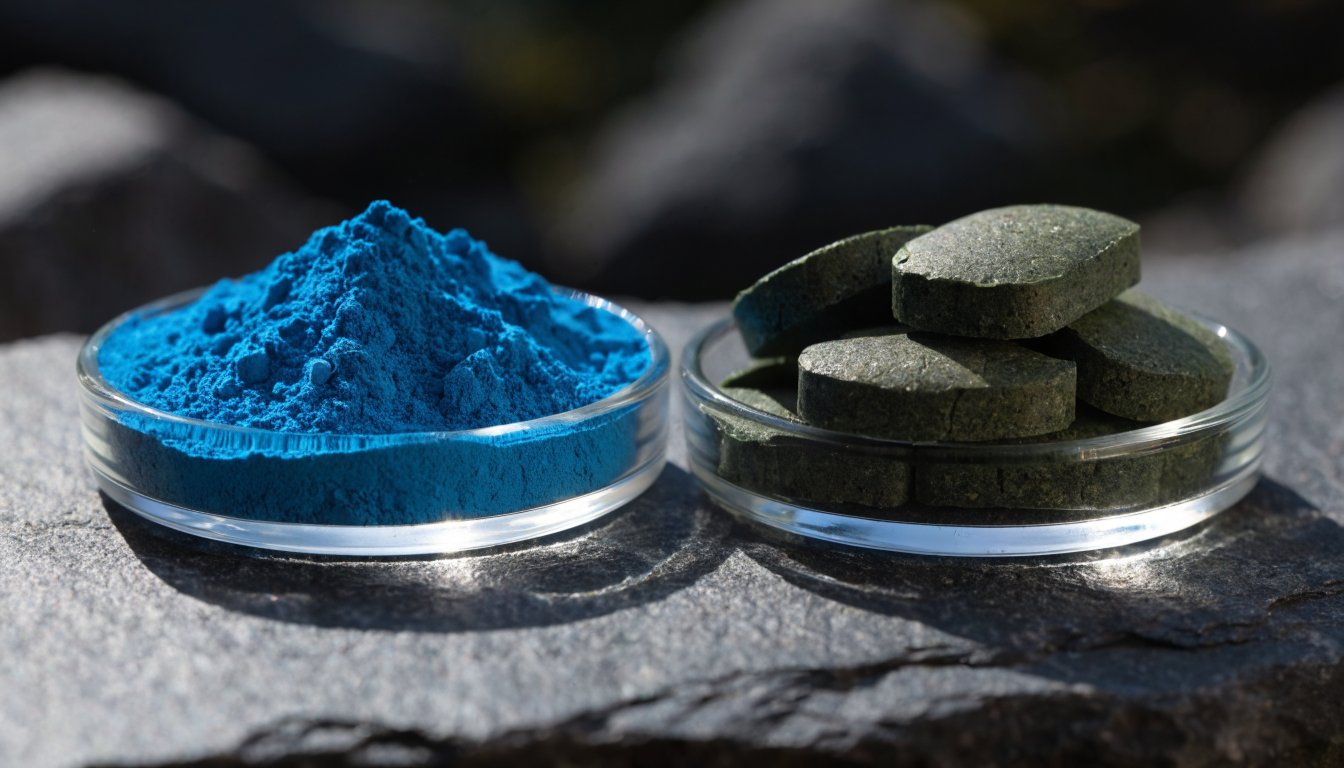
One of these is the whole algae. The other is a single pigment pulled out of it.
Scroll a smoothie bowl feed long enough and you will hit that impossible shade of blue. It is sold as blue spirulina, it photographs beautifully, and it costs a small fortune. Customers write to us asking whether they should be taking it instead of green tablets. The answer gets much simpler once you know how blue spirulina is actually made.
Blue spirulina is not a different species, a rarer strain, or a special farm. It is an extract taken out of ordinary green spirulina. Growers harvest the same algae, Arthrospira platensis, then break open the cells and rinse them with water. Phycocyanin, the blue pigment protein that gives spirulina its faint bluish cast, is water soluble, so it washes free. It is then filtered, concentrated and dried into a vivid blue powder.
Everything that is not water soluble stays behind and gets separated off. That includes the chlorophyll, the carotenoids, the minerals, and most of the protein. If you want the deeper chemistry, we covered it in our explainer on what phycocyanin is and why it matters.
So the honest framing is not blue algae against green algae. It is one isolated compound against the whole organism it came from. That is a very different question from comparing two genuinely separate species, which is what we look at in our guide to spirulina and chlorella.
The appeal is real and mostly visual. Phycocyanin is one of the very few natural pigments that produces a true, saturated blue, and food brands have spent years hunting for an alternative to synthetic blue dye. It turns lattes turquoise, tints frosting, and makes a bowl of oats look like the ocean.
It also tastes like almost nothing. Whole spirulina has a distinctly green, oceanic flavor that some people never warm to. Remove the chlorophyll and most of that flavor goes with it. There is also legitimate research interest in phycocyanin itself as an antioxidant compound, and that concentration is the one genuine nutritional argument in blue spirulina's favor.
| Factor | Blue spirulina | Green (whole) spirulina |
|---|---|---|
| What it is | An extract, isolated phycocyanin pulled from green spirulina | The entire algae cell, dried and pressed or powdered |
| Color source | Phycocyanin only, with chlorophyll removed | Chlorophyll and carotenoids alongside phycocyanin |
| Protein | Low to minimal, especially in diluted powders | Roughly 60 to 70 percent protein by weight |
| Iron and B vitamins | Largely removed during extraction | Retained in the whole cell |
| Taste | Near neutral, no green flavor | Green and oceanic in powder, unnoticeable in tablets |
| Typical use | Natural food coloring for drinks, bowls and baking | Daily nutrition and protein support |
| Cost per gram | Often several times higher | Considerably lower |
Quite a lot, and this is where most product pages go quiet. Whole spirulina is roughly 60 to 70 percent protein by weight and contains all nine essential amino acids, a point we break down in our article on how much protein is in spirulina. Blue spirulina powder delivers only a fraction of that.
You also leave behind the iron, the B vitamins, the chlorophyll, the carotenoids such as beta carotene and zeaxanthin, and the essential fatty acids. These nutrients developed together inside one cell, and there is a reasonable argument that they work better in company than in isolation. Taking phycocyanin on its own is a bit like drinking orange juice with everything stripped out except the vitamin C.
ENERGYbits Spirulina is a single ingredient tablet of organically grown whole spirulina. No extraction, no carriers, no fillers, so the protein, iron, B vitamins and pigments all stay where they started.
Shop ENERGYbits SpirulinaExtraction is the answer. It takes a large volume of whole spirulina to yield a small amount of concentrated phycocyanin, and every processing step adds cost. Gram for gram, blue spirulina commonly sells for several times the price of whole green spirulina.
There is a second issue worth watching. Many products labeled blue spirulina are not pure phycocyanin at all. They are cut with maltodextrin, dextrose or another carrier to stabilize the pigment and stretch the volume, sometimes to the point where the carrier is the main ingredient. The front of the jar may say only blue spirulina extract, so read the full ingredient list. If maltodextrin appears first, you are mostly buying starch.
Choose blue spirulina if your goal is color. For striking food, baking with children, or a household that genuinely cannot tolerate the taste of green algae, it is a food safe pigment and a sensible alternative to synthetic dye.
Choose whole green spirulina if your goal is nutrition. You get the complete nutrient matrix at a far lower cost per gram, and tablets sidestep the taste question entirely because you swallow them rather than sip them. We compare the two formats in our guide to spirulina tablets versus powder. Plenty of people end up doing both: green every day for nourishment, a small jar of blue for the occasional colorful recipe.
Join our newsletter for plain-language guides on spirulina, chlorella, and everyday wellness.
SubscribeNo. Blue spirulina is an extract taken from regular green spirulina. Producers rinse the cells with water to pull out phycocyanin, the water soluble blue pigment protein, and separate it from everything else. Green spirulina is the whole intact algae, so it is a food rather than an isolated compound.
Not in general. Blue spirulina is more concentrated in phycocyanin, but the extraction removes most of the protein, iron, B vitamins, chlorophyll and carotenoids. Whole green spirulina keeps the full nutrient matrix, which is why it is the better choice when nutrition rather than color is the goal.
It takes a large amount of whole spirulina to produce a small amount of concentrated phycocyanin, and the extraction, filtration and drying steps all add cost. Cost per gram is usually several times higher than whole green spirulina, even though the blue powder starts out as the same algae.
Many of them do. Maltodextrin, dextrose and similar carriers are commonly added to stabilize the pigment and increase volume, sometimes making up most of the jar. Read the full ingredient list rather than the front label, and be cautious if a carrier is listed before the extract itself.


