


Is Spirulina Safe If You Have Gout? Purines Explained
, by The ENERGYbits® Team, 10 min reading time
, by The ENERGYbits® Team, 10 min reading time
Spirulina contains nucleic acids the body turns into purines and then uric acid. Here is how its purine load compares with common foods, and why anyone with gout should talk to a healthcare provider first.
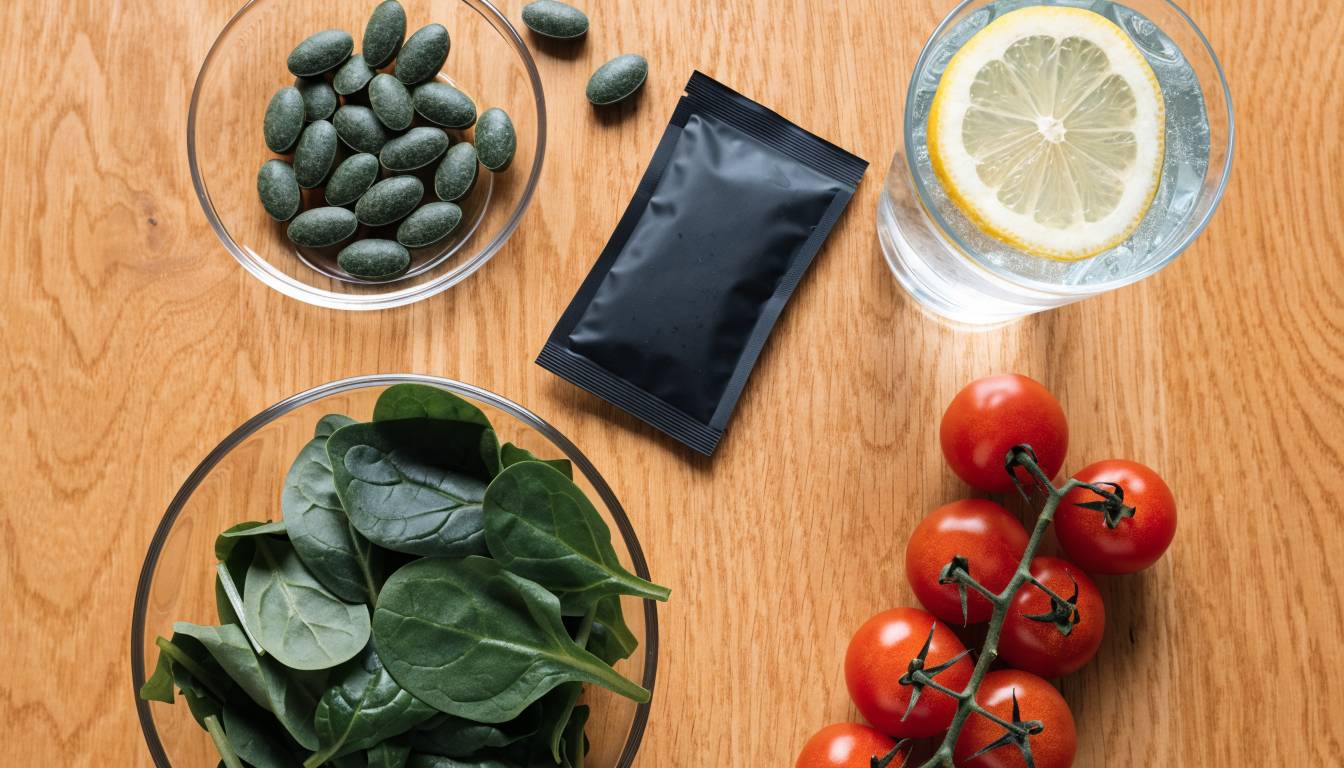
Purine content is about the whole plate, not one ingredient.
This is one of the questions we get asked most often, and it deserves an honest answer rather than a reassuring one. Spirulina is genuinely nutrient dense, and it also genuinely contains purine precursors. Both of those things are true at the same time. Here is how to think it through.
Purines are building blocks of DNA and RNA, found in every living cell, which means they are present in almost every food that was once alive. When your body breaks purines down, the end product is uric acid. Most of the time your kidneys clear that uric acid without any drama.
Gout develops when uric acid builds up faster than it can be cleared. At high enough concentrations it can form sharp crystals in a joint, most famously the base of the big toe, and that is what produces a flare. Diet is only one input here. Genetics, kidney function, body weight, alcohol, certain medications and dehydration all influence uric acid levels, often more than any single food does. That context matters, because it is easy to over-focus on one ingredient and miss the bigger picture.
Yes, in a sense. Spirulina is a dense mass of single-celled organisms, and single cells are rich in nucleic acids. Those nucleic acids are metabolised into purines and then into uric acid, which is why spirulina and other single-cell foods, including brewer's yeast and some microalgae, are usually flagged as higher in purines on a per-gram basis than most plant foods.
That per-gram framing is where a lot of confusion starts. It is accurate, but it is also the least useful way to look at it, because nobody eats spirulina by the plateful. We cover the broader tolerance picture in our guide to spirulina side effects, and purine sensitivity belongs in that same honest conversation.
Standard gout guidance sorts foods into rough tiers. Here is where spirulina tends to sit relative to the usual suspects.
| Food | Typical purine level | Notes |
|---|---|---|
| Organ meats (liver, kidney, sweetbreads) | Very high | Usually limited or avoided in gout diets |
| Anchovies, sardines, mussels, scallops | Very high | Even modest portions add a large load |
| Red meat, pork, game, beer | Moderate to high | Eaten in large portions, so totals climb fast |
| Spirulina (a typical 3 g serving) | High per gram, small per serving | Serving size is tiny next to a 200 g steak |
| Most vegetables and leafy greens | Low to moderate | Plant purines are not strongly linked to flares in research |
| Dairy, eggs, most fruit, water | Low | Frequently encouraged in gout eating patterns |
This is the part that gets lost. A per-gram number tells you nothing until you multiply it by how many grams you actually eat. A restaurant portion of liver or a plate of sardines can run to a couple of hundred grams. A typical algae serving is a few grams, roughly the weight of a paperclip or two.
So even if spirulina scores high per gram, the absolute purine contribution of a normal serving is modest compared with a single high-purine meal. The practical implication is straightforward: if you have gout and you and your doctor decide to try spirulina, keeping to a modest, consistent serving is very different from taking large scoops. Our guides on how much spirulina per day and whether you can take too much spirulina walk through what modest actually looks like.
Water is the quiet variable in almost every uric acid conversation. Uric acid leaves the body mainly through the kidneys, and adequate fluid intake is consistently linked with better clearance. Dehydration works in the opposite direction, concentrating uric acid in the blood, which is one reason flares are sometimes associated with hot weather, heavy exercise or a long night of alcohol.
If you take algae tablets, taking them with a full glass of water is sensible regardless of purine questions. It helps with swallowing, it supports digestion, and it lines up with the general hydration advice that most gout guidance already emphasises.
ENERGYbits is pure spirulina in tablet form, nothing added and nothing hidden. One ingredient makes it far easier to review with your healthcare provider.
Shop ENERGYbits SpirulinaIf you are on allopurinol, febuxostat, probenecid or any other uric-acid-lowering treatment, that is a clear signal to check before adding anything new. Your prescriber is tracking your uric acid numbers over time and is the right person to judge whether a small daily purine source is worth including or not. The same applies if you are on diuretics or low-dose aspirin, both of which can influence uric acid.
Spirulina also has other interaction considerations worth reviewing, particularly around blood thinners and immune-modulating medication, which we cover in our guide to spirulina and medication interactions. None of this means spirulina is off limits for everyone with gout. It means the decision is a clinical one, not a blog one.
Spirulina is not on the classic high-purine avoid list alongside organ meats and oily fish, and a few grams a day is a small load in absolute terms. It is also a concentrated single-cell food with real nucleic acid content, and people with gout or hyperuricemia are generally advised to be cautious with those. Both statements are fair.
If you have gout, the sensible path is to raise it with your healthcare provider, start modest if you get the green light, stay well hydrated, and pay attention to how you feel. Spirulina may support everyday nutrition as part of a balanced diet, but it is not a treatment for anything, and it should never replace medical guidance.
Join our newsletter for plain-language guides on spirulina, chlorella, and everyday wellness.
SubscribeSpirulina contains nucleic acids that the body converts into purines and then uric acid, so people with gout or high uric acid are generally advised to be cautious and keep servings modest. Talk with your healthcare provider before adding it.
Spirulina is relatively high in purine precursors per gram because it is a single-cell organism rich in nucleic acids. However, a typical serving is only a few grams, so the absolute purine load is much smaller than a meal of organ meat or oily fish.
Organ meats, anchovies and sardines are the classic very high purine foods, and they are eaten in large portions. Spirulina scores high per gram but is consumed in tiny amounts, so its total contribution sits far below those foods.
Hydration is sensible either way. Uric acid is cleared mainly through the kidneys, and adequate fluid intake is linked with better clearance, so taking algae tablets with a full glass of water is a good habit.


