


What Is Chlorophyll in Chlorella and Why Does It Matter?
, by The ENERGYbits® Team, 10 min reading time
, by The ENERGYbits® Team, 10 min reading time
Chlorophyll is the green pigment behind chlorella's deep emerald color, and chlorella is one of the most concentrated natural sources on earth. Here is what it is, what research suggests, and how it differs from liquid chlorophyll drops.
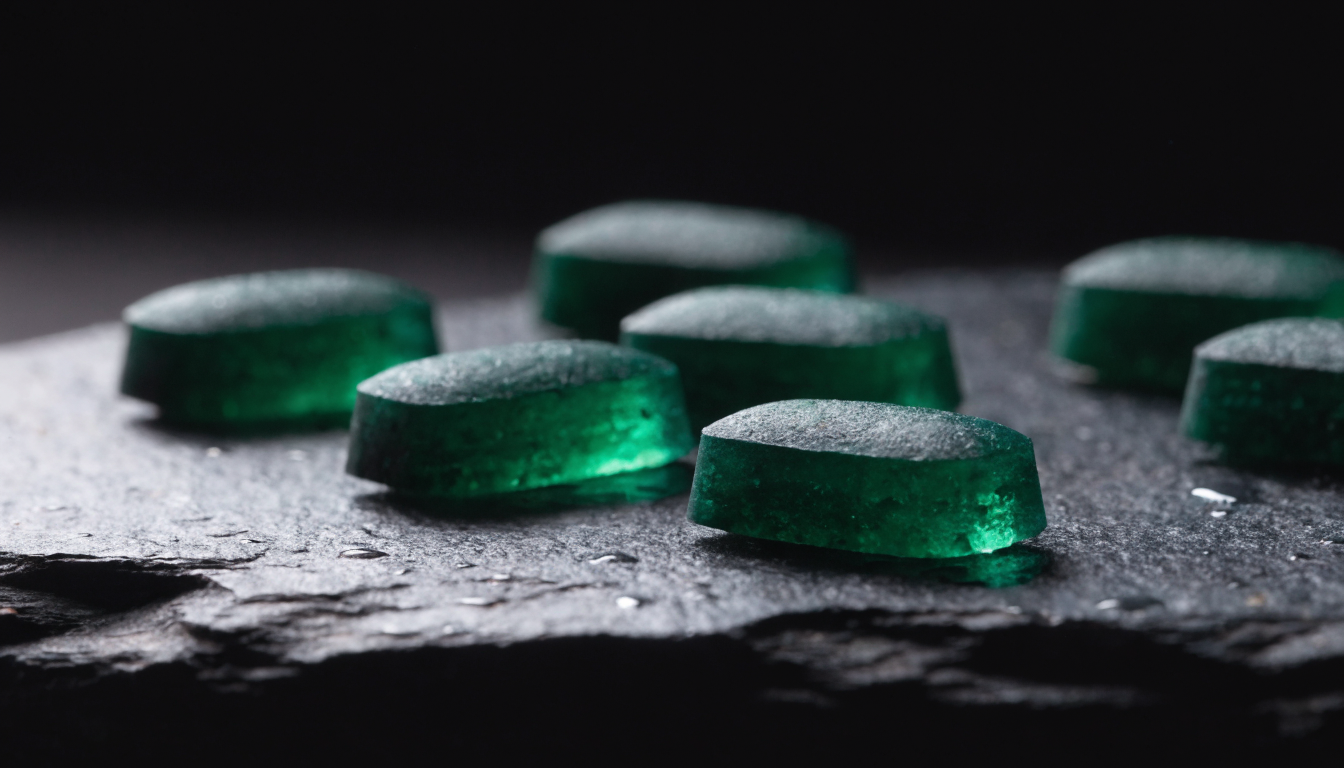
Chlorella gets its deep green color from one of the highest natural chlorophyll concentrations on earth.
If you have ever opened a bag of chlorella tablets, the first thing you notice is the color. Not olive, not sage, but a deep saturated emerald that looks closer to a gemstone than to food. That color is not added and it is not incidental. It is chlorophyll, and there is a great deal of it.
The name itself is a clue. Chlorella comes from the Greek chloros, meaning green, and the Latin diminutive ella, meaning small. A tiny green thing. This article is the chlorella companion to our explainer on what phycocyanin is in spirulina, the blue pigment that makes spirulina distinct. Two algae, two signature pigments, two very different reasons people take them.
Chlorophyll is the molecule that makes photosynthesis possible. It absorbs light energy, mostly in the red and blue parts of the spectrum, and reflects green, which is why every photosynthetic organism on the planet looks green to us. That energy gets converted into the sugars a plant or an alga uses to grow.
In practical nutrition terms, chlorophyll is a marker of how much living green tissue you are eating. Iceberg lettuce has very little. Spinach has more. Chlorella, a single-celled organism that is essentially all chloroplast with no stem, root, or structural fiber, sits at the far end of that scale.
Chlorella is a microalga roughly the size of a red blood cell. It builds no woody parts and spends no energy on leaves, stalks, or seeds. Every cell is a photosynthesis engine, and under good conditions it divides up to four times a day. That growth rate demands enormous light capture, so the cell packs itself with pigment.
The result is a chlorophyll concentration of roughly 2 to 3 percent by dry weight. Most leafy greens land well under 1 percent once you account for water and fiber. Gram for gram, chlorella is one of the most concentrated natural chlorophyll sources ever measured, which is why it became the reference food in early green superfood research.
This is the structural fact people find most striking. The chlorophyll molecule and the heme portion of human hemoglobin share nearly the same porphyrin ring architecture. The difference sits at the center of the ring: chlorophyll holds a magnesium atom where hemoglobin holds iron.
That resemblance is real and it is why the nickname "green blood" has stuck for a century. It is worth being precise about what it does not mean. A structural similarity between two molecules is not evidence that eating one produces the other. Chlorophyll does not become hemoglobin, and we make no claim that it builds blood. It is fascinating biochemistry, not a mechanism of action.
Three areas have drawn the most attention in the published literature.
Antioxidant activity. Chlorophyll and its derivatives demonstrate measurable free-radical scavenging in laboratory settings, which is consistent with the broader antioxidant profile of whole chlorella.
Binding in the digestive tract. This is the best documented property. Chlorophyll and chlorophyllin have a well-studied ability to form tight complexes with certain compounds in the gut, which is part of why chlorella turns up so often in conversations about whether chlorella removes heavy metals. The binding happens in the digestive tract rather than systemically, and the evidence is stronger for some compounds than others.
Internal deodorizing. Chlorophyllin has a long traditional and clinical history in this area, including studies in care settings on body and breath odor. Many people find this one of the more noticeable effects of a consistent chlorella habit.
Liquid chlorophyll drops have had a social media moment, and they are not the same thing as the chlorophyll in chlorella. Almost every liquid product contains chlorophyllin, a semi-synthetic, water-soluble derivative in which the central magnesium is swapped for copper or sodium to make it shelf stable in water. Natural chlorophyll is fat soluble and degrades quickly, which is why it is hard to bottle.
Neither form is inherently wrong, but they are different products answering different questions.
| Chlorella (natural chlorophyll) | Liquid chlorophyll drops (chlorophyllin) | |
|---|---|---|
| Form of pigment | Natural chlorophyll, magnesium centered, inside an intact plant cell | Semi-synthetic chlorophyllin, copper or sodium centered |
| What else you get | Complete protein, fiber, B vitamins, iron, RNA and DNA, chlorella growth factor | The isolated pigment, water, and usually flavoring |
| Absorption | Fat soluble, delivered with the co-nutrients it occurs with in nature | Water soluble and readily absorbed, but arrives alone |
| Processing | Whole food, cracked cell wall only | Chemically modified in a lab |
| Best for | People who want a daily whole-food green with chlorophyll included | People who want the pigment by itself |
The whole-food argument is the important one. When you take chlorella you are not taking chlorophyll in isolation. You are taking it alongside roughly 60 percent complete protein, fiber, minerals, and chlorella growth factor, the nucleotide-rich compound unique to this alga. The pigment arrives in the company it evolved with.
It does. Chlorella has a tough cellulose cell wall that humans cannot digest, so the nutrients inside, chlorophyll included, stay locked away unless that wall is opened first. Quality chlorella is mechanically cracked or broken to solve this. If you are comparing products, read our guide to broken cell wall chlorella before you buy, because an uncracked tablet is largely wasted.
Because chlorophyll is a pigment and a meaningful amount of it passes through the digestive tract unabsorbed. Some new users notice a green tint within a day or two of starting. This is completely normal, entirely harmless, and simply visual confirmation that you are taking a genuinely pigment-dense food. It usually becomes less noticeable over the first few weeks as your body adjusts, and it is not a sign that anything is wrong.
RECOVERYbits® is 100 percent pure cracked cell wall chlorella, grown without pesticides, third-party tested, and nothing else added. One ingredient, deep green, with the chlorophyll still in its whole-food context.
Get practical, research-grounded guides on algae nutrition delivered to your inbox.
Roughly 2 to 3 percent of chlorella by dry weight is chlorophyll, which is several times the concentration found in most leafy green vegetables. That density is why chlorella is frequently used as the reference food in chlorophyll research.
No. Chlorella contains natural, magnesium-centered chlorophyll inside a whole cell. Most liquid chlorophyll drops contain chlorophyllin, a semi-synthetic water-soluble derivative in which copper or sodium replaces the magnesium.
The chlorophyll molecule shares almost the same ring structure as the heme in human hemoglobin, with magnesium at the center instead of iron. It is a structural resemblance only, and it does not mean chlorophyll builds blood.
Yes. Chlorophyll is a strong pigment and some of it passes through unabsorbed, which can tint stool green for the first days or weeks. It is harmless and typically fades as your body adjusts.
Yes, spirulina contains chlorophyll, but less than chlorella, and its signature pigment is the blue protein phycocyanin. Chlorella is the chlorophyll specialist of the two algae.


